




April 8 2022, by Haroon Siddiqui, former president of Pen Canada
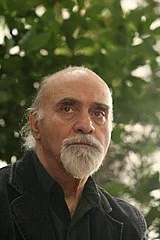
Reza Baraheni, an Iranian dissident, prolific writer and past president of Pen Canada (2001-03), has passed away in Toronto at the age of 86.
A widely acknowledged novelist, poet and literary critic, Baraheni wrote over 60 books that include fiction, poetry and literary analysis. His works have been translated into a dozen languages.
Burhan Sonmez, President of PEN International, stated: “I, alongside the entire PEN movement, mourn the loss of our family member Reza Baraheni. There are no words to express our sorrow. Reza’s work for the protection of suppressed minorities was instrumental in shaping the work of PEN, inspiring us to fight to safeguard the human right to freedom of expression. We, at PEN, will ensure that those who expose injustice and abuse at the highest levels, like Reza, are protected. His legacy will live on.”
A passionate human rights advocate and brave champion for freedom of speech, he tirelessly protested against his country’s oppression of writers, intellectuals and ethnic minorities. He endured imprisonment and torture under both the Shah’s regime and later under the Islamic Republic after the revolution in 1979.
John Ralston Saul, former president of PEN International and former president of PEN Canada said: “When I first met Reza Baraheni I was struck by how this gentle figure was at the same time ‘a ferocious defender of freedom of expression.’ Ferocious is the right word. The energy and determination he put into advancing the cause of free speech against the Shah’s regime and then against the Islamic Republic put him twice in jail. His ethical courage made him a model for all of us when it comes to defending free speech. You put yourself, your very body, in the way of its opponents.”
An Azerbaijani Turk by descent, Baraheni was first arrested in 1973 for advocating on behalf of non-Persian minorities whose linguistic and cultural identities were being oppressed. He was released following protests from notable American academics and writers such as novelist Jerzy Kosinsky. They referred to him as “Iran’s Solzhenitsyn.”
E. L. Doctorow described him as “the chronicler of his nation’s torture industry.” Meanwhile Harper’s magazine named him “Iran’s finest living poet.”
He eventually defected to America where he testified before Congress and rallied influential figures like Arthur Miller, Joan Baez, Noam Chomsky among others to challenge Washington’s unwavering support for the Shah. In December 1978 he joined hundreds demonstrating outside the White House while Jimmy Carter hosted the king.
Two months later brought about the Islamic revolution which led Baraheni back home with excitement.
He resumed his teaching position at Tehran University but soon clashed with new authorities due to his involvement with a banned Writers’ Association. In 1994 during secret meetings with this group he helped draft a charter demanding “freedom of expression without limits or exceptions.” They titled it Text of 134 echoing Vaclav Havel’s Charter 77 from Communist Czechoslovakia. He translated it into English having it smuggled out to Arthur Miller who read it during a Congress meeting in Prague in 1994.
The Iranian government retaliated quickly; interrogations followed for Baraheni along with several others leading many to be jailed or worse. His name appeared on a hit list by fall 1995 prompting him to flee to Sweden before arriving in Canada two years later thanks to assistance from PEN Canada.
“Reza’s case was one rare instance where PEN Canada could make a real difference efficiently,” recalls author Ron Graham who held presidency then. “The office got wind about a distinguished Iranian poet who had reached Sweden seeking political asylum here in Canada; within hours Ottawa’s foreign ministry ensured his swift passage through systems.”
In Canada Baraheni continued fighting against persecution faced by journalists authors educators among others within Iran.
However his vision extended beyond Iran’s borders too; he played an essential role in changing wording within PEN International’s charter making it more inclusive globally. The original text started with: “Literature national though it may be in origin knows no frontiers..” He suggested removing “national though it may be” which resulted approved change during Mexico City’s congress back in 2003 – marking first amendment since its establishment back around ’48 now simply stating “Literature knows no frontiers..”
He leaves behind wife Sanaz Sehhati residing in Toronto; daughter Aleca based out Fairfax Virginia; Oktay located between Tehran & Toronto plus sons Arsalan & Esfandiar both also living within Toronto area.
A memorial service is being organized for April.
Joanne Leedom-Ackerman from Washington ex-International Secretary at PEN International remarked: “I remember well sharp intelligence coupled passion demonstrated by Reza – truly important voice representing not just PEN but specifically voices needing representation across Iran.” She added: “Reza also contributed intellect improving beloved charter reflecting better modern era.” p >
Haroon Siddiqui succeeding as President noted calling him an “indefatigable defender” regarding freedoms stating how perfect fit between himself & Canada seemed upon arrival so fast acceptance elevating towards leadership chapter happened merely four years thereafter.” p >
Source link