



Conservative Leader Pierre Poilievre is urging Prime Minister Mark Carney to initiate an emergency debate regarding the economy, following Canada’s slide into what some consider a technical recession.
Statistics Canada reported on Friday that the nation’s GDP decreased by 0.1 per cent on an annualized basis in the first quarter of 2026, which comes after a revised one per cent annualized drop in the fourth quarter of 2025. A technical recession is typically defined as two successive quarters of negative economic growth.
“On Friday, you became the only leader in the G7 to have taken your country into a recession,” Poilievre stated in a letter to Carney on Sunday. “You promised you would deliver the fastest-growing economy in the G7. You delivered the only recession in the G7.”
Poilievre further remarked that “excuses” about U. S.-imposed tariffs affecting various Canadian industries and the Iran war “do not work either.” He highlighted that other G7 nations have managed to avoid a recession even with tariffs and challenges stemming from the conflict in Iran.
Story continues below
has contacted the federal government for their response to Poilievre’s request.

Get daily National news
Get daily Canada news delivered to your inbox so you’ll never miss the day’s top stories.
After Friday’s report, some economists suggested that the economic downturn may not necessarily indicate a recession.
The decline in real GDP last quarter was essentially negligible, TD economist Marc Ercolao told The Canadian Press. He also pointed out unexpected weakness in government spending, which had been strong throughout 2025, contributed to lower results seen in the first quarter.
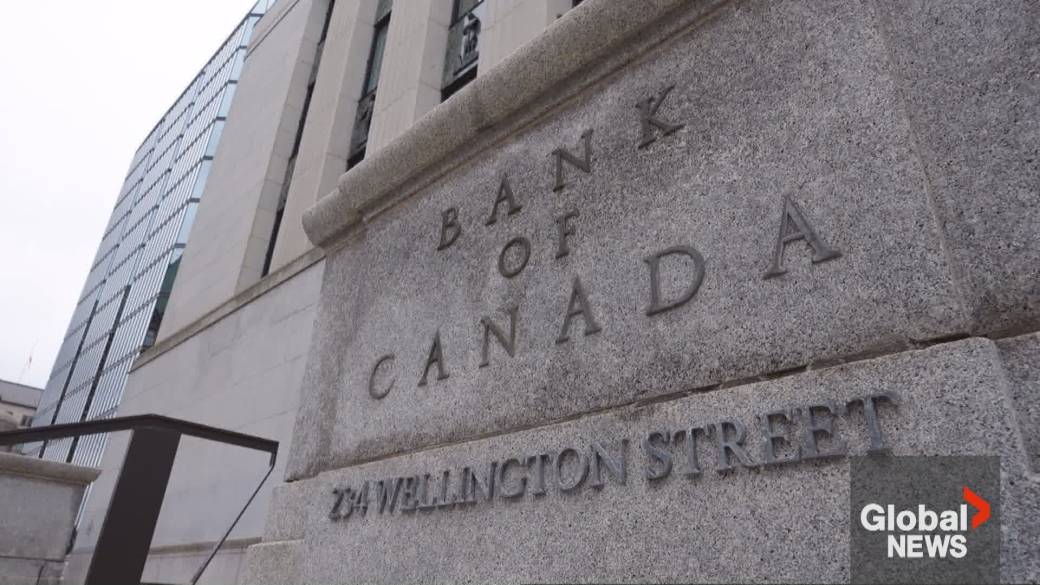
1:55 Canada slips into a technical recession for first time since 2020
BMO chief economist Doug Porter mentioned in a note to clients that they would say “no, not really,” if asked whether recent GDP declines signify a recession; however, he acknowledged that it’s true the economy has struggled to “make any headway” over the past year.
More on Politics More videos
While discussions continue about whether Canada is experiencing a recession, Poilievre pointed out other pressing issues facing Canadians.
Story continues below
Among these concerns are an Equifax report indicating insolvency volumes rising nearly 19 per cent year-over-year, thousands of job losses occurring within the first three months of 2026, and findings from Toronto’s Daily Bread Food Bank stating one-tenth of GTA residents are now relying on food banks.
“As you can see, two consecutive quarters of declining GDP are not just flukes or anomalies or technicalities. It is part of overwhelming evidence demonstrating an economy under serious strain with rapidly increasing costs,” Poilievre wrote.
“The recession is real.”
This letter echoes remarks Poilievre made on Friday after Statistics Canada released its figures, indicating his party’s call for Carney to propose legislation aimed at “reversing all of the economic policies his party has introduced over the last decade.”
The latest data further strengthens predictions from economists like Porter that suggest the Bank of Canada will likely maintain interest rates at current levels for some time ahead.
In his note, Porter also expressed that weak first-quarter GDP numbers will probably dampen rate-hike discussions within financial markets because “the economy is not equipped to handle higher rates right now.”
-with files from Ariel Rabinovitch and The Canadian Press
& copy 2026 , a division of Corus Entertainment Inc.
Source link