



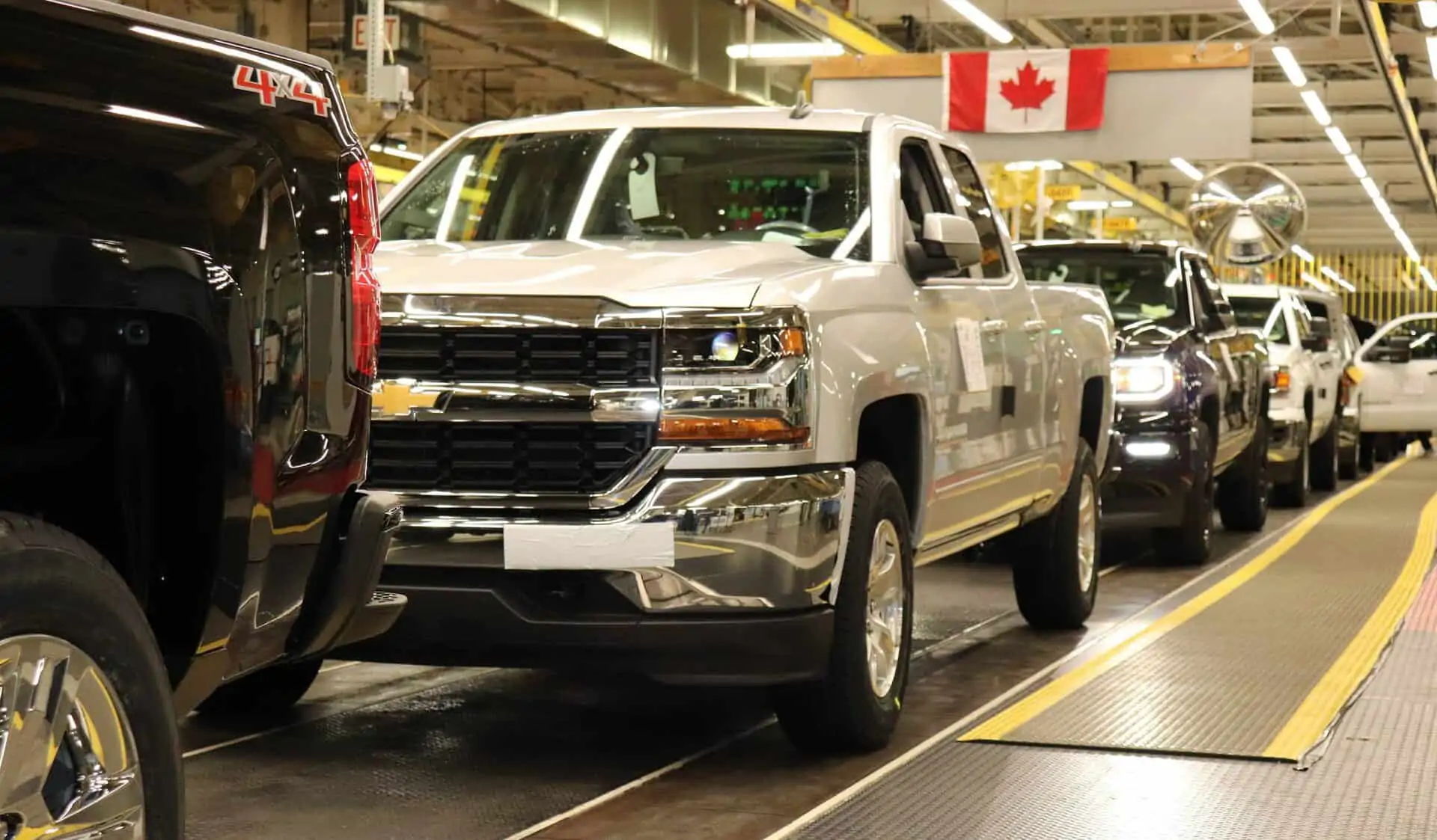
Initial feedback on Canada’s new federal auto policy announced by Prime Minister Mark Carney on Thursday is positive, with the union representing workers at manufacturing facilities in Oshawa, Brampton, St. Catharines, Ingersoll, and Windsor stating that the strategy includes “positive measures.”
On Thursday, Ottawa revealed a range of new electric vehicle policies, which include bringing back the rebate program and replacing the EV sales mandate with stricter emissions standards for the auto industry.
The policy also maintains counter-tariffs on light-duty vehicles made in the U. S., a move praised by Unifor President Lana Payne.
The strategy features beneficial aspects like ongoing counter-tariffs on U. S.-made light-duty vehicles; however, the union expressed disappointment that it does not extend to heavy-duty trucks. They urge Ottawa to support this plan with decisive actions to protect Canadian auto jobs and secure a future for autoworkers at idle plants in both Brampton and Ingersoll.
Unifor President Lana Payne
“We need a strategy that reassures workers that automaking has a future in Canada, regardless of U. S. trade attacks,” Payne stated. “The bottom line for all automakers must be if they want to sell in Canada, they have to build and invest in Canada. The free ride must end for companies that take from Canada’s $100 billion sales market while giving nothing back.”
The union is still worried about the recent agreement between Canada and China regarding EVs and continues to demand strong protections against an influx of vehicles made in China.
![]()
 “The government is giving itself a chance to explore various options, expand its remission program, and think strategically about using our vehicle market to secure long-term investments,” she mentioned. “This is an opportunity for Canada to be proactive in its demands of automakers and bring work back into our plants.”
The enhancement of strategic investment funding support, improved vehicle fuel economy standards, reinstatement of EV purchase incentives, and investment in charging infrastructure will help mitigate the negative impacts from President Trump’s rollback of U. S. EV strategies, she added.
“Within this new strategy we need governments to implement clear policies that create good union jobs, protect our plants, and strategically transform domestic industry for a net-zero future.”
Oshawa Regional Councillor Tito-Dante Marimpietri feels optimistic that the new strategy will help retain automotive jobs within the city.
“It signals a clear commitment to strengthening domestic manufacturing, securing supply chains, and building the next generation of made-in-Canada vehicles right here at home,” he said. “For Oshawa-a city with a century-long history of building, innovating, and supporting Canada’s economy-this strategy brings real opportunities: well-paying jobs, renewed investments, and a future where skilled workers stay central to Canada’s industrial success.”
He also noted Premier Doug Ford’s support for this initiative as beneficial.
“With proper alignment between federal and provincial leadership along with Oshawa’s skilled workforce plus innovation capacity-we can deliver the next chapter of Canada’s auto story.”
“Oshawa is ready. Our workers are ready. Canada’s future can be built here now.”
Speaking at an auto parts manufacturer located in Woodbridge on Thursday, Carney described Ottawa’s pitch for this new plan as aiming to transform Canada’s auto sector-which has faced months of challenges due to U. S. tariffs.
“We possess everything needed to lead in tomorrow’s vehicles; we’re positioning Canadian workers and businesses so they can seize that chance,” he remarked.
“The government is giving itself a chance to explore various options, expand its remission program, and think strategically about using our vehicle market to secure long-term investments,” she mentioned. “This is an opportunity for Canada to be proactive in its demands of automakers and bring work back into our plants.”
The enhancement of strategic investment funding support, improved vehicle fuel economy standards, reinstatement of EV purchase incentives, and investment in charging infrastructure will help mitigate the negative impacts from President Trump’s rollback of U. S. EV strategies, she added.
“Within this new strategy we need governments to implement clear policies that create good union jobs, protect our plants, and strategically transform domestic industry for a net-zero future.”
Oshawa Regional Councillor Tito-Dante Marimpietri feels optimistic that the new strategy will help retain automotive jobs within the city.
“It signals a clear commitment to strengthening domestic manufacturing, securing supply chains, and building the next generation of made-in-Canada vehicles right here at home,” he said. “For Oshawa-a city with a century-long history of building, innovating, and supporting Canada’s economy-this strategy brings real opportunities: well-paying jobs, renewed investments, and a future where skilled workers stay central to Canada’s industrial success.”
He also noted Premier Doug Ford’s support for this initiative as beneficial.
“With proper alignment between federal and provincial leadership along with Oshawa’s skilled workforce plus innovation capacity-we can deliver the next chapter of Canada’s auto story.”
“Oshawa is ready. Our workers are ready. Canada’s future can be built here now.”
Speaking at an auto parts manufacturer located in Woodbridge on Thursday, Carney described Ottawa’s pitch for this new plan as aiming to transform Canada’s auto sector-which has faced months of challenges due to U. S. tariffs.
“We possess everything needed to lead in tomorrow’s vehicles; we’re positioning Canadian workers and businesses so they can seize that chance,” he remarked.
 Canadian Prime Minister Mark Carney
This announcement includes restoring the EV rebate program-with $2.3 billion allocated to assist Canadians with purchasing new EVs-a credit system aimed at benefiting automakers producing cars domestically as well as investing $1.5 billion into EV infrastructure like charging stations.
Diving into details during a technical briefing on Thursday officials couldn’t specify how these measures would affect overall emissions but promised vehicle emissions would be halved by 2035.
This year alone passenger vehicles contributed 81 million tonnes of carbon dioxide or its equivalent among other greenhouse gases-accounting for nearly 12 percent of Canada’s total emissions.
Carney had paused the electric vehicle sales mandate last fall under pressure from provinces along with automakers which was meant to begin this year requiring EVs make up at least 20 percent of car sales across Canada this year-the target slated for increase up until reaching 100 percent by 2035.
The updated system removes these sales targets instead opting for stricter existing tailpipe emission standards which are expected by government estimates will boost adoption rates reaching 75 percent out-of-new-sales by 2035 then climbing further up towards 90 percent by 2040.
AUTO companies will have some leeway concerning compliance with these new regulations including improving fuel efficiency among gas-powered models but all manufacturers must gradually increase their EV sales over time aligning themselves with meeting those standards set forth.
The Ontario Premier Doug Ford who did not attend this announcement expressed approval over ending the EV sales mandate bolstering Ontario’s automobile industry health moving forward
“Ontario has been urging federal authorities toward discontinuation regarding electric vehicle mandates since it lessened competitiveness within our automobile sector undermining investments while jeopardizing jobs particularly when facing aggressive tactics directed toward us from President Trump,” Ford conveyed through his statement.
“New federal financial backing intended specifically targeting investment towards automotive parts suppliers job training initiatives infrastructure development around charging stations complements existing supports implemented previously via province-led efforts.”
The conservative party federally appeared skeptical concerning benefits arising from Mr. Carneys outlined plan dismissing it altogether labeling it merely an ‘insult’ delivered towards those engaged actively working within automotive sector.”
Following Carne y’ s public pronouncement , President paine reached out directly engaging union members stressing importance behind having framework established even if imperfect allows them greater leverage pushing beyond current outcomes sought alongside firm expectations placed upon automakers entailing ensuring production returns safely back into local factories.”
Canadian Prime Minister Mark Carney
This announcement includes restoring the EV rebate program-with $2.3 billion allocated to assist Canadians with purchasing new EVs-a credit system aimed at benefiting automakers producing cars domestically as well as investing $1.5 billion into EV infrastructure like charging stations.
Diving into details during a technical briefing on Thursday officials couldn’t specify how these measures would affect overall emissions but promised vehicle emissions would be halved by 2035.
This year alone passenger vehicles contributed 81 million tonnes of carbon dioxide or its equivalent among other greenhouse gases-accounting for nearly 12 percent of Canada’s total emissions.
Carney had paused the electric vehicle sales mandate last fall under pressure from provinces along with automakers which was meant to begin this year requiring EVs make up at least 20 percent of car sales across Canada this year-the target slated for increase up until reaching 100 percent by 2035.
The updated system removes these sales targets instead opting for stricter existing tailpipe emission standards which are expected by government estimates will boost adoption rates reaching 75 percent out-of-new-sales by 2035 then climbing further up towards 90 percent by 2040.
AUTO companies will have some leeway concerning compliance with these new regulations including improving fuel efficiency among gas-powered models but all manufacturers must gradually increase their EV sales over time aligning themselves with meeting those standards set forth.
The Ontario Premier Doug Ford who did not attend this announcement expressed approval over ending the EV sales mandate bolstering Ontario’s automobile industry health moving forward
“Ontario has been urging federal authorities toward discontinuation regarding electric vehicle mandates since it lessened competitiveness within our automobile sector undermining investments while jeopardizing jobs particularly when facing aggressive tactics directed toward us from President Trump,” Ford conveyed through his statement.
“New federal financial backing intended specifically targeting investment towards automotive parts suppliers job training initiatives infrastructure development around charging stations complements existing supports implemented previously via province-led efforts.”
The conservative party federally appeared skeptical concerning benefits arising from Mr. Carneys outlined plan dismissing it altogether labeling it merely an ‘insult’ delivered towards those engaged actively working within automotive sector.”
Following Carne y’ s public pronouncement , President paine reached out directly engaging union members stressing importance behind having framework established even if imperfect allows them greater leverage pushing beyond current outcomes sought alongside firm expectations placed upon automakers entailing ensuring production returns safely back into local factories.”
![]() Last thirty days witnessed eighty five thousand two hundred one votes casted.
Last thirty days witnessed eighty five thousand two hundred one votes casted.Would you consider purchasing electric car next ?INsaugas editorial guidelines Policies
 “The government is giving itself a chance to explore various options, expand its remission program, and think strategically about using our vehicle market to secure long-term investments,” she mentioned. “This is an opportunity for Canada to be proactive in its demands of automakers and bring work back into our plants.”
The enhancement of strategic investment funding support, improved vehicle fuel economy standards, reinstatement of EV purchase incentives, and investment in charging infrastructure will help mitigate the negative impacts from President Trump’s rollback of U. S. EV strategies, she added.
“Within this new strategy we need governments to implement clear policies that create good union jobs, protect our plants, and strategically transform domestic industry for a net-zero future.”
Oshawa Regional Councillor Tito-Dante Marimpietri feels optimistic that the new strategy will help retain automotive jobs within the city.
“It signals a clear commitment to strengthening domestic manufacturing, securing supply chains, and building the next generation of made-in-Canada vehicles right here at home,” he said. “For Oshawa-a city with a century-long history of building, innovating, and supporting Canada’s economy-this strategy brings real opportunities: well-paying jobs, renewed investments, and a future where skilled workers stay central to Canada’s industrial success.”
He also noted Premier Doug Ford’s support for this initiative as beneficial.
“With proper alignment between federal and provincial leadership along with Oshawa’s skilled workforce plus innovation capacity-we can deliver the next chapter of Canada’s auto story.”
“Oshawa is ready. Our workers are ready. Canada’s future can be built here now.”
Speaking at an auto parts manufacturer located in Woodbridge on Thursday, Carney described Ottawa’s pitch for this new plan as aiming to transform Canada’s auto sector-which has faced months of challenges due to U. S. tariffs.
“We possess everything needed to lead in tomorrow’s vehicles; we’re positioning Canadian workers and businesses so they can seize that chance,” he remarked.
“The government is giving itself a chance to explore various options, expand its remission program, and think strategically about using our vehicle market to secure long-term investments,” she mentioned. “This is an opportunity for Canada to be proactive in its demands of automakers and bring work back into our plants.”
The enhancement of strategic investment funding support, improved vehicle fuel economy standards, reinstatement of EV purchase incentives, and investment in charging infrastructure will help mitigate the negative impacts from President Trump’s rollback of U. S. EV strategies, she added.
“Within this new strategy we need governments to implement clear policies that create good union jobs, protect our plants, and strategically transform domestic industry for a net-zero future.”
Oshawa Regional Councillor Tito-Dante Marimpietri feels optimistic that the new strategy will help retain automotive jobs within the city.
“It signals a clear commitment to strengthening domestic manufacturing, securing supply chains, and building the next generation of made-in-Canada vehicles right here at home,” he said. “For Oshawa-a city with a century-long history of building, innovating, and supporting Canada’s economy-this strategy brings real opportunities: well-paying jobs, renewed investments, and a future where skilled workers stay central to Canada’s industrial success.”
He also noted Premier Doug Ford’s support for this initiative as beneficial.
“With proper alignment between federal and provincial leadership along with Oshawa’s skilled workforce plus innovation capacity-we can deliver the next chapter of Canada’s auto story.”
“Oshawa is ready. Our workers are ready. Canada’s future can be built here now.”
Speaking at an auto parts manufacturer located in Woodbridge on Thursday, Carney described Ottawa’s pitch for this new plan as aiming to transform Canada’s auto sector-which has faced months of challenges due to U. S. tariffs.
“We possess everything needed to lead in tomorrow’s vehicles; we’re positioning Canadian workers and businesses so they can seize that chance,” he remarked.
 Canadian Prime Minister Mark Carney
This announcement includes restoring the EV rebate program-with $2.3 billion allocated to assist Canadians with purchasing new EVs-a credit system aimed at benefiting automakers producing cars domestically as well as investing $1.5 billion into EV infrastructure like charging stations.
Diving into details during a technical briefing on Thursday officials couldn’t specify how these measures would affect overall emissions but promised vehicle emissions would be halved by 2035.
This year alone passenger vehicles contributed 81 million tonnes of carbon dioxide or its equivalent among other greenhouse gases-accounting for nearly 12 percent of Canada’s total emissions.
Carney had paused the electric vehicle sales mandate last fall under pressure from provinces along with automakers which was meant to begin this year requiring EVs make up at least 20 percent of car sales across Canada this year-the target slated for increase up until reaching 100 percent by 2035.
The updated system removes these sales targets instead opting for stricter existing tailpipe emission standards which are expected by government estimates will boost adoption rates reaching 75 percent out-of-new-sales by 2035 then climbing further up towards 90 percent by 2040.
AUTO companies will have some leeway concerning compliance with these new regulations including improving fuel efficiency among gas-powered models but all manufacturers must gradually increase their EV sales over time aligning themselves with meeting those standards set forth.
The Ontario Premier Doug Ford who did not attend this announcement expressed approval over ending the EV sales mandate bolstering Ontario’s automobile industry health moving forward
“Ontario has been urging federal authorities toward discontinuation regarding electric vehicle mandates since it lessened competitiveness within our automobile sector undermining investments while jeopardizing jobs particularly when facing aggressive tactics directed toward us from President Trump,” Ford conveyed through his statement.
“New federal financial backing intended specifically targeting investment towards automotive parts suppliers job training initiatives infrastructure development around charging stations complements existing supports implemented previously via province-led efforts.”
The conservative party federally appeared skeptical concerning benefits arising from Mr. Carneys outlined plan dismissing it altogether labeling it merely an ‘insult’ delivered towards those engaged actively working within automotive sector.”
Following Carne y’ s public pronouncement , President paine reached out directly engaging union members stressing importance behind having framework established even if imperfect allows them greater leverage pushing beyond current outcomes sought alongside firm expectations placed upon automakers entailing ensuring production returns safely back into local factories.”
Canadian Prime Minister Mark Carney
This announcement includes restoring the EV rebate program-with $2.3 billion allocated to assist Canadians with purchasing new EVs-a credit system aimed at benefiting automakers producing cars domestically as well as investing $1.5 billion into EV infrastructure like charging stations.
Diving into details during a technical briefing on Thursday officials couldn’t specify how these measures would affect overall emissions but promised vehicle emissions would be halved by 2035.
This year alone passenger vehicles contributed 81 million tonnes of carbon dioxide or its equivalent among other greenhouse gases-accounting for nearly 12 percent of Canada’s total emissions.
Carney had paused the electric vehicle sales mandate last fall under pressure from provinces along with automakers which was meant to begin this year requiring EVs make up at least 20 percent of car sales across Canada this year-the target slated for increase up until reaching 100 percent by 2035.
The updated system removes these sales targets instead opting for stricter existing tailpipe emission standards which are expected by government estimates will boost adoption rates reaching 75 percent out-of-new-sales by 2035 then climbing further up towards 90 percent by 2040.
AUTO companies will have some leeway concerning compliance with these new regulations including improving fuel efficiency among gas-powered models but all manufacturers must gradually increase their EV sales over time aligning themselves with meeting those standards set forth.
The Ontario Premier Doug Ford who did not attend this announcement expressed approval over ending the EV sales mandate bolstering Ontario’s automobile industry health moving forward
“Ontario has been urging federal authorities toward discontinuation regarding electric vehicle mandates since it lessened competitiveness within our automobile sector undermining investments while jeopardizing jobs particularly when facing aggressive tactics directed toward us from President Trump,” Ford conveyed through his statement.
“New federal financial backing intended specifically targeting investment towards automotive parts suppliers job training initiatives infrastructure development around charging stations complements existing supports implemented previously via province-led efforts.”
The conservative party federally appeared skeptical concerning benefits arising from Mr. Carneys outlined plan dismissing it altogether labeling it merely an ‘insult’ delivered towards those engaged actively working within automotive sector.”
Following Carne y’ s public pronouncement , President paine reached out directly engaging union members stressing importance behind having framework established even if imperfect allows them greater leverage pushing beyond current outcomes sought alongside firm expectations placed upon automakers entailing ensuring production returns safely back into local factories.”
All time total stands at one million two hundred nineteen thousand three hundred ninety votes registered.Two Thousand Eight Hundred Twenty Four Votes


