




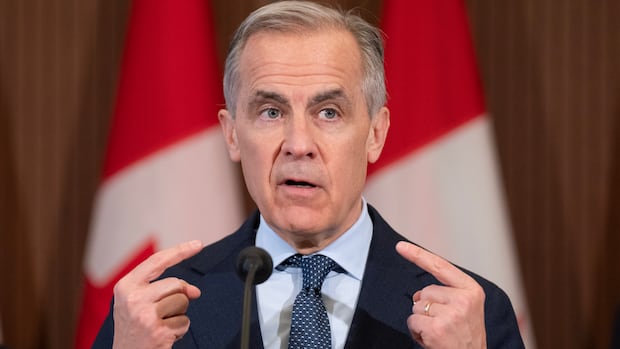
Prime Minister Mark Carney says that Canada’s relationship with the U. S. has become “weaknesses” that need fixing, as workers in Canada’s auto, steel, and lumber sectors are still at risk due to U. S. President Donald Trump’s tariffs.
“The U. S. has fundamentally changed its approach to trade, raising its tariffs to levels last seen during the Great Depression,” Carney stated in a video uploaded to You Tube on Sunday morning.
“Many of our former strengths, based on our close ties to America, have become weaknesses – weaknesses that we must correct.”
The prime minister used his video as a way to speak directly to Canadians about the threats facing the country – and he mentioned that regular updates on Canada’s efforts for diversification would follow.
“Security can’t be achieved by ignoring the obvious or downplaying the very real threats that we Canadians face,” Carney remarked. “I will never sugarcoat our challenges. Instead, I’ll talk to you directly and regularly about the plan.”
The video was released just days after U. S. Commerce Secretary Howard Lutnick criticized Canada’s trade strategy while reviewing the current version of North America’s free trade agreement and slammed Ottawa’s trade deal with China.
WATCH | What leverage does Canada have in tariff, trade talks?: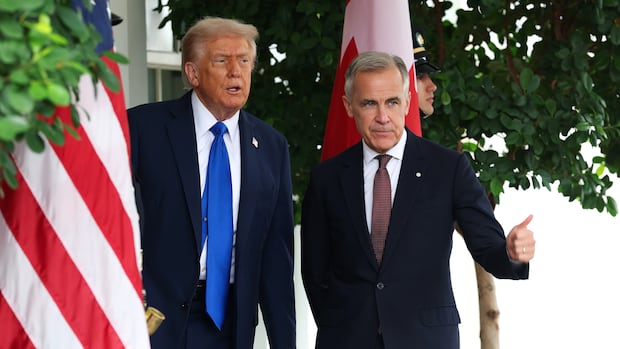
What leverage does Canada have in tariff, trade talks?
The U. S. and Canada had discussions regarding trade in Washington earlier this month, and a review of the CUSMA free trade agreement is set for July. CBC’s Mike Crawley explains what negotiating power Canadian negotiators may possess.
Lutnick reacted to comments from Canada’s former trade negotiator, Steve Verheul, who suggested that time favors Canadians since political pressure on the U. S. president will grow over time as the American economy falters.
“That is like, the worst strategy I’ve ever heard. They suck, they – look, we are a $30-trillion [US] economy, right?” Lutnick said.
He also took aim at Ottawa’s agreement with China.
“Carney has a problem with us. He gets on a plane and he goes to China,” Lutnick noted. “Does he think the Chinese economy is going to buy his stuff? China is entirely an export-driven economy, right? So what do you do? [Carney] came back and said, ‘Oh, we’ll take their electric cars.’ I mean, is this nuts?”
As part of this deal, Canada will allow 49,000 Chinese electric vehicles into its market at a tariff rate of 6.1 percent – down from 100 percent.
In return, China agreed to cut tariffs on Canadian canola down to 15 percent and eliminate levies on Canadian canola meal along with lobsters, crab and peas until at least late 2026.
More updates are coming soon.
Source link