



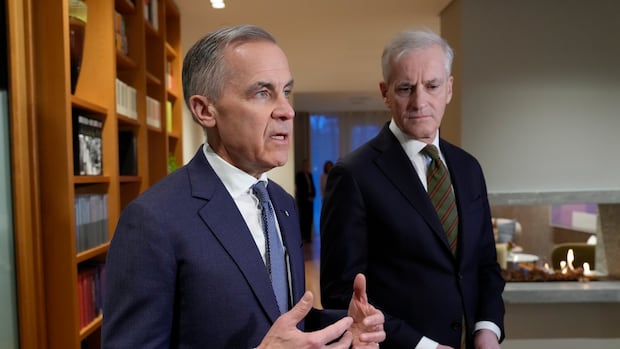
Both Prime Minister Mark Carney and Norwegian Prime Minister Jonas Gahr Støre were focused on easing the economic strains in global oil markets during their meeting in Oslo on Saturday.
This meeting followed the International Energy Agency’s call earlier this week for its 32 members to release 400 million barrels of oil to avoid global shortages and stabilize markets shaken by the U. S.-Israeli conflict with Iran.
Canada has committed to providing 23.6 million barrels, as announced by Energy Minister Tim Hodgson on Friday.
While attending the Holmenkollen Ski Festival in Oslo on Saturday, Carney aimed to convey a reassuring message, pointing out that Canada – being a net exporter of oil – doesn’t maintain a strategic reserve and isn’t obligated to contribute, but will do so anyway.
“From Canada’s perspective, we are low-risk producers of oil. We are low-risk producers of natural gas. We’re reliable.”
WATCH | Carney meets NATO allies in Norway: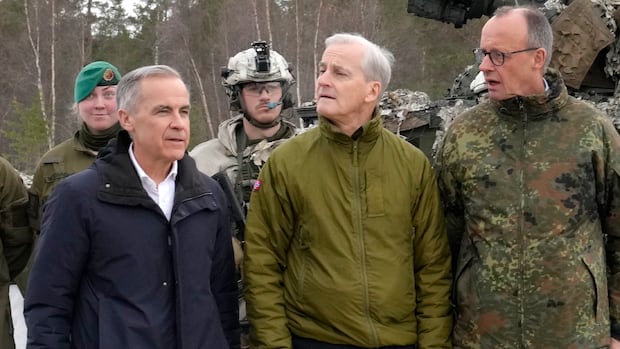 Carney upholds Russian oil sanctions, meets NATO allies in Norway
During his visit to Norway, Prime Minister Mark Carney reaffirmed Canada’s commitment to sanctions against Russian oil while discussing matters with Norwegian and German allies. Canadians are among the 25,000 NATO troops stationed there to counter Russian threats.
“The oil market is tight. That’s the reality and … the last thing you need in a tight market is to have more problems, and Canada is part of the solution in that regard.”
The United States announced it will release 172 million barrels from its strategic petroleum reserve as part of coordinated efforts with the IEA. However, the U. S. also opted to temporarily relax sanctions on Russia’s fleet of tankers, which caused frustration among other G7 leaders including Carney.
Norway is a significant offshore oil producer but hasn’t indicated whether it will increase production in response to the IEA’s request.
Oil prices have risen sharply as tankers avoid sailing through the Strait of Hormuz due to fears of Iranian attacks.
Carney upholds Russian oil sanctions, meets NATO allies in Norway
During his visit to Norway, Prime Minister Mark Carney reaffirmed Canada’s commitment to sanctions against Russian oil while discussing matters with Norwegian and German allies. Canadians are among the 25,000 NATO troops stationed there to counter Russian threats.
“The oil market is tight. That’s the reality and … the last thing you need in a tight market is to have more problems, and Canada is part of the solution in that regard.”
The United States announced it will release 172 million barrels from its strategic petroleum reserve as part of coordinated efforts with the IEA. However, the U. S. also opted to temporarily relax sanctions on Russia’s fleet of tankers, which caused frustration among other G7 leaders including Carney.
Norway is a significant offshore oil producer but hasn’t indicated whether it will increase production in response to the IEA’s request.
Oil prices have risen sharply as tankers avoid sailing through the Strait of Hormuz due to fears of Iranian attacks.
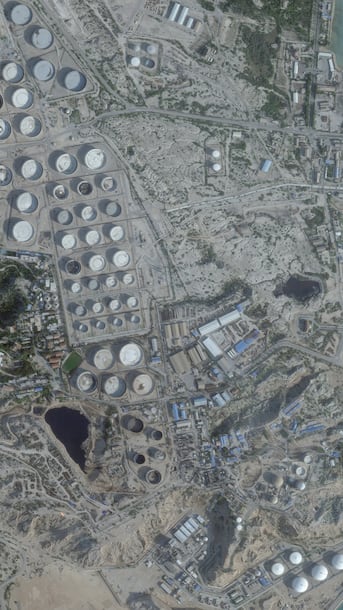 Iran warns of attacks on oil facilities after U. S. strikes Kharg Island
The U. S. military carried out a large-scale precision strike on Iran’s Kharg Island oil facility Friday night targeting military installations while leaving infrastructure intact. In response, Iranian officials threatened retaliation potentially against other allied nations’ oil industries.
“It is escalating with dramatic consequences for people in the region but also beyond. And I don’t think we have the blueprint for that. I mean those who are engaged in that war have to take responsibility for helping it end.”
Carney concurred stating leaders need conversations focused on de-escalation followed by ending hostilities.
“We remind all belligerents in this conflict of their responsibilities to adhere to international law,” Carney said. “That means no attacks on civilian infrastructure, and certainly civilians, and care in that regard.”
Both Canada and Norway agreed upon enhancing defense cooperation not only in Arctic regions but also regarding space activities while continuing support for Ukraine amid its struggle against Russia.
“We have been through a list of areas … where we can deepen co-operation connected with prime minister’s visit,” said Støre.
“And I was really so positively surprised by how many key areas we share interest: energy, artificial intelligence, digitalization of our economies – security too – critical minerals – so … there’s definitely common ground based on important economic foundations.”
Iran warns of attacks on oil facilities after U. S. strikes Kharg Island
The U. S. military carried out a large-scale precision strike on Iran’s Kharg Island oil facility Friday night targeting military installations while leaving infrastructure intact. In response, Iranian officials threatened retaliation potentially against other allied nations’ oil industries.
“It is escalating with dramatic consequences for people in the region but also beyond. And I don’t think we have the blueprint for that. I mean those who are engaged in that war have to take responsibility for helping it end.”
Carney concurred stating leaders need conversations focused on de-escalation followed by ending hostilities.
“We remind all belligerents in this conflict of their responsibilities to adhere to international law,” Carney said. “That means no attacks on civilian infrastructure, and certainly civilians, and care in that regard.”
Both Canada and Norway agreed upon enhancing defense cooperation not only in Arctic regions but also regarding space activities while continuing support for Ukraine amid its struggle against Russia.
“We have been through a list of areas … where we can deepen co-operation connected with prime minister’s visit,” said Støre.
“And I was really so positively surprised by how many key areas we share interest: energy, artificial intelligence, digitalization of our economies – security too – critical minerals – so … there’s definitely common ground based on important economic foundations.”
Source link
Carney upholds Russian oil sanctions, meets NATO allies in Norway
During his visit to Norway, Prime Minister Mark Carney reaffirmed Canada’s commitment to sanctions against Russian oil while discussing matters with Norwegian and German allies. Canadians are among the 25,000 NATO troops stationed there to counter Russian threats.
“The oil market is tight. That’s the reality and … the last thing you need in a tight market is to have more problems, and Canada is part of the solution in that regard.”
The United States announced it will release 172 million barrels from its strategic petroleum reserve as part of coordinated efforts with the IEA. However, the U. S. also opted to temporarily relax sanctions on Russia’s fleet of tankers, which caused frustration among other G7 leaders including Carney.
Norway is a significant offshore oil producer but hasn’t indicated whether it will increase production in response to the IEA’s request.
Oil prices have risen sharply as tankers avoid sailing through the Strait of Hormuz due to fears of Iranian attacks.
Støre emphasizes need for peace in Middle East
A joint statement released late Saturday after their bilateral discussions highlighted Carney and Støre’s shared commitment to collaborate for affordable, secure, and sustainable energy solutions among other areas. Before dinner at Støre’s official residence, he expressed concern about escalating conflict in the Middle East saying it should come to an end. “There is no real script on how it’s going to evolve and end,” said Støre without directly mentioning the United States or Israel. WATCH | Iran threatens attacks on oil facilities after U. S. strikes:
Iran warns of attacks on oil facilities after U. S. strikes Kharg Island
The U. S. military carried out a large-scale precision strike on Iran’s Kharg Island oil facility Friday night targeting military installations while leaving infrastructure intact. In response, Iranian officials threatened retaliation potentially against other allied nations’ oil industries.
“It is escalating with dramatic consequences for people in the region but also beyond. And I don’t think we have the blueprint for that. I mean those who are engaged in that war have to take responsibility for helping it end.”
Carney concurred stating leaders need conversations focused on de-escalation followed by ending hostilities.
“We remind all belligerents in this conflict of their responsibilities to adhere to international law,” Carney said. “That means no attacks on civilian infrastructure, and certainly civilians, and care in that regard.”
Both Canada and Norway agreed upon enhancing defense cooperation not only in Arctic regions but also regarding space activities while continuing support for Ukraine amid its struggle against Russia.
“We have been through a list of areas … where we can deepen co-operation connected with prime minister’s visit,” said Støre.
“And I was really so positively surprised by how many key areas we share interest: energy, artificial intelligence, digitalization of our economies – security too – critical minerals – so … there’s definitely common ground based on important economic foundations.”Source link