


With ongoing doctor shortages in the province, Northern Ontario School of Medicine (NOSM) University has unveiled its new five-year strategic plan, which primarily targets the recruitment and retention of physicians in the area.
The school, established in 2002, made headlines by becoming Canada’s first independent medical university in 2022.
NOSM’s latest strategic plan, titled Rooted in the North, sets out its vision through 2030 “to grow training capacity, deepen regional partnerships, and enhance research that directly supports rural, remote, Indigenous, and Francophone communities.”
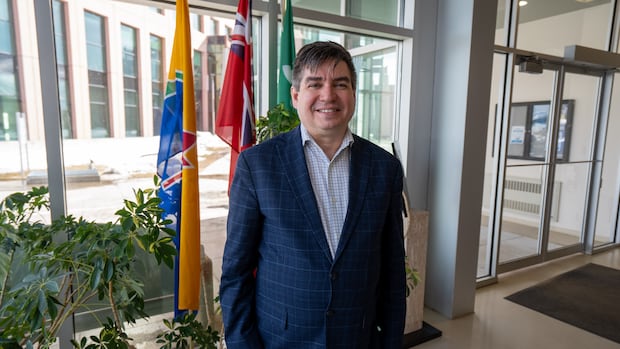
“This is our first significant plan as an independent university granting our own degrees, and it comes at a really exciting time when medical education is expanding a lot in northern Ontario,” said Dr. Michael Green, who serves as NOSM’s president, vice chancellor, dean and chief executive officer.
“This plan will help guide that growth and keep us on track for our mission of training doctors who will help deliver on the health care that northerners need.”
There are over 2.5 million Ontarians lacking access to a family doctor according to the Ontario Medical Association. At the same time, a recent survey found that 52 percent of family physicians in the province are thinking about retirement or planning to retire within the next five years.
![]() NOSM University’s Thunder Bay, Ont., campus is co-located with Lakehead University. (Marc Doucette/CBC)
NOSM has graduated 1,041 doctors as of May 2025; more than half have chosen to stay in northern Ontario. This year’s group includes 88 new students, Green noted.
<p“Obviously there's still a lot of shortages so this growth we’re pursuing right now – with our learners spread across various locations instead of just one city – is part of ensuring graduates can serve all areas,” he said.
While its primary campuses are located in Thunder Bay and Sudbury, NOSM operates numerous satellite sites and provides training in over 90 communities.
LISTEN | NOSM U Camp Med celebrates 20 years this summer:
6:58NOSM U Camp Med celebrates 20 years this summer
Applications are now open for the 20th year of a summer camp program run by NOSM University. Camp Med offers high school students insight into healthcare careers to inspire them toward medicine someday. CBC’s Amy Hadley spoke with Katie Biasiol from NOSM U about admissions and learner recruitment for more details.
Additionally, every NOSM medical student completes a four-week placement during their first year at either a First Nation organization or an Indigenous health organization located in northern Ontario.
“Communities across northern Ontario made NOSM University possible,” stated John Stenger, chair of NOSM’s board of governors during a news release Wednesday. “Rooted in our special mission and guided by our communities, this strategy ensures we remain strong sustainable and responsive as health system needs evolve.”
NOSM University’s Thunder Bay, Ont., campus is co-located with Lakehead University. (Marc Doucette/CBC)
NOSM has graduated 1,041 doctors as of May 2025; more than half have chosen to stay in northern Ontario. This year’s group includes 88 new students, Green noted.
<p“Obviously there's still a lot of shortages so this growth we’re pursuing right now – with our learners spread across various locations instead of just one city – is part of ensuring graduates can serve all areas,” he said.
While its primary campuses are located in Thunder Bay and Sudbury, NOSM operates numerous satellite sites and provides training in over 90 communities.
LISTEN | NOSM U Camp Med celebrates 20 years this summer:
6:58NOSM U Camp Med celebrates 20 years this summer
Applications are now open for the 20th year of a summer camp program run by NOSM University. Camp Med offers high school students insight into healthcare careers to inspire them toward medicine someday. CBC’s Amy Hadley spoke with Katie Biasiol from NOSM U about admissions and learner recruitment for more details.
Additionally, every NOSM medical student completes a four-week placement during their first year at either a First Nation organization or an Indigenous health organization located in northern Ontario.
“Communities across northern Ontario made NOSM University possible,” stated John Stenger, chair of NOSM’s board of governors during a news release Wednesday. “Rooted in our special mission and guided by our communities, this strategy ensures we remain strong sustainable and responsive as health system needs evolve.”
Source link
Expanding presence across the north
The new strategic plan includes four main pillars aimed at: Delivering top-notch health education for the north. Building sector-leading partnerships with community organizations alongside education and health partners. Advancing research initiatives along with graduate studies up north. Strengthening NOSM University’s foundations to support growth. Green started his career focused on family medicine spending his initial eight years working in Moose Factory. He recently met up with some NOSM students there who have taken on “the challenge of delivering high-quality healthcare even when not all resources you’d expect from larger centers are available.” Pursuing health equity within rural and remote communities has always been central to NOSM’s goals; therefore they’re aiming to broaden their reach throughout these regions. “A big part involves ensuring we bring people into our program who genuinely connect with northern Ontario-most learners either grew up here or have deep ties to these areas,” Green mentioned. In five years’ time , Green hopes enrollment will rise to include108 new students each year while also having operational primary care teaching clinics available. “The key aspect during training involves making sure people gain experience throughout various communities all over northern regions. ”Source link