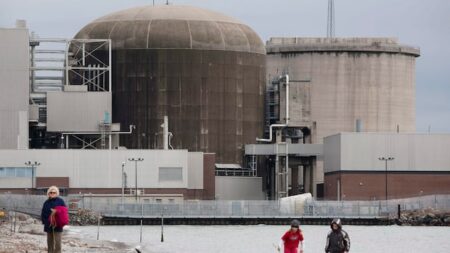





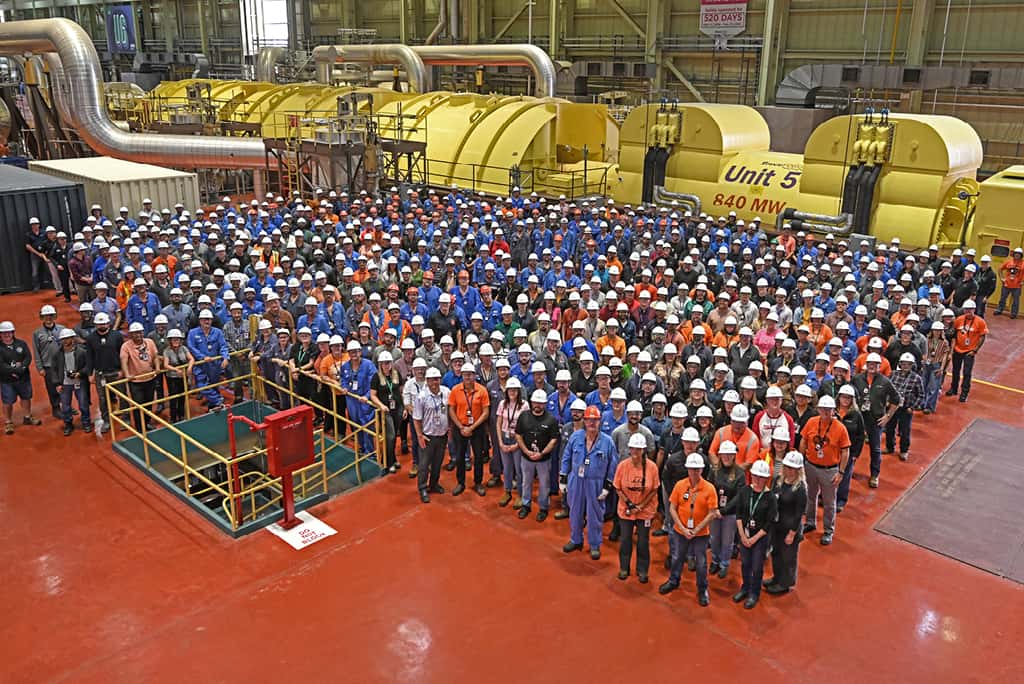
A significant, privately funded nuclear upgrade in Ontario has officially reached a new key milestone, as Bruce Power has successfully taken Unit 5 offline to kick off its Major Component Replacement (MCR) outage.
This marks the second phase of the energy giant’s ambitious MCR Project, with the planned shutdown of Unit 5 driving forward a groundbreaking effort to renew Units 3 through 8. Once finished, this initiative is expected to provide decades of clean and dependable electricity for homes, businesses, and medical facilities across Ontario while ensuring a vital global supply of life-saving cancer-fighting medical isotopes.
The start of Unit 5’s refurbishment highlights a growing trend in the province’s nuclear industry, building directly on the proven success of previous reactor upgrades. According to Bruce Power, Unit 6 returned to operation in 2023 ahead of schedule and under budget, returning $52 million back to Ontario ratepayers.
As stated by Bruce Power, Unit 3 came back online in June more than seven months ahead of plan to help meet peak summer demand while returning approximately $150 million to ratepayers via the Independent Electricity System Operator (IESO). Meanwhile, Bruce Power noted that Unit 4’s ongoing MCR outage continues to set speed and efficiency records.
“Ontario’s nuclear advantage is powered by the best workers, engineers, and skilled tradespeople in the world, and the start of Unit 5’s refurbishment is yet another example of nuclear expertise that few jurisdictions can match,” said Stephen Lecce, Ontario Minister of Energy and Mines. “Extending the life of this critical asset will deliver reliable, affordable electricity while strengthening Ontario’s position as a global energy superpower that can refurbish nuclear plants on time and on budget. With 95 per cent of Bruce Power’s spending staying in Canada, this work sustains 22,000 jobs and approximately $4 billion in economic benefits every year, supporting skilled trades and made-in-Ontario supply chains along with communities across our province.”
Overlapping reactor refurbishments will keep up an intense operational rhythm at the Bruce site through 2033. This scale of engineering work is unmatched by any other utility worldwide; upgrades for Units 7 and 8 are scheduled to begin in 2028 and 2030 respectively while provincial leaders are actively considering a potential second MCR for Units 1 and 2.
“Our performance improves with each MCR outage,” said Eric Chassard, Bruce Power’s President and Chief Executive Officer. “We’re committed to delivering these projects safely with high quality and on time so we can return reliable units to power Ontario forward. Along with our partners and skilled workforce, we are securing the future of the Bruce site while supporting surrounding communities driving economic growth and producing cancer-fighting medical isotopes for patients around the globe.”
Local community leaders emphasize that this multi-billion-dollar Life-Extension Program acts as an economic engine for the area by extending each unit’s lifespan by about 30 to 35 years through careful replacement processes involving over 480 Calandria Tubes along with Fuel Channels, around 960 Feeder Tubes , and large steam generators.
“The start of Unit 5’s Major Component Replacement outage is another important milestone for Bruce Power’s Life-Extension Program,” said Lisa Thompson , MPP for Huron-Bruce. “As each refurbishment project wraps up , we see Ontario-made expertise producing real results for ratepayers while boosting good-paying jobs and reinforcing communities across Bruce , Grey , and Huron counties. This work secures a steady supply of clean electricity for many years ahead enhancing our region ’s role as a leader in Ontario ’s nuclear success story.”
Beyond powering millions of homes , this mega-project supports around 22 ,000 direct or indirect jobs throughout Canada injecting about $4 billion annually into our economy-with about95 percentof all program expenditures remaining within Canada.
“The strong performance we’re seeing across our MCR program starts with the skilland experienceof tradespeople doingthis work every day,” said Laurent Seigle, Bruce Power’s Executive Vice-President , Projects. “When you combinethatexpertisewith Ontario ’s robustnuclearsupplychainalongwithinnovativetechnologiesandprocesses, we have apowerfulmade-in-Ontarioadvantagethat helpsus execute more efficientlywitheachsuccessive MCRand deliverlong-termvalueforratepayer s.” p>
Source link