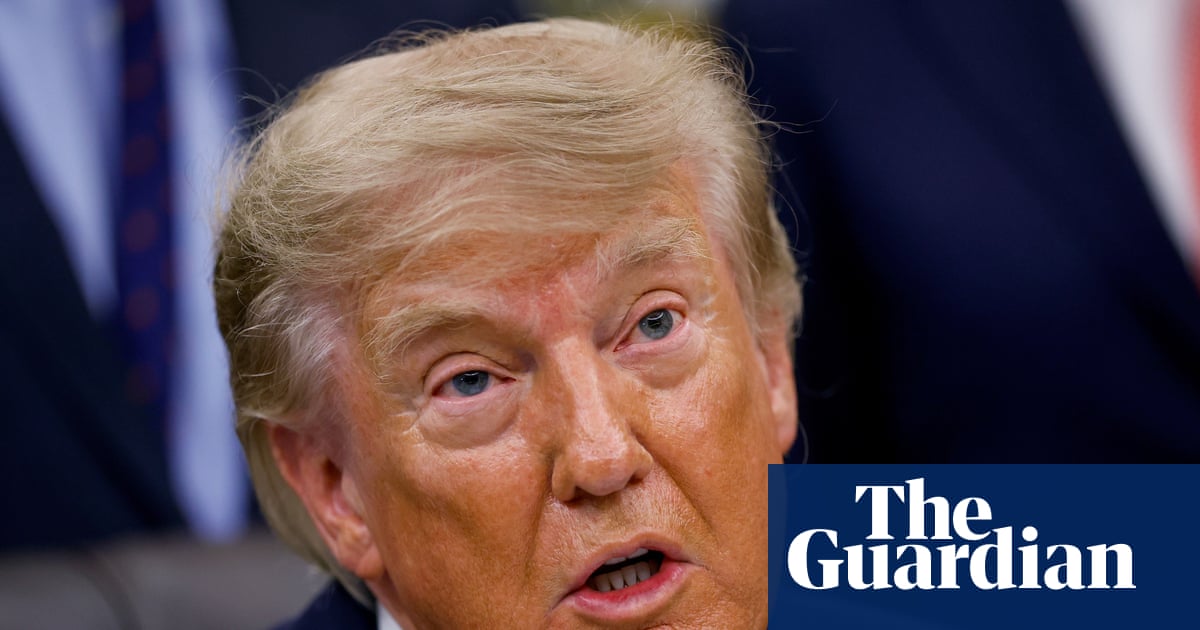
Donald Trump is encountering a rare pushback from Congress as both Democrats and some Republicans advocate for regulations on the most powerful AI companies in the world.
Fears about the potentially dangerous nature of AI peaked this week after tech leaders raised alarms about the swift development of this technology and its possible risks to humanity.
On Monday, Trump dismissed these worries, labeling them a “HOAX” and “conspiracy,” insisting on social media: “The only control or ‘guardrails’ that AI needs is a STRONG AND SMART (High IQ!) PRESIDENT, and the U. S. A. has that, in spades!”
However, the 80-year-old president, who has often ignored Congress during his second term, seems more isolated as members from both parties recognize the dangers and wish to take action before it’s too late.
Don Beyer, a Democratic congressman from Virginia, stated: “History will look very poorly on that tweet. He’s not paying attention – or he’s paying attention to the wrong people. He’s being really foolish: not the first time he’s been really foolish but perhaps catastrophically foolish in this case.”
Recent polls by the University of Maryland’s Program for Public Consultation revealed that 85% of Democrats and 79% of Republicans support creating a new federal agency to oversee and regulate AI; furthermore, 82% of Democrats and 78% of Republicans are in favor of government safety tests for AI systems making important decisions.
While many politicians agree that action is necessary, they disagree on what kind of government intervention should be taken and how extensive it should be. Some worry that pausing AI development could allow China to lead in this field and threaten national security.
Beyer urged Congress to remain in session rather than break for midterm elections to focus on already proposed AI legislation. “The first thing that I’m very certain of is that the industry shouldn’t be allowed to regulate themselves; history doesn’t support that at all,” he said.
“Especially when they’re making so much money, there will be absolutely no incentive to regulate themselves at a lesser profit. If we look at medicines or childcare workers or automobile emissions and safety, all throughout our economy, we have regulatory bodies that keep us safe and promote the common good while allowing businesses to thrive. We need something like that.”
Protesters in San Francisco call on AI companies to pause development. Photograph: Manuel Orbegozo/Reuters
The surge in debate follows recent warnings from three Anthropic researchers indicating that AI could pose a threat to humanity within ten years. New revelations from several AI firms showing their models hacking into external organizations during failed safety tests have heightened concerns regarding cybersecurity risks. Dario Amodei, CEO of Anthropic, asserted in an essay that within six to twelve months a “swarm” of AI agents could attack the entire internet leading to hundreds of billions of dollars in damages.
While leaders within the AI industry have also voiced their own concerns regarding their products’ risks, public discontent against these companies has grown throughout the year alongside pressure on lawmakers to impose limits on them. The rapid expansion of data centers has sparked nationwide protests becoming a key issue leading up to midterm elections while tech lobbyists have spent millions trying to influence political campaigns and shape new laws.
The recent frenzy surrounding fears about AI’s potential existential threat has intensified an ongoing discussion about technology which so far has resulted mostly in political hand-wringing with only scattered attempts at regulation taking place. Many experts view this moment as an unprecedented opportunity despite differing opinions regarding warnings made by Anthropic researchers.
Amba Kak, co-executive director at the AI Now Institute who previously served as senior adviser on AI for the Federal Trade Commission noted: “You never waste a crisis is an old adage in policy circles. We’re looking at a truly significant policy opportunity right now.”
AI industry leaders seem open towards increased oversight along with forming some sort standards body; however Amodei’s letter called for international collaboration with countries like China similar cold war-era arms limitation treaties. Many advocates pushing for stricter regulations are doubtful about these proposals believing big tech companies are trying undercut real governmental oversight by setting their own terms instead.
In an unusual move Monday night former president Barack Obama expressed support for current discussions but cautioned against relying solely upon voluntary guidelines set forth by select tech firms stating it wouldn’t suffice.
Writing on X Obama emphasized: “We need government – specifically our leaders in Washington – getting proactive with concrete proposals laws regulations addressing serious safety issues anticipating impacts from AIs affecting jobs kids ensuring benefits are fairly distributed.”
Congressional members plan meetings throughout this week involving researchers safety advocates aiming tackle increasing concerns surrounding artificial intelligence technologies further along Senate Democratic leader Chuck Schumer implored Trump administration provide classified briefings senators discussing ways implement guardrails blocking China access advanced American chips related A. I.
Bernie Sanders recently announced bill intended ban “artificial superintelligence” holding private briefing upcoming week fellow senators including co-founder Future Life Institute Max Tegmark whose organization gained considerable funding influence raising awareness around alleged existential threats posed by A. I.
Tegmark commented saying : “Every other industry America was unregulated once. There used soothing syrups containing opioids fed infants prior creation FDA , leading safer markets. Eventually regulatory standards emerged thereafter hasn ‘ t been done respect A. I. “
Congressman Greg Casar democrat scheduled speak Sanders Future Life Institute ’ s “Pro – Human Assembly” Tuesday rejected idea big tech firms should handle A. I. safety themselves asserting responsibility lies elsewhere : “That ’ s equivalent asking bank robbers ensure banking security.”
“American public waking dangers stemming unchecked artificial intelligence.”
“You’ve got those executives arriving ready strip jobs surveil citizens infringe freedoms whistleblowers surfacing risk mass casualties present need crackdown particularly among major players CEOs versus behaviors seen lately GOP Speaker Mike Johnson Donald Trump approach toward seeking campaign donations instead genuine accountability “.Former President Barack Obama cautioned against solely relying volunteer measures established limited number technology corporations insufficient protect society. Photo : Scott Olson / Getty Images
Republican legislators diverged views acknowledging possible threats associated with innovation nevertheless proposing range solutions tackle problems arising. Congressman Jay Obernolte California chief negotiator bipartisan legislation governing artificial intelligence suggested strategy avoiding overregulation required balancing safeguarding Americans facing tangible hazards emerging misuse malicious actors counterbalancing necessity maintaining light touch environment promoting beneficial applications improving economy society hence difficulty precisely achieving equilibrium properly addressed.”
Senator John Kennedy representing Louisiana intends introduce Wednesday mandate every company designing Artificial Intelligence build integrated shutdown mechanism models specifying ownership falls onto respective organizations rather federal supervision implementing such functionalities concerning mentioned systems.”
Nonetheless persistent urgency coupled public demand raises doubts if divided contentious legislature capable addressing present situation effectively. “
” Representative Jared Moskowitz hailing Florida conveyed skepticism chances passing regulatory framework : ” Congress demonstrated incapacity collective effort earlier known saying nothing ventured achieve progress. Speaker articulated lack sufficient understanding grasp complexity involved hence failure fulfill expectations constituents seeking leadership.” “” Senator Rick Scott additionally chimed noting previous failures generating budgets completing objectives ever accomplishing meaningful outcomes adding incredulity toward ability resolve emerging challenges posed technological advancements presently encountered impacting lives daily basis today asks , ‘ Can regulatory framework put place ? ‘ “”“
Source link