



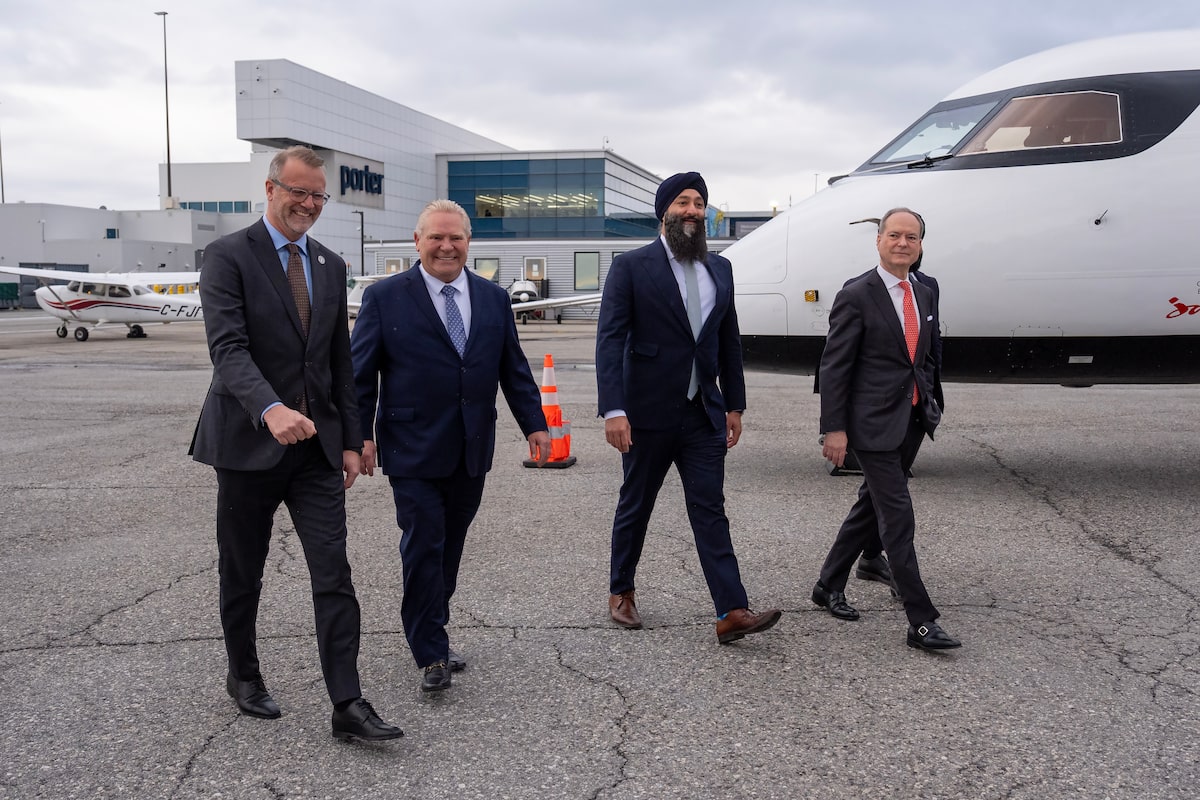
Open this photo in gallery: From left, Toronto Port Authority president and CEO RJ Steenstra, Ontario Premier Doug Ford, Ontario Transportation Minister Prabmeet Sarkaria and Ontario Finance Minister Peter Bethlenfalvy arrive at an event at Billy Bishop Toronto City Airport in March. Frank Gunn/ Ontario Transportation Minister Prabmeet Sarkaria stated on Tuesday that Ottawa has yielded to a “small fringe group” by halting the province’s plans for a significant expansion of Billy Bishop Toronto City Airport to accommodate commercial jets. “We’ve seen the federal government here listen to a small fringe group in Toronto,” Mr. Sarkaria told reporters during an unrelated announcement in St. Thomas, Ont. “But we as the province will continue to push forward on modernization of this airport.” On Friday, which was also the last day of a federal online consultation regarding the proposal, Transport Minister Steven Mac Kinnon released a statement indicating that Ottawa would not move forward with the plan “at this stage.” Mr. Mac Kinnon mentioned that more than 87,000 responses had been received, primarily from residents of Toronto. Federal government declines to allow jets at Billy Bishop ‘at this stage’ A source within the federal government informed The Globe last week that an overwhelming number of responses were opposed to the expansion. The Globe did not disclose the source as they were not authorized to comment publicly on this issue. Critics argue that permitting jets at the small Billy Bishop airport – potentially increasing passenger numbers to 10 million per year from just over 1 million – would damage the Toronto Islands, harm the harbor and waterfront area, and lead to traffic congestion. This topic has long been contentious in local politics. Nevertheless, Mr. Sarkaria expressed that the province would keep collaborating with the Toronto Port Authority, which oversees the island airport as an independent federal agency while it develops its expansion strategy. He urged Ottawa to rethink its decision. “It’s also about building big projects,” he said. “You know, if Prime Minister Carney and his team are going to treat larger projects like this, I don’t think much will get built.” Additionally, Mr. Sarkaria mentioned that despite requests from Toronto Mayor Olivia Chow for its repeal, Ontario wouldn’t revoke legislation passed earlier this year that removed city control over its stake in the airport and influence regarding future developments there. Toronto City Council is set to vote later this week on a resolution urging repeal of the bill. This legislation also granted extensive authority to Ontario for potential expropriation across much of Toronto Islands and part of a city park located near the current terminal. Ontario NDP Leader Marit Stiles stated on Tuesday that Bill 110 should be scrapped entirely. She criticized Mr. Sarkaria’s remarks about “fringe groups,” calling it a “pathetic insult” towards thousands who opposed what she called an unreasonable project. Rejection of Billy Bishop expansion prevents environmental destruction, advocates say The plan for jet operations is separate from existing approvals by the city allowing 150-meter safety buffer zones at both ends of its main runway as mandated by new Transport Canada regulations. Before Ottawa’s announcement last week, both Premier Doug Ford and Roelof-Jan (RJ) Steenstra-president and CEO of the port authority-had indicated support from Ottawa for allowing jets at Billy Bishop. Prime Minister Mark Carney referred to it as an “interesting vision” back in March but later claimed he had “not formed an opinion” by June while promising public consultations after feedback from some Liberal MPs who faced criticism from their constituents regarding jet operations around Beaches-East York where there’s an upcoming by-election next month.
The Premier’s action expropriating control over airport shares allowed Ontario entry into what is known as tripartite agreement; A consensus deal spanning 43 years between city , port authority , and federal government governing operations banning jets.
Mr. Ford pledged utilizing newly acquired powers enabling declaration airport special economic zone suspending provincial laws speeding construction efforts although restrictions remain under federal aviation rules governing air travel.
Currently commercial carriers Porter Airlines & Air Canada operate turboprop flights seating seventy-eight passengers out from facility Terminal owner Nieuport Aviation controlled J. P. Morgan Asset Management sought governmental endorsement towards proposed expansions initiatives.
In April interview with The Globe , port authority’s Mr. Steenstra noted final plan completion wouldn’t be reached until months ahead stating concept entailed extending up-to six hundred meters main runway currently measuring one thousand two hundred eighteen meters long.
Additional requirements include three hundred meter safety zones established already thus creating total possible nine hundred meter artificial peninsulas expanding off island site costs estimated reaching five billion dollars.
Source link