


Ottawa Construction News staff writer
The city council in Ottawa has given the green light to a comprehensive financial strategy designed to tackle a $1.23 billion shortfall in infrastructure funding. This plan also includes new investments in transit, initiatives for affordable housing, and involvement in a federal clean fuel credit program.
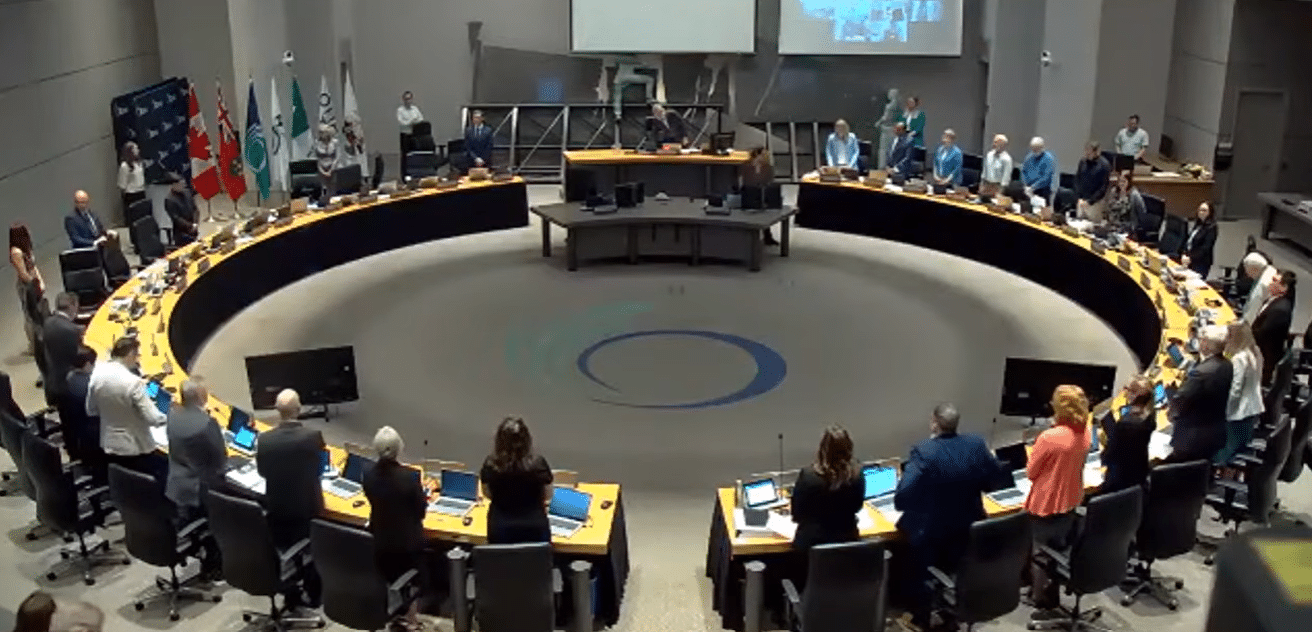
The Long-Range Financial Plan for tax-supported capital sets out a 10-year approach for funding the renewal and growth of municipal infrastructure. To help bridge the funding gap, council members decided during the June 10 meeting to increase annual contributions to capital by $12 million, which includes $4.5 million allocated to cover $120 million in new debt projected for 2027 and 2028.
Council also approved allocating 0.15 percent of annual property tax revenue growth-estimated at $3.5 million each year-toward capital growth projects, alongside a one-time withdrawal of $32 million from the capital reserve.
<p. Starting in 2029, the city intends to boost annual borrowing by $36.5 million, raising average yearly debt issuance to $96.5 million until 2035. Additional funds will be generated from yearly base budget increases, savings from optimizing facilities, and proceeds from selling surplus properties.
A reserve fund will be established to finance climate-related infrastructure projects using part of Hydro Ottawa’s dividend revenues as well as savings gained through climate initiatives.
In another move, council approved Ottawa’s participation in the federal Clean Fuel Regulations Program, allowing municipalities to create and sell credits for providing clean transportation energy that replaces fossil fuels.
Ottawa plans to register its zero-emission bus program this July and use income from selling credits to acquire more electric buses. City officials estimate this initiative could bring in around $1.3 million in revenue by 2026, increasing to about $3.9 million in 2027 and roughly $4.3 million annually once Ottawa’s electric bus fleet expands to 350 vehicles.
<p. A set of measures aimed at improving transit reliability was approved too; this includes adding heat tracing on the overhead catenary system of the Confederation Line and implementing enhanced transit priority measures.
Changes are anticipated regarding how funds from the city’s Housing Accelerator Fund will be spent, which is expected to provide greater flexibility on how approximately $44 million in expected federal funding for 2027 will be utilized-with about 90 percent directed towards affordable housing development, acquisitions, and supporting infrastructure while allowing room for new partnerships.
Source link
Source link