





Ontario Construction News staff writer
The Ontario government is putting $2.8 million into port infrastructure projects in Thunder Bay and Marathon through the Northern Ontario Heritage Fund Corporation. This funding aims to boost cargo capacity and enhance domestic trade routes.
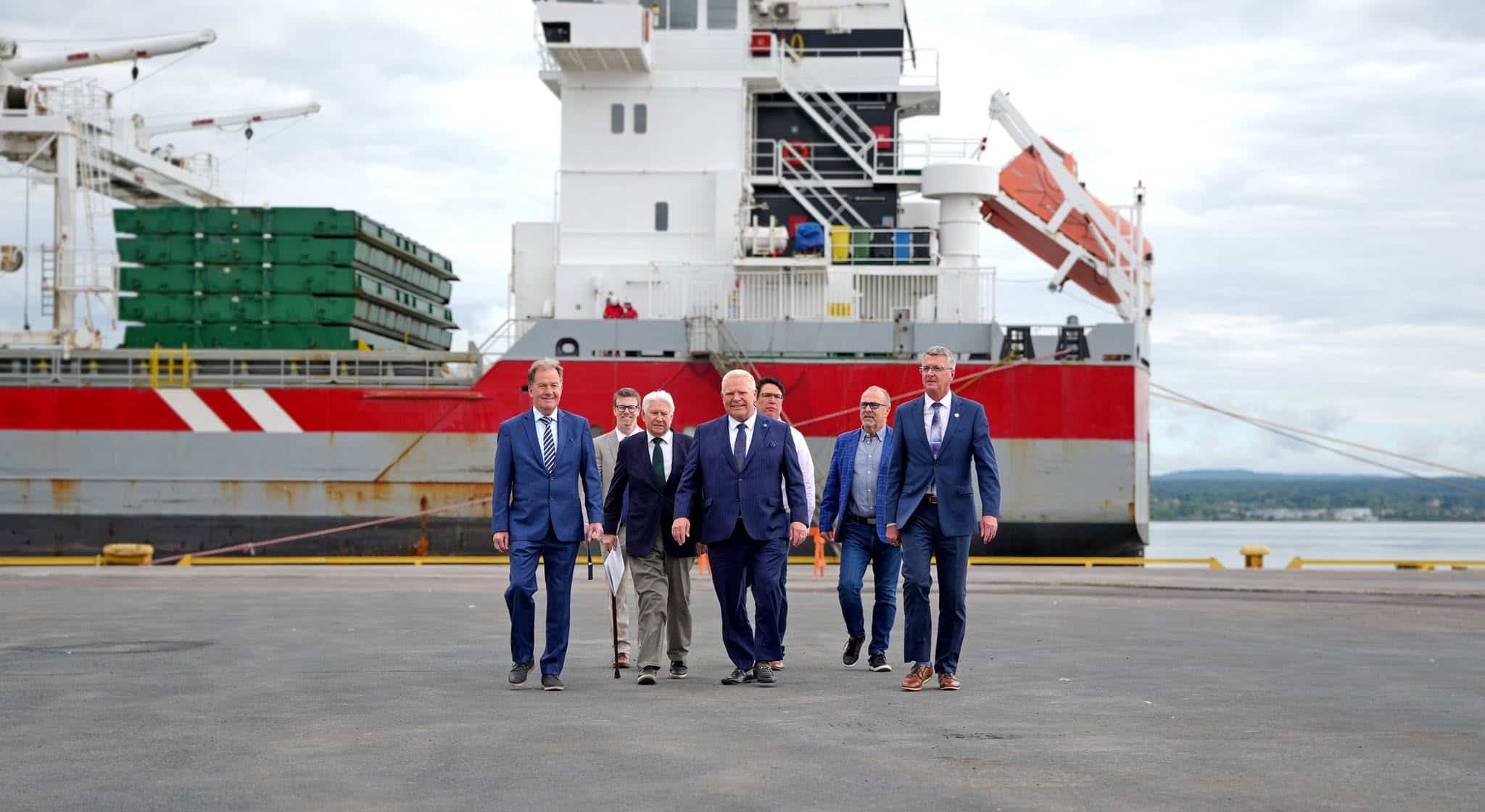
Premier Doug Ford announced on Friday that this funding will facilitate an expansion at the Port of Thunder Bay and help build a new marine terminal in Marathon. The province believes these projects will enable more efficient movement of goods across Canada and lessen dependence on U. S. markets.
The Thunder Bay Port Authority will receive $804,955 to enlarge the staging and storage area at Keefer Terminal by 10 acres. This added space should improve the terminal’s ability to manage wind turbine parts, steel products, and oversized cargo.
The province noted that this expansion will allow the port to handle greater cargo volumes, retain current business, and reinforce Thunder Bay’s status as a key transportation hub for both domestic and international trade.
In 2025, over 10.7 million metric tonnes of cargo passed through the Port of Thunder Bay, which included grain, potash, and natural resources. The port is situated at the western end of the Great Lakes-St. Lawrence Seaway system with connections to railways and highways serving mining, manufacturing, and forestry sectors.
The Peninsula Harbour Port Authority in Marathon will get $2 million to renovate unused commercial docks at the old Marathon Pulp mill site into a marine terminal. It’s anticipated that this facility will manage shipments of essential minerals, forest products, road salt, pipeline components, and wind turbine parts intended for southern Ontario as well as international markets.
Formed in 2020 through a collaboration between the Town of Marathon and Biigtigong Nishnaabeg First Nation, Peninsula Harbour Port Authority expects that the terminal will be operational by late 2027.
“By expanding the Port of Thunder Bay and creating a new marine terminal in Marathon, we’re helping Northern Ontario ports increase cargo volumes to ship everything from grain and potash to components for pipelines and critical minerals from the Ring of Fire,” Ford said in a statement.
This announcement comes as Ontario continues focusing on infrastructure initiatives designed to support northern industries while improving access to both domestic and global markets.
Recently, Ontario raised its annual funding for the Northern Ontario Heritage Fund Corporation to $110 million with an extra $30 million allocated over three years.
“The Town of Marathon has been working toward reactivating the Port of Marathon with a vision of unlocking economic potential in northwestern Ontario,” said Rick Dumas
Mayor, Town of Marathon, and President, Northwestern Ontario Municipal Association. “As the closest international port to the Ring of Fire, it’s positioned to assist mining, forestry, renewable energy efforts along with other resource industries throughout our region.”
“Upgrading the marine terminal to St. Lawrence Seaway standards will create new opportunities for moving Northern Ontario resources into global markets while revitalizing a previously derelict pulp mill site for better use benefiting both Marathon and Biigtigong Nishnaabeg.”
Source link