




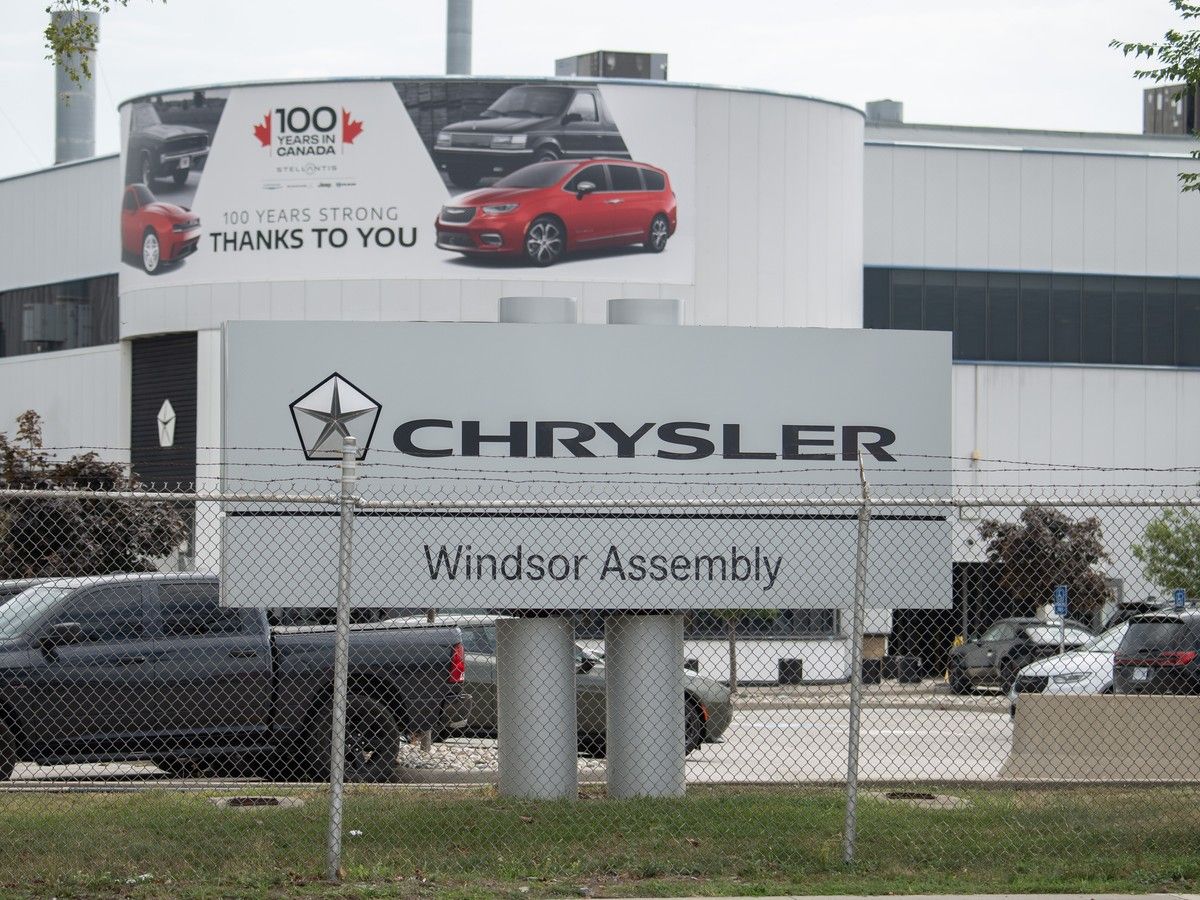
This month saw the U. S. trade war intensify just as Stellantis began negotiations with Unifor, but an insider in the auto industry believes it won’t significantly affect the Windsor Assembly Plant.
Despite President Donald Trump’s ongoing efforts to undermine manufacturing hubs like Windsor, two automakers from Detroit have recently made collective agreements that promise further investments in Ontario.
Ford Motor Company has pledged $500 million US for its Windsor facility over the next three years, alongside significant funding for Oakville. GM is also set to invest heavily in its plants located in Oshawa and St. Catharines.
As labour talks started this week, Stellantis informed the Star that these recent investments “reflect our confidence in Canada, our workforce and the long-term future of Canadian manufacturing.”
“The advantage for Windsor is that their products can’t be produced anywhere else,” said Sam Fiorani, vice president of global vehicle forecasting at Auto Forecast Solutions. “They can’t just shift Pacificas to a plant in the U. S.”
“Moving that vehicle to another plant would require billions of dollars. They would need to find a location capable of producing 150,000 units and then equip it accordingly. That’s a huge investment and takes time.”
Unifor Local 444 did not reply to a request for comment.
On Tuesday, Trump escalated his trade war by deciding to ban imports of various Canadian products including motorcycles, dairy goods and alcohol starting September 29. He claimed this was retaliation against Canada’s new tariffs on $27.6 billion worth of U. S. goods that went into effect at 12:01 a. m. Tuesday.
However, Canada’s actions were actually a dollar-for-dollar response to newly imposed tariffs ranging from 15% to 50% by Trump after trade talks between Canada and the U. S. broke down last month.
The tariffs from the U. S., which took effect in late August, impact around $20 billion worth of Canadian exports such as hockey sticks, beverages and apparel.
Trump has also threatened additional 50% tariffs on cars, trucks, auto parts and steel starting January 1.
“At this point, we’re still negotiating,” said Fiorani. “The Trump administration imposed their tariffs while Canada chose not to back down but instead push back. This puts Canada in a strong position for negotiations and gives Windsor along with other Canadian plants a chance for sustained operation at current levels.”
Frederic Pearson, a political science professor at Wayne State University described Trump as “a narcissist” and “colonialist” who is “constantly attacking.”
“He seems to think he has ownership over the Western Hemisphere,” Pearson stated. “He wants dominance here and expects allies to concede while giving him what he desires without realizing those relationships are reciprocal.”
Pearson noted that Trump negotiated the Canada-United States-Mexico Agreement (CUSMA), which he now claims is unfair.
“Now free trade isn’t sufficient,” remarked Pearson who also served as director of Wayne State’s Center for Peace and Conflict Studies. “He seeks controlled trade instead; he’s essentially disregarded his own agreement.”
The 50% tariffs introduced by Trump override certain rules within CUSMA (also known as USMCA). Thus vehicles qualifying under CUSMA aren’t exempt from these new tariffs.
CUSMA states that vehicles with at least 75% North American content shouldn’t face tariffs. Fiorani mentioned that the gas-powered Dodge Charger made in Windsor contains about 77% North American content while the Pacifica produced there uses roughly 90% North American parts.
“Finding a way to impose tariffs on that remaining 10% is still an option,” he added. “But according to USMCA guidelines, those vehicles should be tariff-free.”
Regardless of any backlash faced by Canada, standing firm against the U. S was necessary according to him.
“The alternative would have been simply rolling over which would’ve severely harmed Canada’s auto industry,” said Fiorani who operates out of Pennsylvania.
The CEO of Windsor-Essex Regional Chamber of Commerce Ryan Donally expressed concern saying an “escalating trade war” isn’t beneficial for either Windsor-Essex or Canada overall.
“However we understand where our government stands on this,” he mentioned. “The ideal scenario would be reaching a finalized trade agreement between our two nations that’s advantageous for both sides; we’re hopeful about it moving forward.”
Fiorani believes these new tariffs probably won’t disrupt ongoing discussions between Stellantis and Unifor since Ford and GM have already settled their collective agreements. Unifor aims to maintain its “D3 pattern” approach with Stellantis contracts similar to others secured previously.
Bearing this in mind though those recently agreed labor contracts won’t alleviate trade tensions between Canada and America according Fiorani’s view.
“They’ve already committed resources towards keeping jobs stable , maintaining current operations ,” he explained. “That goes against what Trump’s administration desires which focuses investments/jobs being directed into USA.”
Donally reiterated there are numerous incentives behind continuing investment into both Windsor & overall Canadian market despite existing tariff concerns.
“As pointed out earlier by Prime Minister – arrangements made with US President often appear provisional rather than permanent,” added Donally. “This uncertainty doesn’t give companies assurance they’re making sound decisions when entering partnerships/projects linked closely together across borderlines.”Source link