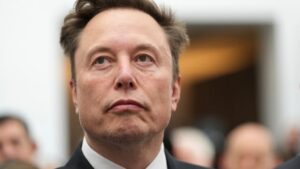


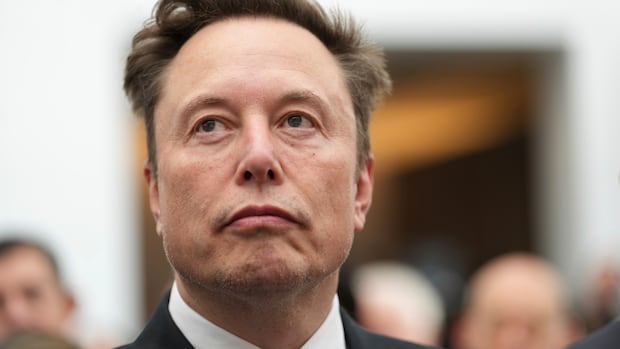
When Elon Musk suggested that Quebec, Alberta, and Saskatchewan should break away from Canada earlier this week, it might have just been the billionaire stirring the pot a bit.
However, according to one observer of Musk, he could have had a different agenda altogether.
“With Musk, there’s usually another layer to his actions,” said Quinn Slobodian, a professor of international history at Boston University and co-author of the book: Muskism: A Guide for the Perplexed.
Earlier in the week, Musk responded to a post on X that mentioned Parti Québécois premier-designate Paul St-Pierre Plamondon had expressed hope that his dream of independence “will be realized one day.”
‘Would be better off’
Musk replied: “Good. Quebec should separate.”
He added in another post: “They would be better off. Alberta and Saskatchewan should separate too.”
Cross Country Checkup is asking: What conversations are you having about the Alberta referendum with friends and family? Leave your comment here and we may read it or call you back for next Sunday’s show
Canadian tech journalist Paris Marx, host of the Tech Won’t Save Us podcast and a frequent critic of Musk, suggested people shouldn’t overanalyze his posts.
It might simply be Musk acting as a “right-wing troll who takes issue with countries he sees as more progressive or left-leaning compared to his own views,” Marx wrote in an email to .
@Polymarket Good. Quebec should separate.
-elonmusk
Musk’s comments were quickly dismissed by Alberta Premier Danielle Smith, Saskatchewan Premier Scott Moe, and Prime Minister Mark Carney. On Friday, Conservative Leader Pierre Poilievre also rejected Musk’s calls for separation.
WATCH | ‘Tweets and memes do not affect Canada’: Poilievre: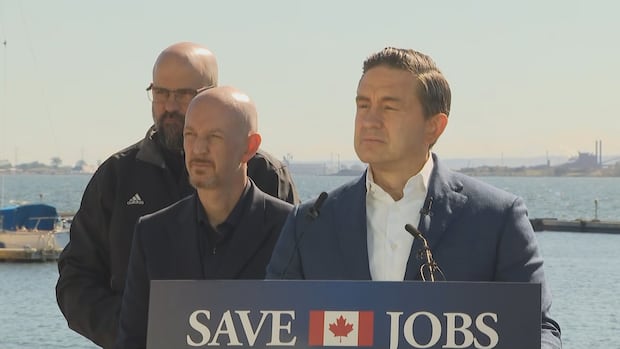
‘Tweets and memes do not affect Canada’: Poilievre responds to Elon Musk separatism comments
When asked if he worries about U. S. interference in Canada’s separatist movements, Conservative Leader Pierre Poilievre stated ‘we need to spend less time worrying about silly tweets from people who have no power over what Canadians do’ and instead focus on issues like affordability. He emphasized that memes don’t impact Canada; it’s Canadians’ choices that matter.
Marx noted that Musk seems to view separatist movements in Canada as a chance to undermine government credibility.
Still, Marx doesn’t think these posts were part of any strategic plan from Musk; he likely hasn’t considered what separation would mean for those provinces.
Instead, Marx believes the post regarding Quebec independence probably just popped up on his feed and he quickly shot off a response.
“Many people reply online without thinking,” Marx said. “Elon Musk’s replies get news articles written because he’s incredibly wealthy and influential.”
Musk is known as the world’s richest person and was dubbed the first-ever trillionaire; he was born in South Africa but holds Canadian-American citizenship.
‘Canada is not a real country’
Musk’s mother Maye is originally from Saskatchewan. He moved to Canada in 1989 where he studied at Queen’s University for two years before transferring to the University of Pennsylvania. His grandfather Joshua Haldeman led the Social Credit Party of Saskatchewan.
Musk has previously commented on Canadian matters too.
In 2025, he tweeted on X that “Canada is not a real country” after facing calls for his passport and citizenship revocation due to ties with U. S. President Donald Trump. This petition gathered over 375,000 signatures.
Musk also weighed in on Canadian politics last year when he criticized then-prime minister Justin Trudeau by calling him an “insufferable tool.” At the same time, he praised Pierre Poilievre.
WATCH | Carney responds to Musk: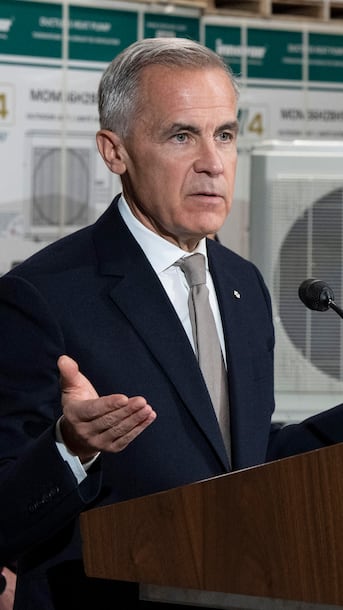
Carney responds to Elon Musk’s support for Quebec sovereignty
Prime Minister Mark Carney stated that Canada prioritizes being ‘free from interference from foreign governments and large tech firms that think they can tell us what to do,’ responding to Elon Musk’s remarks urging multiple provinces in Canada toward separation.
Slobodian indicated there’s an inherent dislike towards Canada’s policies among figures like Musk. p >
So when it comes down to separatism, “it’s like any enemy of Ottawa is a friend of mine,” Slobodian said. p >
Yet Musk has shown interest in political trends overseas, especially within Europe. For instance, he’s been outspoken in supporting the far-right anti-immigration Alternative for Germany (Af D) party. p >
According to an NBC News report from February 2025, Musk has encouraged right-wing political movements across at least eighteen countries as part of efforts aimed at reducing immigration and loosening business regulations. p >
Connection with far-right politics h2 > Slobodian believes there’s more than just coincidence between musk’s recent comments on separatisms versus ties with far-right parties within Europe. P >
As traditional parties throughout Europe face challenges from dynamic newcomers, Slobodian points out, that building relationships with them makes sense strategically. P >
“Then when they become ruling parties, you’ve got instant connections or partnerships,” Slobodian added. P >
He says musk perceives both EU and Canadian frameworks as hindrances towards achieving personal goals, suggesting disturbances might create opportunities beneficial for him along with product lines. P >
“I believe he’s trying to catch onto secessionist momentum early, so if it does happen, he gains some competitive edge,” Slobodian concluded. “And if nothing pans out? Then no big deal; it just fades away.” P>
Source link