


UPDATED April 21
Ontario is set to introduce a new law that will limit foreign ownership of farmland in the province.
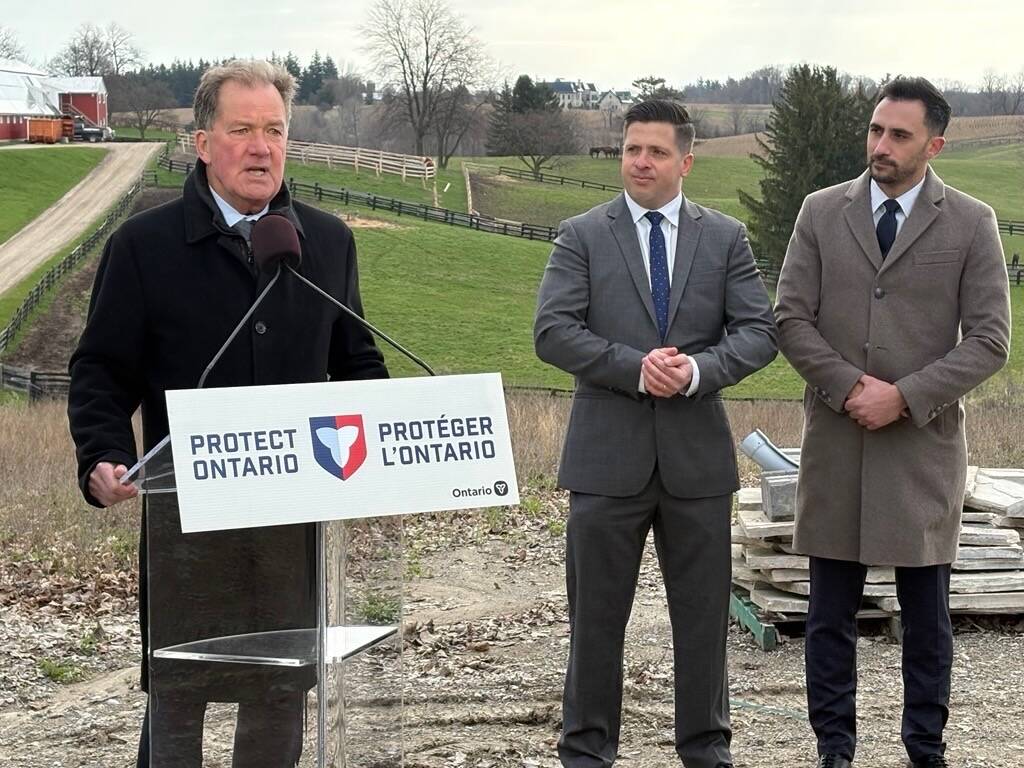
Trevor Jones, Ontario’s agriculture, food and agribusiness minister, announced this on April 21, 2026, in King City, located north of Toronto. He stated that if the proposed law passes, it would help Ontario become more self-sufficient amid trade disruptions and global uncertainties.
WHY IT MATTERS: Over the past decade, farmland prices in Ontario have risen significantly, partly due to speculation. There’s concern that some of this speculation might come from foreign buyers.
“Now more than ever we need to protect and grow our agri-food sector,” said Jones. “These proposed changes will safeguard local food production, boost our economy, and keep our farmland under domestic ownership for future generations.”
Read Also Ontario atta flour processor aims to disrupt in flour market
1847 Stone Milling’s Canadian-grown, Ontario-milled atta flour meets growing consumer demand for flours used in certain South Asian flatbreads.
Ontario minister of agriculture, food and agribusiness “Ontario farmland is an important, limited resource and it should be owned by Ontario farmers,” said Jones. He added that while there are anecdotal reports of foreign ownership happening already, the government wants to take action before it becomes a bigger issue. If foreign ownership increases too much, it could lead to food production land being left unused while profits go abroad instead of benefiting Ontario’s farmers and families.![]() MPPs talk with Jay Willmot, CEO of Haven Greens (back to camera), during an announcement in King City April 21 about restrictions on foreign ownership on farmland. Photo Diana Martin.
“What we can’t have is someone just land banking,” he stressed. “I don’t want our farmland, our farm systems, production areas to be some ledger line on some company overseas balance sheet.”
The area from Southern Ontario through the Holland Marsh contains some of the best agricultural land worldwide, according to Jones.
MPPs talk with Jay Willmot, CEO of Haven Greens (back to camera), during an announcement in King City April 21 about restrictions on foreign ownership on farmland. Photo Diana Martin.
“What we can’t have is someone just land banking,” he stressed. “I don’t want our farmland, our farm systems, production areas to be some ledger line on some company overseas balance sheet.”
The area from Southern Ontario through the Holland Marsh contains some of the best agricultural land worldwide, according to Jones.
“This aligns with our vision toward extending Northern Ontarian agricultural footprint alongside enhancing economic diversification competitiveness,” remarked Pirie adding “As stated earlier; ‘Ontario has what world needs.’”![]()
Source link
Joining Other Provinces
The province mentioned that this legislation will align Ontario with other Canadian provinces like Alberta and Quebec by establishing “significant” restrictions on foreign ownership of farmland. They plan to consult with farmers, municipalities, and industry stakeholders regarding implementation and exemptions. “I don’t want our farmland, our farm systems, production areas to be some ledger line on some company overseas balance sheet.” Trevor JonesOntario minister of agriculture, food and agribusiness “Ontario farmland is an important, limited resource and it should be owned by Ontario farmers,” said Jones. He added that while there are anecdotal reports of foreign ownership happening already, the government wants to take action before it becomes a bigger issue. If foreign ownership increases too much, it could lead to food production land being left unused while profits go abroad instead of benefiting Ontario’s farmers and families.
A Wider Economic Perspective
Stephen Lecce, minister of energy and mines as well as MPP for King-Vaughan said that protecting elements like the Oak Ridge Moraine and the Greenbelt is crucial for producing nutritious food for Canada. “We are in a broader economic war; when building resilience comes into play we’ve got to produce more locally and rely less on Americans or others,” said Lecce. “King Township is a producer as well as an exporter and innovator like much of our province.”Haven Greens as an Example
Lecce highlighted Haven Greens as “the ultimate case study” showing how all three aspects intersect. The site includes horse breeding operations along with an apiary and a rapidly expanding facility dedicated to pesticide-free leafy green production that caters to Canadian produce needs. Its one-to-forty-acre ratio on class five farmland has already surpassed its original target model aimed at increasing local greens production for better food sovereignty. “We’re all on the same mission,” Lecce noted. “Which is ensuring our farmers are protected; keeping our land secure in Canadian hands benefits Canadian families.” OFA Looking Into Legislation Impact Drew Spoelstra president of the Ontario Federation of Agriculture remarked it’s early days yet regarding understanding how this proposed legislation might affect things but emphasized keeping farmland under farmer control remains their priority. <p“I think (the Ontario government) saw this as a priority aligning with other provinces," Spoelstra shared with Farmtario. "Given current times’ significance around putting Canada first." The OFA membership has raised concerns over Chinese investments in Ontarian farms among other nations but hasn’t prioritized it heavily thus far. Spoelstra mentioned further study is needed about how this legislation could impact farming here but believes keeping “land in the hands of farmers who are based here in Ontario – I see that positively impacting the industry.” Clay Belt Expansion Announced The government also revealed plans aimed at boosting agricultural productivity in Northern Ontario by making access easier for Crown land within Clay Belt region available for leasing purposes. This initiative should unlock fresh agricultural opportunities by simplifying processes which could create jobs while reinforcing both food security along with production within the province itself. George Pirie Minister responsible for Northern Economic Development claimed Clay Belt holds great potential suited towards agricultural investment growth hence why they aim at reducing existing barriers hindering progress there.“This aligns with our vision toward extending Northern Ontarian agricultural footprint alongside enhancing economic diversification competitiveness,” remarked Pirie adding “As stated earlier; ‘Ontario has what world needs.’”
Source link