
Want to bookmark your favourite articles and stories to read or reference later? Start your Independent Membership today.
Join today
Already a member? Log in
Who would have thought that Trump would get so worked up over a law that’s been around since Abraham Lincoln was president?
I certainly didn’t expect it when I showed up at the White House this morning.
I was there as part of what the Trump administration calls the “secondary print” component of the White House press pool, which includes a rotating selection of news outlets invited into the Oval Office for events. Typically, I’m assigned as the “print pool” reporter about once a month, where I provide brief updates on what happens in the Oval Office or any other event attended by the president.
This time, my role was solely to ask questions. I had prepared a list after discussing with my colleagues back in New York, but then decided to switch things up when I learned that Trump and Vice President JD Vance were set to announce a new program and “tip line” offering bounties up to $30,000 for “whistleblowers” who expose what they deem as “fraud.”
That’s when I found myself on the receiving end of Trump’s ire.
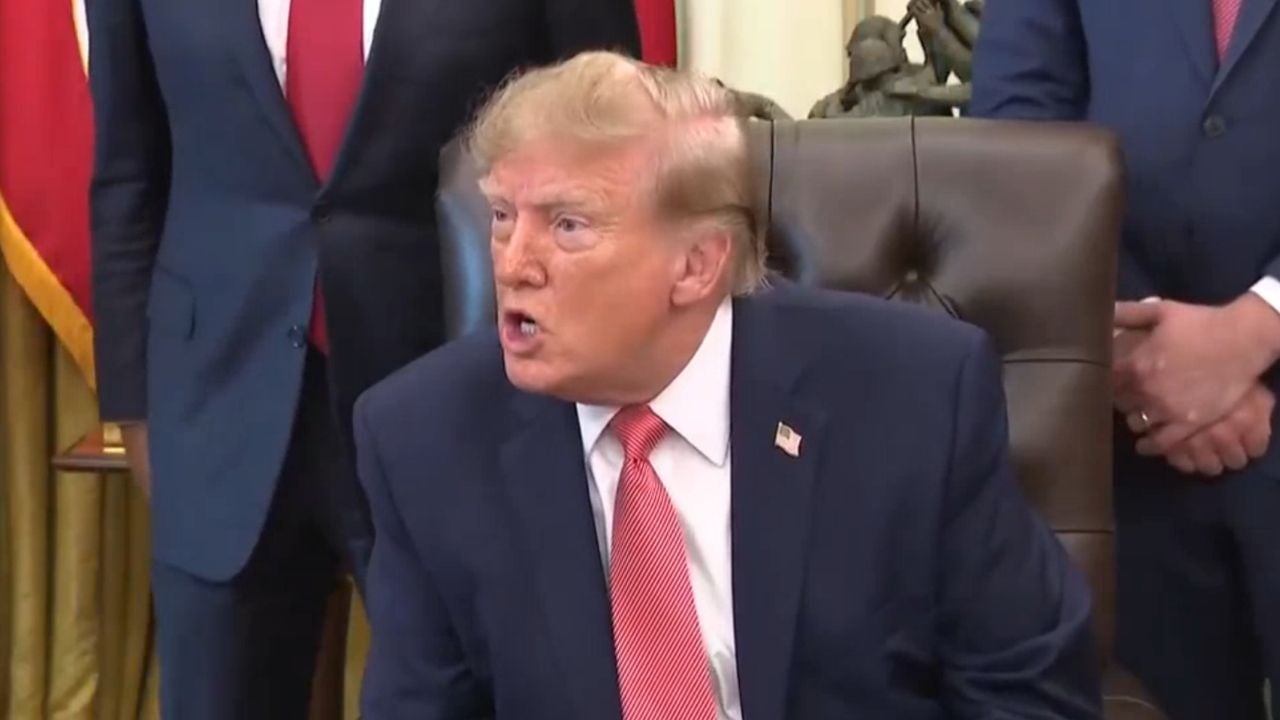
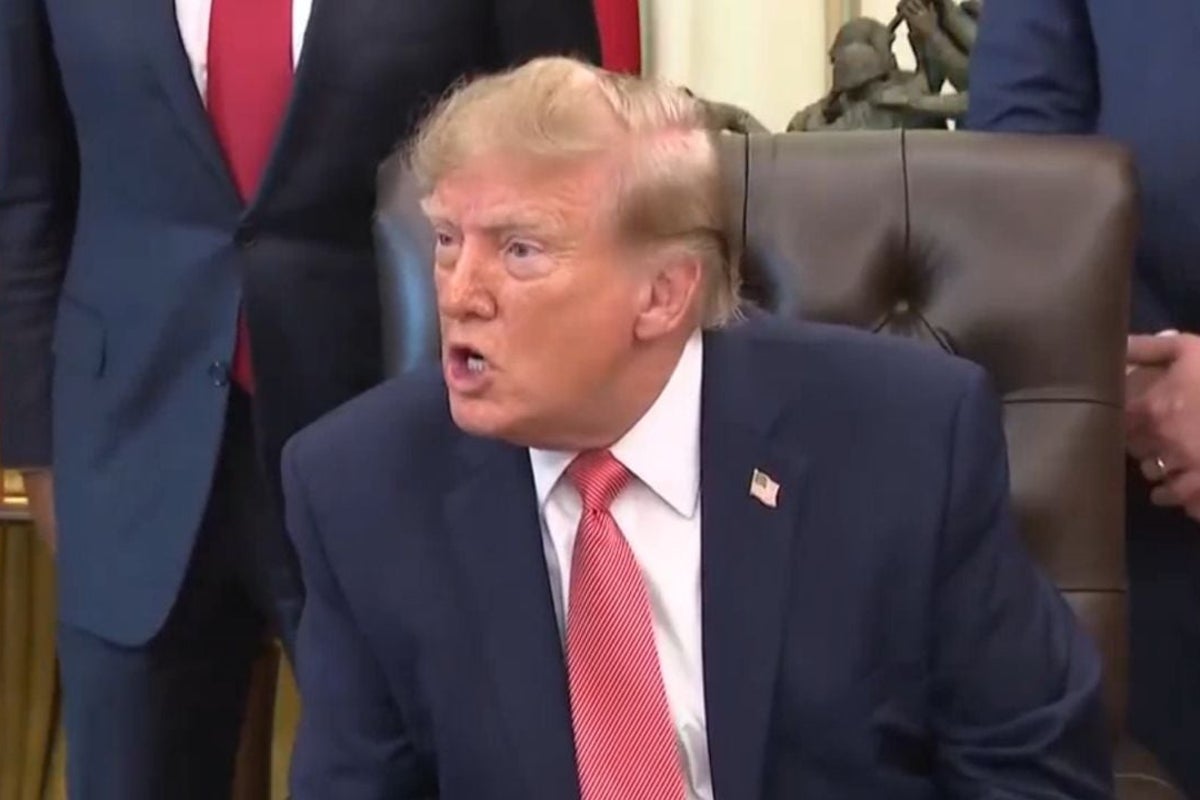
President Donald Trump turned a White House event on its head unleashing his anger on me and The Independent for asking questions (Reuters)
For simply doing my job, I became a target for Trump and his team. Shortly after, he gave me a lecture and directed his White House rapid response team to call me a “Mongoloid Moron”-a derogatory term aimed at those with developmental disabilities-a phrase I would never use. The Vice President even labeled me an ‘imbecile’ from his official government account.
All this happened during an event that began quite ordinarily. White House officials planned to present Nick Shirley-a right-wing You Tuber whose viral videos helped spark an administration campaign against daycare and home health care businesses owned by Somali-Americans-with an award. Surprisingly, Trump, Vance, and even Shirley acted like rewarding whistleblowers was something entirely new for this administration; Shirley claimed there had “never been an incentive for anyone to ever expose fraud” throughout U. S. history.
Having spent much of my career covering federal government matters, I’m aware there’s already an established method for rewarding whistleblowers-it seemed clear that Shirley-and others-were mistaken about this issue.
Since 1863, there’s been something called the False Claims Act that allows whistleblowers to sue on behalf of the federal government to recover funds lost due to fraud against federal programs. This law can actually offer people more than what Trump suggested through his new program.
These lawsuits are known as qui tam cases and often involve Medicare and Medicaid fraud similar to what this administration claims it is addressing. Unlike Trump’s stated 1 percent reward potential for whistleblowers, under the False Claims Act someone can receive up to 25 percent of whatever amount is recovered by the government.
The process isn’t easy; it’s complex and requires legal help-but it can lead to significant payouts at completion. In contrast, Trump’s new initiative seemed far less appealing-and left him rather than federal judges deciding who deserves any rewards.
So why would anyone opt for using this administration’s “tip line” instead of pursuing more lucrative options available through tried-and-true methods established since Lincoln’s era?
I asked him just that. His answer? “Because it’s a lot of money.”
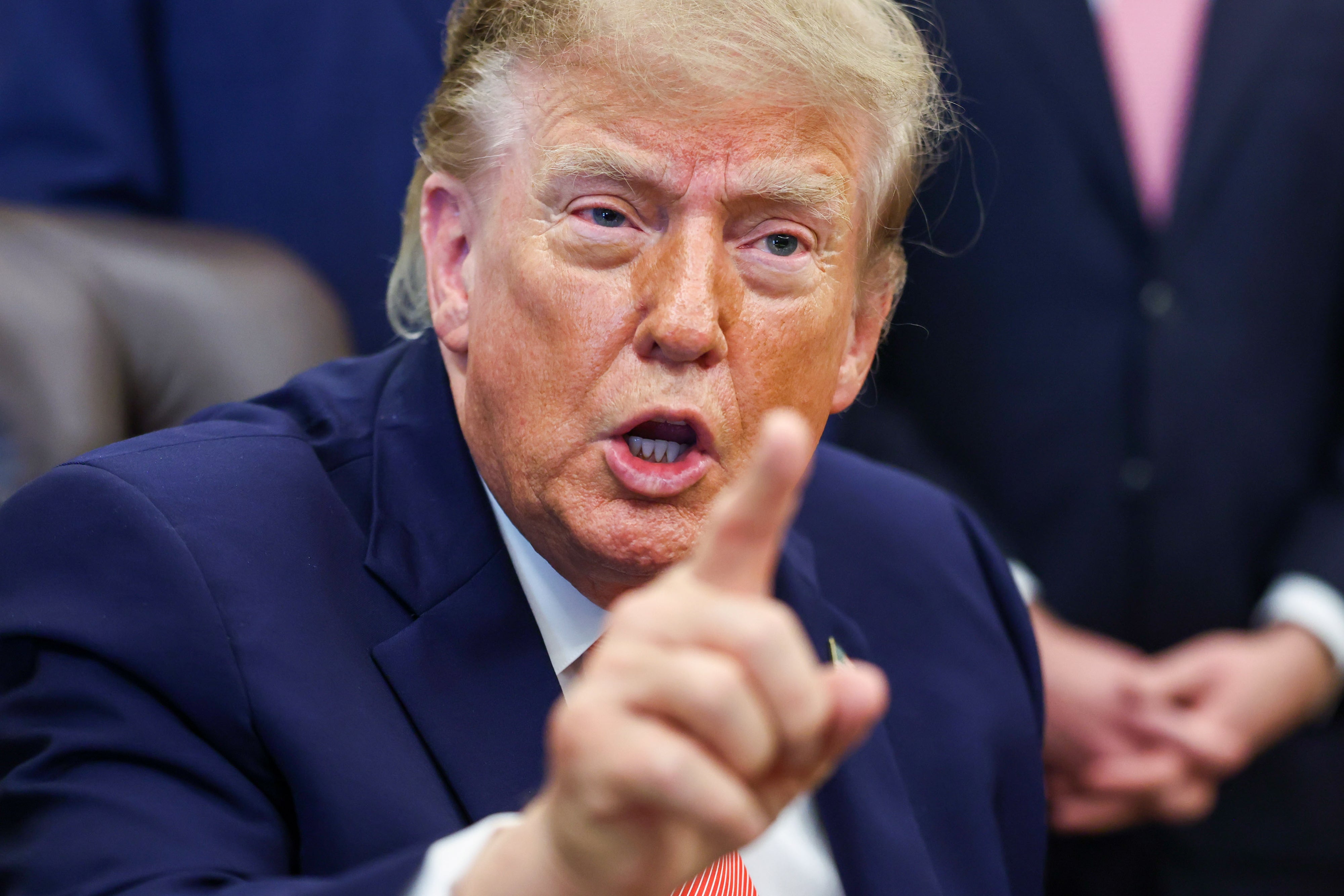
Trump was asked about his plan to pay people to snitch on government fraud; he then focused on me for most of the event (Bloomberg via Getty)
“At 1 percent, people will make millions and millions of dollars for turning in what actually is somewhat routine crime involving millions,” said Trump while possibly misunderstanding my question or not realizing that ten-to-twenty-five percent is way more than one percent.
While Trump might not have understood my question clearly enough, Vance did-and he jumped right into defense mode. We’d previously clashed months ago in the briefing room regarding Trump’s stock trading when I’d questioned him about it too directly-clearly still irked by earlier remarks from both sides.
Sensing some tension from Vance’s rebuttal caused by feeling overshadowed by him during our exchange before calling out “Who are you?” felt odd since he’d acknowledged me earlier with a wink as Vance spoke.
I’ve covered him countless times across various settings including Air Force One over many years-we’ve even spoken multiple times over phone calls before now!
This latest confrontation prompted him again: “Who are you?”
</blockquon
I identified myself saying I’m Andrew Feinberg from The Independent.</blockquon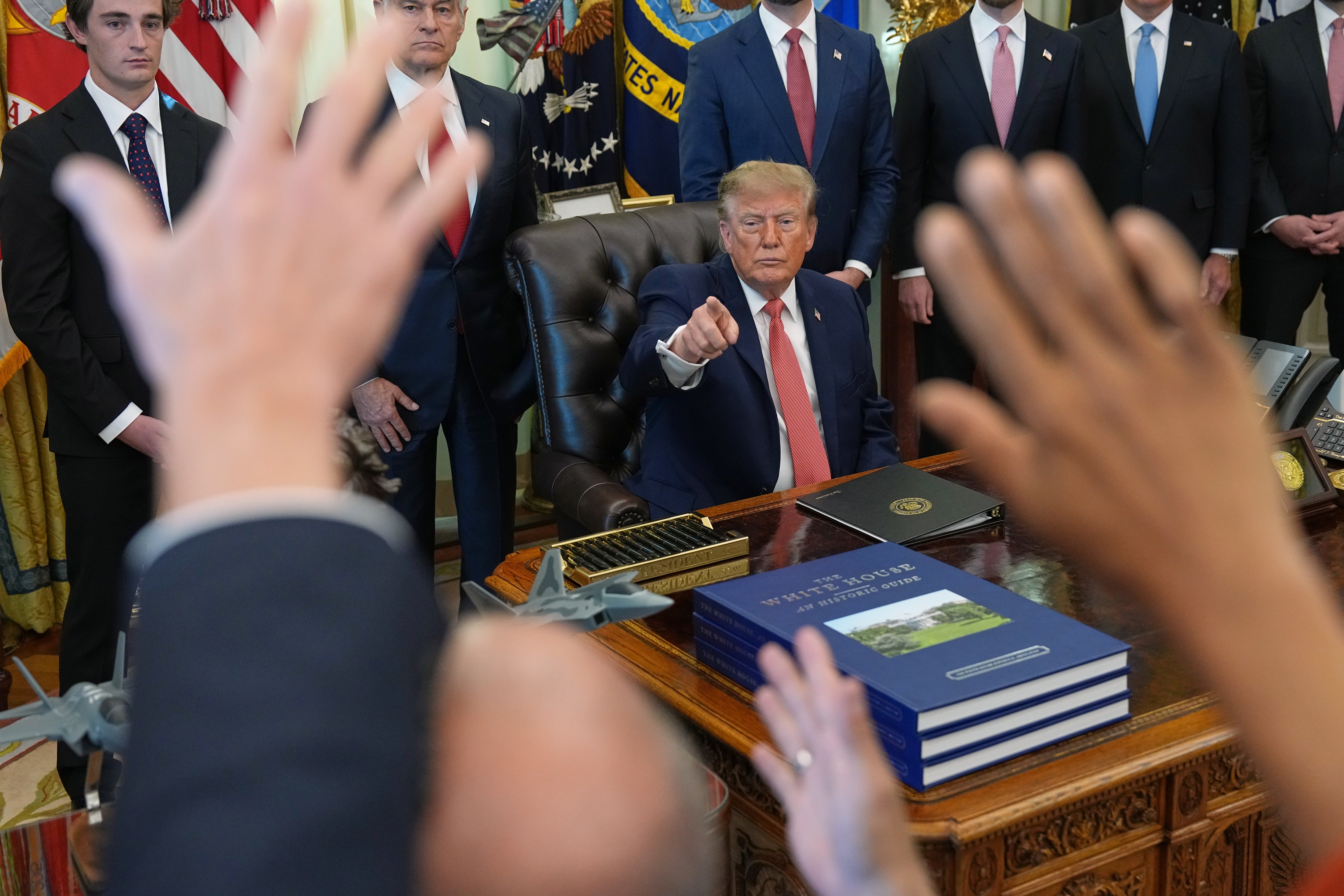 Trump ended his press conference after losing control telling me ‘be quiet.’ But I’ll be back tomorrow (AP Photo/Jacquelyn Martin)
</blockquon
As our discussion continued onward-I tried pushing forth further inquiries based upon prepared notes-including questioning plans concerning renovations happening at D. C.’s popular golf course-but continually found myself amidst another wave filled with furious responses from none other than himself!</blockquon
A few times I noticed seemingly directed gestures towards myself but only later realized he intended focusing toward Agence France-Presse situated directly behind where I’d stood placing emphasis repeatedly seemingly intentionally towards us both! So naturally assuming intent…I attempted interjecting thoughts accordingly! …And boy did THAT set off fireworks!</blockqou`n
/span<snn cd = "A’$b Cis Ml$$@^’dd’ &get=$(B3^^;5F)$. d#r*GQs’5})b Ew38$%v$x B$y)s'(KX#*u Ptvb‘Zt01o40) ~V3$NGD=8GF)_/H2*(Rm)|.`%k Ow/z&Le A9^:`Zz4R+R[t]$.am\k@W`d*6s$l*t[ld2}M: Rt/<““`