


Oshawa has the largest homeless population in Durham Region, according to regional data, and as the race for mayor heats up, homelessness in the downtown area has become a key topic of discussion.
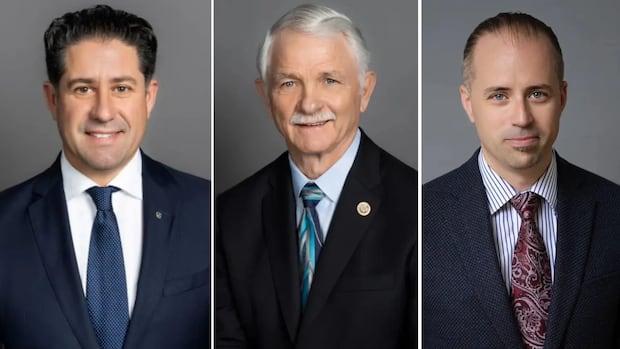
Here’s how three city councillors running for mayor say they would handle this issue, along with expert opinions on their proposals.
Derek Giberson
Coun. Derek Giberson, who represents Ward 4 that includes downtown Oshawa and previously served as president of the social service organization Back Door Mission, has consistently stated that housing is essential to solving homelessness.
His plan involves collaborating with non-profits to create mixed-income housing, utilizing federal resources like the National Housing Strategy, and acquiring properties designated for supportive housing.
WATCH | Front-line workers on homelessness, addiction and the Oshawa election:
Oshawa’s addiction crisis: 3 experts with solutions for the next mayor
Three individuals working directly with Oshawa’s issues related to homelessness and addiction share their daily experiences and what they require from the future mayor to improve conditions.
Giberson has also promised to shift funding from managing homelessness toward preventing it, arguing that prevention ultimately saves money over time.
Tyler Frederick, an associate professor of criminology at Ontario Tech University who researches homelessness, supports Giberson’s reasoning with economic data.
Costs associated with emergency services such as hospital visits or shelter stays can accumulate quickly; Frederick refers to emergency rooms as “shockingly expensive.”
Coun. Derek Giberson, whose ward covers downtown Oshawa, has pledged to work with non-profits to build mixed-income housing. He’s repeatedly called housing the solution to homelessness. (Susan Goodspeed/CBC)
Trish Lenz, an assistant professor at York University’s school of social work, acknowledged that leveraging federal housing programs is vital but emphasized that simply building structures doesn’t solve all problems.
“Who pays for the ongoing maintenance of the building and operation of the support?” she asked.
Additionally, Giberson committed to partnering with addiction service providers to enhance capacity and reduce wait times.
Nick Cristiano, assistant professor and program co-ordinator of Trent University’s policing and community well-being program at Durham warns that delays can hinder recovery chances significantly.
“In six months, they might have changed their mind; they might be in a totally different state and [are] no longer open to receiving treatment,” he noted.
Jim Lee
Coun. Jim Lee from Ward 2 believes people need safe shelter along with comprehensive support before they can begin healing from issues like addiction or mental health problems.
While he doesn’t explicitly label it this way, his approach aligns closely with what Cristiano described as a “housing-first” model.
“The idea is once you have a stable home, everything else can follow,” he said.
Lee aims to utilize surplus city land for supportive and modular housing while applying municipal tools such as zoning changes or development-charge waivers to expedite construction processes.
Frederick mentioned that “all kinds of housing … are basically good kinds of housing,” but cautioned that modular units need detailed planning regarding location and on-site staff in order for them to succeed within neighborhoods effectively.
“You can’t just kind of plop the container down on an empty lot and expect it to be successful,” Frederick explained further; previous modular projects in Oshawa have met community resistance.
WATCH | CBC’s Durham reporters break down Oshawa’s mayoral race:
Oshawa’s mayoral race is wide open. CBC’s Durham team gives you a primer
Nine candidates are competing for your vote this October in Oshawa. Here’s where they stand on significant city issues.
Lee also promises advocacy at Queen’s Park seeking funds dedicated towards treatment options alongside supportive housing initiatives noting how municipalities have been left managing drug crises without adequate funding. P
Frederick concurs stating inadequate provincial healthcare & addictions systems result forcing individuals into shelters or public spaces leading cities spending more resources maintaining local facilities needing bylaw officers too often.”
Tito-Dante Marimpietri H2 >
Tito-Dante Marimpietri , regional & ; city councillor representing Ward 2 , proposes establishing formal collaboration frameworks ensuring accountability among various stakeholders including governments & ; service providers. P >
Marimpietri introduced his five-point framework targeting homelessness recovery featuring these focus areas :
Identifying root causes contributing towards reducing rates Improving mental health treatments Coordinated approaches linking available supports Providing secure living environments Ensuring pathways leading back into employment opportunities
Experts agreed enhanced coordination matters however questioned if anything about Marimpietri’s proposal adds unique value compared existing efforts already underway regionally. P >< P CLASS = "PARAGRA PH-B 9 G X D HT ML- PARAGRA PH "I’m not sure what he’s proposing is sort new stuff never been tried before,Frederick commented adding aligning multiple priorities remains challenging across differing governmental layers. P >WATCH | This Oshawa youth centre launched an affordable housing project last year:
How an Oshawa shelter aims t o assist at-risk youth p>A youth shelter located within Oshawahas initiated a new affordable accommodation project designed provide stable homes its vulnerable residents CBCs Christian DAvino conversed several youths team behind endeavor learn more details
Lenz expressed concern merely coordinating services alone fails truly increase overall available offerings overall.
When discussing public safety concerns M arimpietri underscored importance balancing needs those facing vulnerabilities versus rights businesses residents feel secure.
Cristiano emphasized clarifying what exactly constitutes public safety-whether it refers clearing encampments visible signs homelessness instead actual underlying social problems present causing them initially arise.
He suggested focusing efforts addressing core societal economic factors leading many situations surrounding street dwelling naturally results bettering overall sense communal security experienced thereafter moving forward.
Lenz viewed Ma rim pietri s initiative positively yet pointed out absence crucial perspective needed input voices belonging individuals actually experiencing struggles first hand daily basis. p >
What plans overlook <P C LASS =' PAR AG RAP-HBIX-GXDPARG RAP-HHTML PAR AG RAP-HBLEN Z VOICED HER DISAPPOINTMENT REGARDING NONE MAYORAL CANDIDATES ADDRESSED NECESSITY IMPROVING PROVINCIAL INCOME SUPPORTS SUCH AS ONTARIO WORKS O R DISABILITY ASSISTANCE PROGRAMS
L ENS ADDED IF YOU’RE UNABLE PAY RENT MAINTAINING HOUSING THERE WILL ALWAYS BE HOMELESSNESS CLAIMING EXISTING SOCIAL ASSISTANCE LEVELS WHOLLY INADEQUATE.
In September spokesperson Rob Flack Ontarios municipal affairs minister stated recent investments made addressing mental health challenges cycle dependency while providing municipalities necessary tools tackle pressing issue around developing sustainable communities based supporting environments. i >
Nick Cristiano noted worry none current sitting councilors emphasizing harm reduction options within campaign agendas submitted so far submitted until now.
Meanwhile Cristiano raised concerns specifically mentioning neither candidate platform highlights much attention focused necessary aspects reduction strategies critical minimizing overdoses incidents taking place worsening situation affecting vulnerable populations involved every day lives happening today because current policies lean heavily toward treating only those ready participate treatment options despite many who still aren’t there yet whereas harm reductions strategies allow safe alternatives decreasing fatal outcomes potentially associated occurring visible substance usage thus hopefully creating outreach channels able refer people transitioning towards needed services when prepared enough ready engage further beyond basic survival stage altogether latter thought becoming part community success story transitions safely through difficulties faced every day navigating life circumstances encountered presently right now.