



You’re reading Dispatch Markets, a weekly newsletter on economics featuring Scott Lincicome, Kyla Scanlon, Karl Smith, Marian Tupy, and Adam Ozimek. To access more Dispatch reporting and analysis, become a member today.
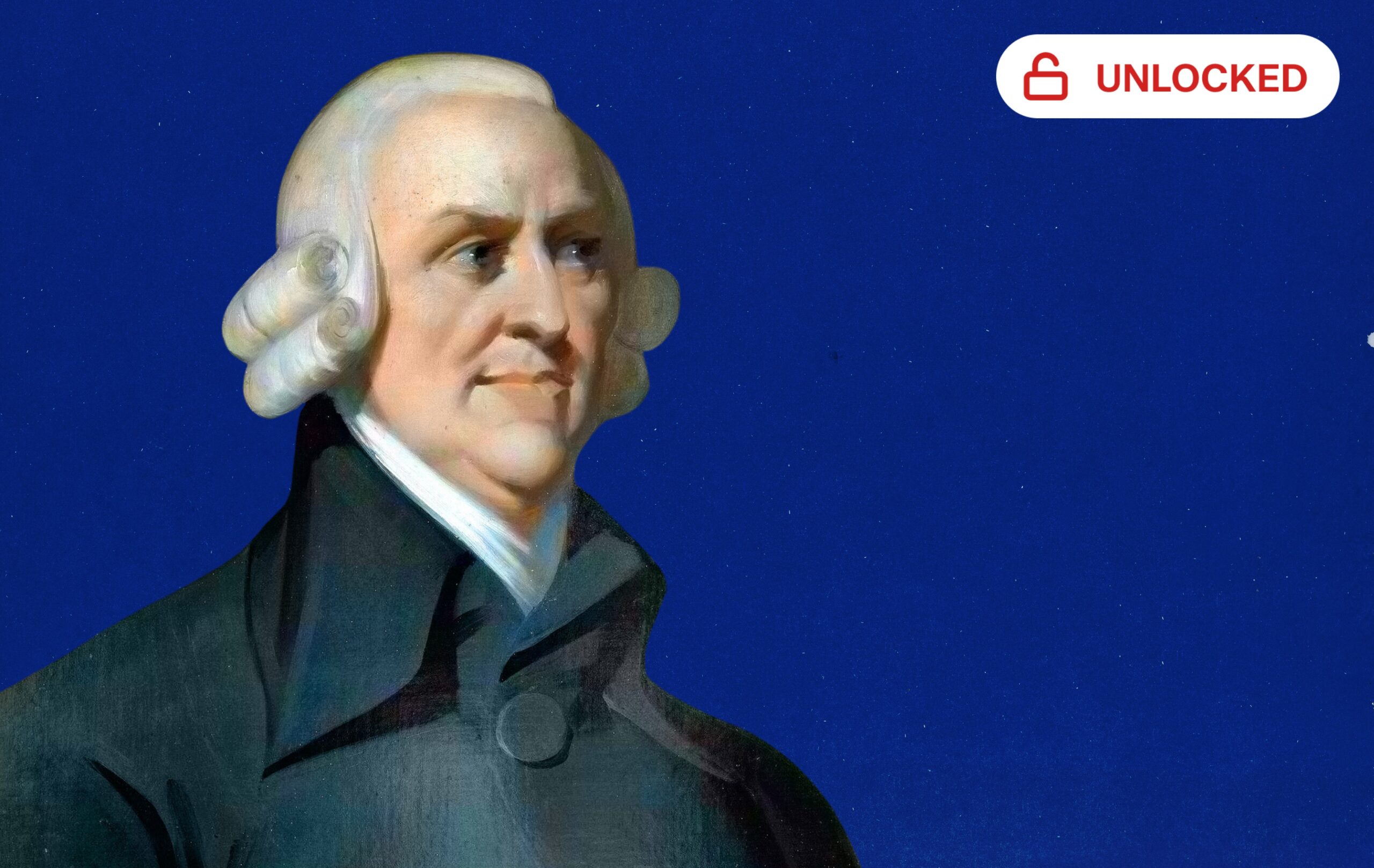
On Tuesday, I had the honor of delivering the 2026 Lev Dobriansky Distinguished Lecture in Political Economy at George Mason University. In celebration of the 250th anniversary of both the Declaration of Independence and Adam Smith’s influential book, The Wealth of Nations, I was invited to discuss how Smith’s ideas still shape U. S. public policy, particularly in trade and protectionism. This will serve as a written version of that lecture.
Three quotes from this classic capture some of Smith’s most important political concepts-showing him not just as an economist from the 18th century but also as an insightful political theorist whose words could easily apply to Washington today rather than Scotland over two centuries ago.
‘A conspiracy against the publick.’
The first quote might be one of Smith’s most recognized statements regarding politics and policy; however it’s often misinterpreted. In Book I of The Wealth of Nations he wrote:
People of the same trade seldom meet together, even for merriment and diversion, but the conversation ends in a conspiracy against the publick or in some contrivance to raise prices. It is impossible indeed to prevent such meetings by any law which either could be executed or would be consistent with liberty and justice. But though the law cannot hinder people of the same trade from sometimes assembling together, it ought to do nothing to facilitate such assemblies; much less to render them necessary.
The often-overlooked second part makes it clear that contrary to many contemporary interpretations, Smith isn’t advocating for government antitrust actions against private businesses meeting up. Instead he’s emphasizing a point about political economy: since industries tend to focus on boosting their own profits at consumers’ expense (by charging higher prices), government should avoid encouraging such gatherings.
Yet this is exactly what U. S. trade policy does-and has done for hundreds of years now.
Stay ahead of policies shaping free enterprise and affecting American business.
Get the U. S. Chamber’s free newsletter for insights on economic policy trends affecting businesses and markets.
By subscribing you agree to receive communications from the U. S. Chamber of Commerce.
In early America (when government was quite small), tariffs served mainly as tools for generating revenue while providing “rents” to businesses that successfully organized lobbying efforts for them. The famously named Tariff of Abominations (1828) was largely influenced by Northern textile manufacturers and iron producers. Following the Civil War era ushered in a peak time for tariff rent-seeking where various sectors like iron, steel, wool, and sugar essentially dictated U. S. tariff schedules themselves. As I’ve detailed through research at Cato along with Dartmouth historian Douglas Irwin’s thorough examination in Clashing Over Commerce , 19th-century tariff lobbying laid much groundwork for today’s extensive lobbying landscape in America-all starting when American trade policy was openly auctioned off to whoever bid highest.
Offer up those rents? Then expect folks will go after them.
The heightening cronyism surrounding congressional tariffs reached its peak with Smoot-Hawley Tariff Act in 1930. As economic historian Phillip Magness pointed out , tariff-loving Republicans gave industry lobbyists another chance at price-inflating import protections; these lobbyists swarmed Congress: “Special interests flooded committee rooms exchanging cash under-the-table for favorable rates so they could shield themselves from foreign competition during [the ongoing economic] downturn.” Almost every group got its own specific tariff line item resulting in average rates nearing 50 percent-which triggered retaliatory measures deepening what became known as Great Depression.
To counteract this trend Congress enacted Reciprocal Trade Agreements Act (RTAA) in 1934 aiming to limit its influence by assigning authority over negotiations around tariffs back into executive hands-a move that likely would’ve pleased Adam Smith. This approach aimed at minimizing corporate rent-seeking behavior within Congress by shifting tariff rate-setting away from legislators’ oversight while encouraging exporters’ voices helping balance protective interest groups via new market openings abroad conditioned upon keeping import channels open domestically.
That reform worked-for some time. Legislated rates went down significantly while corruption around tariffs reduced overall activity levels during that era too; however America’s lobbying machine didn’t vanish-it simply adapted itself according to newer forms offered up through governmental initiatives. By 1960s things gained solid legal reinforcement through Noerr-Pennington doctrine established via multiple Supreme Court rulings stating joint corporate efforts aimed towards securing favorable policies-even if explicitly anti-competitive-were constitutionally protected First Amendment activities hence immune from antitrust repercussions. While defendable based upon First Amendment grounds (and arguably aligning with what smith saw regarding “liberty & justice”), this effectively endorsed corporations’ organized “conspiracy against publick”-as long they conspired within D. C instead outside boardrooms p>
And so we see modern-day complexities surrounding lobbying machines enabled by Noerr-Pennington have grown vast & effective. Cato researchers Clark Packard & Alfredo Carrillo Obregon demonstrated last year how “Big Steel” comprising American Iron & Steel Institute plus union representatives have scored protective measures exceeding other sectors across USA. Far being satisfied each measure taken merely fueled demands further prompting huge influxes requests since past decade wherein ex-steel executives along lawyers landed numerous high-ranking positions throughout federal agencies.
Now let’s talk about “Big Sugar,” functioning like textbook example legal cartel backed primarily due governmental price supports & quotas everyone knows remains financially disastrous despite knowledge within D. C yet growers remain concentrated among few electoral swing states forging alliances corn farmers benefiting derived sweeteners replacing sugar cane production altogether given previous context. Even former House Speaker John Boehner commented memorably expressing fellow congressmen quickly discover reality concerning terrible consequences behind sugar-policy combined succinctly stating not worth upsetting Big Sugar. These entities aren’t alone! Another case would be Big Dairy who lobbied effectively gaining tariff-rate quotas alongside marketing orders setting boundaries protecting local markets contributing towards crisis witnessed recently involving infant formula availability issue last year similarly coalition known collectively termed Big Ship-encompassing unions alongside shippers preventing significant reforms associated Jones Act perpetuating costs ballooning upwards four-five times compared world averages even whilst crude oil travels distances sourced Saudi Arabia/Nigeria rather than Texas directly thus exposing deeper inefficiencies brought forth regulatory practices observed currently.
The moment you scratch surface beneath virtually any product safeguarded through unique barriers imposed today-from textiles/apparel/shrimp/catfish/tomatoes/aluminum/lumber/kitchen cabinets-you’ll uncover organized interests actively pursuing agendas aligning precisely where observed originally by smith back way back then !
Even more ironically far remove concealing their conspiracies these organizations parade boldly flaunting intentions out there:
‘The most suspicious attention.’ h3 >
Second quote maintains focus recognizing direct influence exerted corporately acknowledging responses emerging publicly revealing expectations concerning legislative challenges posed. Here again comes another line appearing within Book I : Interest dealers…specific branches commerce usually differ substantially oppositely aspect touching upon needs/pursuits communities concerned … Thus proposal introducing fresh laws/regulations must carefully examined responded particularly keen awareness possible repercussions before passing considering scrutinized cautionary lens.
As indicated above quote highlights challenges facing rational ignorance impacting voters/consumers disincentivizing obtaining vital info intricacies behind commercial legislation owing fact personal costs seem lower whilst burdens incurred gathering information feel overwhelming; insiders/dealers possess accurate knowledge therefore engage diligently obscuring protectionist motives embedded within unreadable regulations thereby leaving decision-makers prone favoring commercial interests over general populace ; hence need arises intense skepticism scrutiny continuing evade politicians cronies alike! History serves reminder illustrating problems identified earlier amply! For instance Smoot-Hawley’s staggering figure exceeding twenty-thousand distinct items adjusted mostly committees without extensive deliberation inviting diverse industry insights scarce opportunities exist explore alternatives available outside typical floor debates! Today countless peaks remaining existence traces directly descended trail left smoot-hawley having survived decades reforms undiscovered unnoticed indicating shortcomings present congressional amendments targeting provisions intended ensuring fair-trade rules favored larger players responding solely benefiting steel constituents whereas repeals remain difficult incurring factors hindering implementations evident gradual pattern witnessed broader scope analyzing complex existing regulatory framework focused protecting vested interests rather simply representing overall welfare population writ large; Furthermore Byrd Amendment snuck quietly amid major omnibus appropriations bill introduced around year two-thousand requiring antidumping duties paid companies requesting petitions incentives further extending roots initial framework founded originally lacks thorough transparency allowing unchallenged persistence defined problematic realms influencing outcomes observed across agricultural spheres exemplified farm bill/biofuels policies widely adopted ! Ultimately leads us once again witnessing current environment dominated political patterns making way increasingly harder repeal historically ingrained protective regulations universally recognized costly failures nonetheless endure numerous variants upheld persistent beneficiaries resolutely resist losing advantages fighting retain losses carried forth achieving little improvement amidst greater societal contexts proving detrimental statewide reinforcing walls fortifying strongholds benefiting select individuals/businesses disproportionately; So here lies pattern making outright unlikely removal preservationist practices heightened perception discouragement mounting pushes forward create urgency highlighting importance vigilance inherent pursuit progressive reforms moving ahead targeted solutions required ! With respect toward administration officials obstructing discussion steps beyond simple rhetoric pave way ensuring robust path ultimately enabling transition phase towards fostering productive dialogues capable shifting dynamics progressively beneficial circumstances usher modernization exploring models founded principles underpinning democracy foster consensus promoting accountability!
Source link
Source link