





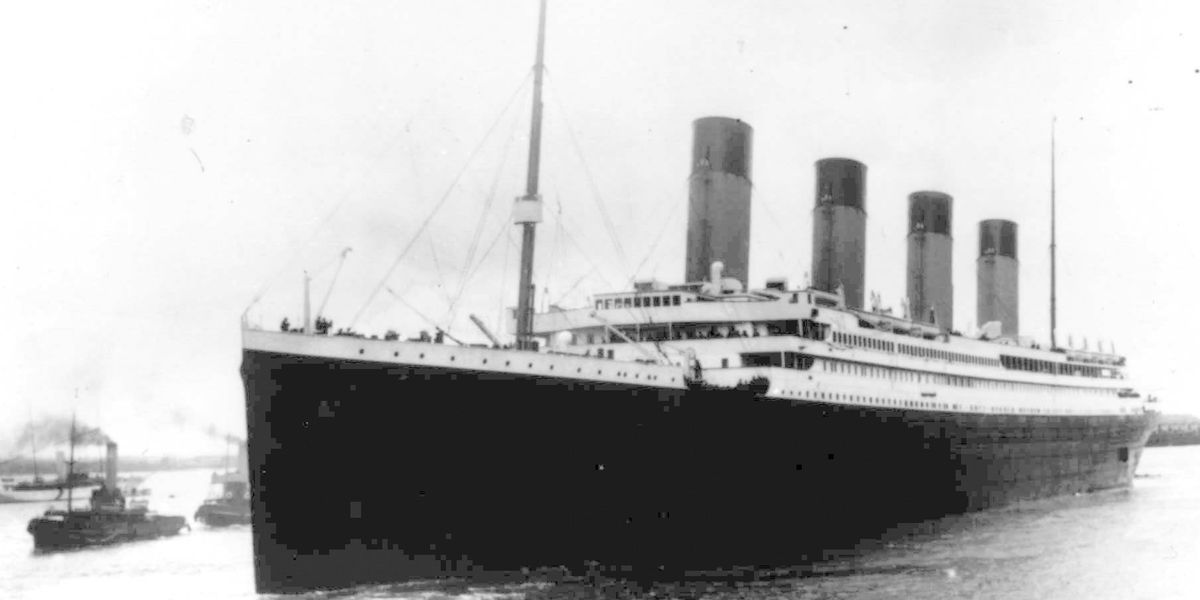
A proposal to auction off over 100 items recovered from the Titanic wreck – including personal belongings, money, kitchenware, and decorative pieces – is encountering resistance from the U. S. government, based on recently released court documents.
RMS Titanic Inc., the company that holds exclusive salvage rights to the iconic ship in the North Atlantic, aims to sell artifacts for the first time, even though prior agreements only allowed for their display in museums and traveling exhibits.
The company has suggested auctioning these items and showcasing them on a worldwide exhibition tour across four cities, although those locations have not yet been disclosed. Court documents submitted in the U. S. mentioned RMS Titanic’s intention to sell items such as a bronze cherub, a gold nugget necklace, and a heart-shaped pendant.
The National Oceanic and Atmospheric Administration oversees U. S. interests regarding the wreck site. The agency argues that this sale would breach RMS Titanic’s legal commitments to preserve the site, according to documents that a judge ordered unsealed earlier this month.
In its case against allowing the auction, the government noted that the company “does not seek the Court’s approval, does not believe that approval is required, and asserts that it is not restricted in its ability to sell” these artifacts.
Representatives for RMS Titanic did not reply to requests for comment on Monday. Their lawyers previously stated in a federal filing that their proposed auction plan wouldn’t violate existing court orders or agreements related to these artifacts.
Since 1987, RMS Titanic has retrieved thousands of items along with large sections of the ship’s hull. The company generates revenue by exhibiting these finds.
Over recent decades, they’ve made attempts to sell artifacts as a way to fund future explorations while facing financial issues. However, these efforts have faced significant opposition from U. S. courts along with preservation advocates and family members of victims; some salvaged pieces belonged to passengers aboard the ill-fated vessel.
On the other hand, items saved by survivors or taken from rescuers can be sold for substantial amounts – for instance, a life jacket worn by a passenger sold for just over $900,000 in April while a gold pocket watch given to the captain who rescued survivors went for nearly $2 million in 2024.
Auctioneers point out that ongoing interest in the Titanic – which sank after colliding with an iceberg during its maiden voyage from Europe to New York in 1912 and resulted in more than 1,500 deaths – combined with rare artifacts leads to high demand and significant prices.
Those opposing selling artifacts retrieved from the wreck argue that RMS Titanic is bound by an agreement from the 1990s granting exclusive salvage rights while promising never to sell those items. Some underwater explorers resist selling Titanic relics because they believe they should be showcased for public benefit.
“I don’t have a problem with people recovering artifacts from the Titanic as long as it’s done careful with proper archaeological techniques,” said Greg Stone, an experienced ocean explorer and scientist. “I’d feel better if it was a nonprofit enterprise.”
The regulations governing how Titanic artifacts are displayed or sold aim at preserving them for public use so they can’t just be “picked up by billionaires for further display of their wealth and power,” explained Richard Daynard, a law professor at Northeastern University School of Law specializing in public interest advocacy.
“If it’s something where someone can walk through their house and say ‘Yes, I bought this for $5 million and it’s original from the Titanic,’ that’s not a good thing,” he said.
Source link