



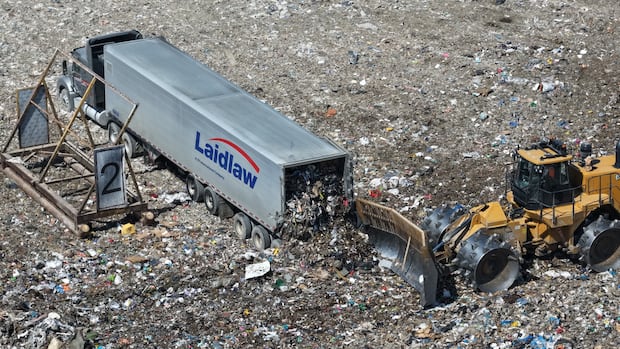
Ontario’s environment minister wants to increase waste incineration for energy and develop more landfills as the province faces a shortage of space for its garbage, presenting it as a strategy to counter U. S. President Donald Trump’s recent tariffs on Canadian waste.
According to Environment Minister Todd Mc Carthy, Ontario’s landfills could reach capacity in just 10 years, prompting the need for urgent action.
On Tuesday, the government introduced an omnibus bill called the Building Ontario Faster Act aimed at accelerating the permitting and approval processes across all ministries, which includes new landfill sites or incinerators.
“We want interested parties to come forward with proposals for either a landfill or an energy-from-waste facility, along with municipalities that are open and supportive about being host communities,” Mc Carthy stated on Wednesday.
He noted that communities do have the option to decline a landfill or waste incinerator.
“Municipalities will decide if they want a landfill site or not, but there are clear economic advantages to having such facilities in their area,” he added.
However, at a press conference the day prior, Mc Carthy suggested that if no communities volunteer to host landfills, they might be imposed on unwilling areas.
Details in the bill yet to be passed indicate that it would eliminate a part of the Environmental Assessment Act requiring municipal backing for landfill projects.
Last year, provincial actions attempted to push for reopening a landfill that a southwestern Ontario community opposed.
In 2025, Ontario enacted Bill 5-a controversial omnibus bill meant to hasten approvals for large-scale projects like mines. This bill also included provisions exempting the previous landfill in Dresden from undergoing a full environmental assessment despite local opposition.
Ontario’s Landfill Capacity Could Run Out in 5 Years
Trump signed an executive order last week lifting some tariffs on Canadian goods but imposing a new 50 percent tariff on Canadian trash set to take effect shortly.
Mc Carthy warned that under these circumstances, Ontario’s landfills might fill up within five years if this tariff remains in place; however, he did not specify how many new landfills or incinerators are necessary.
Ontario Environment Minister Todd Mc Carthy says, ‘Energy from waste is something we can and should embrace.’ (Christian Paas-Lang/CBC)
A report from Michigan’s Department of Environment highlighted that Canada sent over three million tonnes of garbage into Michigan last year.
“Energy from waste is something we can and should embrace,” Mc Carthy remarked. “Countries like Europe and Great Britain have adopted this practice since they’re short on landfill space. We may have room now, but without improvements in our landfill capacity-since no new sites have been built here in two decades-we’ll face challenges within ten years.”
Green Party Leader Urges Dialogue with Scientists
Mc Carthy claimed that these incinerators generate clean energy; however, Green Party Leader Mike Schreiner disagreed strongly.
“I believe it’s essential for the minister to consult scientists who clearly show that incineration produces harmful air emissions and leaves behind toxic ash that still requires disposal in landfills,” he said.
Mc Carthy referenced two successful waste-to-energy plants in Ontario: Emerald Energy from Waste located in Brampton and Durham-York Energy Centre situated in Clarington which falls within his riding of Durham.
Schreiner pointed out one significant hurdle when establishing landfills or incinerators is strong public resistance against them nearby.
“People don’t want toxic air pollution affecting their homes,” he noted.
“They’re looking instead for leaders who won’t dismantle our recycling programs but will explore ways we can minimize garbage heading into landfills rather than increasing those amounts.”
You can’t keep blaming tariffs or Donald Trump as justification without giving any clarity-it seems that’s exactly what we’re seeing unfold here,” he said.
Source link