


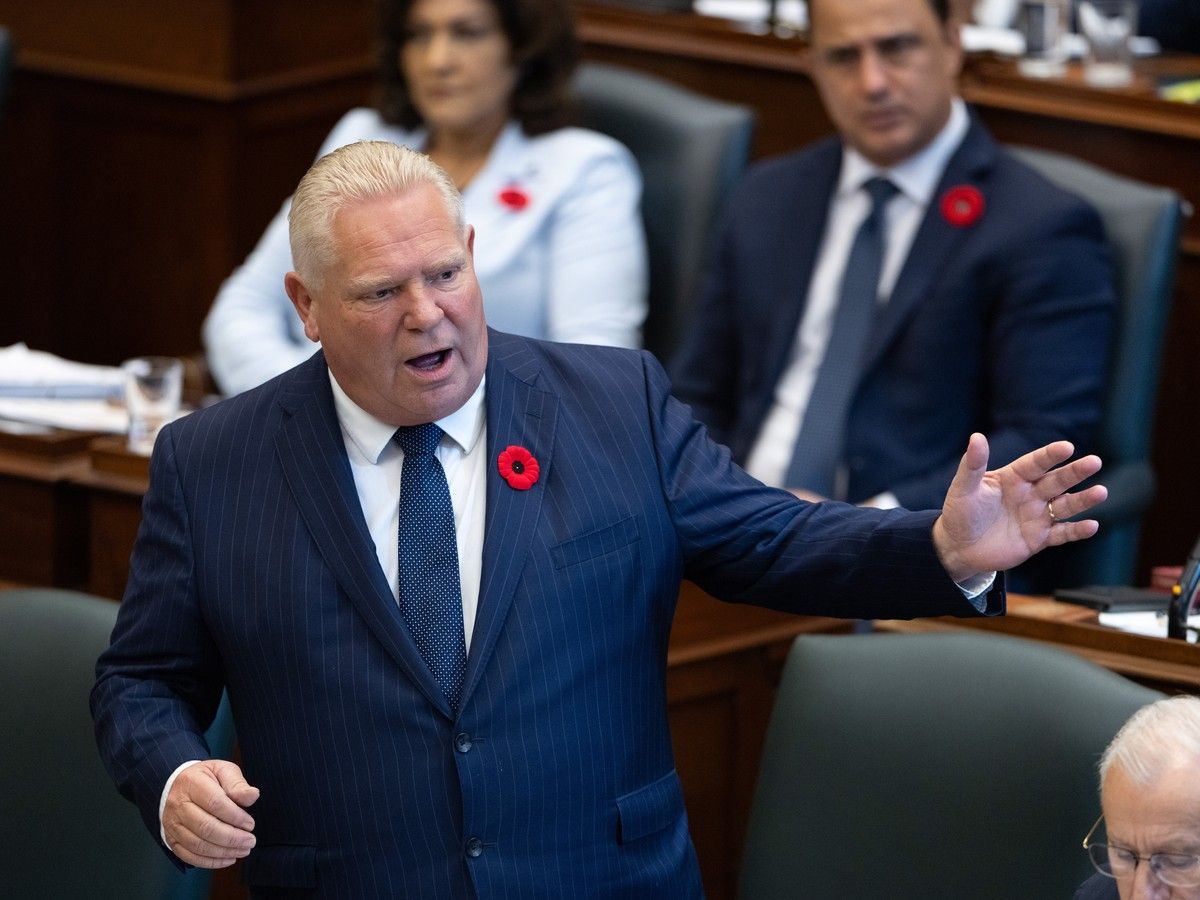
Reviewing the Ontario government’s Fall Economic Statement, filled with alarming red figures, rising deficit estimates, and decelerating growth due to Donald Trump’s tariffs, it’s tough to escape one main takeaway.
Doug Ford really thought this was a good moment to purchase a private jet?
The lavish aircraft has since been put on hold, sold back to Bombardier in the spring after the premier understood that the optics of his $30-million acquisition wouldn’t, well, hold up. However, it’s worth recalling that blunder because it occurred quietly after the release of the 2026 Budget in March – a document that has turned out to be an overly optimistic view of Ontario’s financial situation.
Despite Finance Minister Peter Bethlenfalvy’s rhetoric about fiscal discipline and accountability when he unveiled the economic statement at Queen’s Park on Thursday, this is a government that seemed ready for a shiny new ride for the premier right as the economy was about to take a hit from the unpredictably unpredictable U. S. president.
Here are the stark figures in brief: The budget deficit for 2026-27 is now projected at $16.9 billion, an increase of over $3 billion from the $13.8-billion estimate in the 2026 Budget released in March. The deficit for 2027-28 is now expected to reach $12.7 billion, more than double what was forecasted back in March ($6.1 billion). Furthermore, a budget initially aiming for surplus by 2028-29 is now anticipated to still be short by $5.7 billion during that fiscal year. This marks yet another time under Ford’s leadership where the target date for achieving a balanced budget has been pushed back.
This situation is also largely due to Donald Trump’s actions and explains why Ford often seems frustrated when discussing a president he once backed. The premier rose to power criticizing years of excessive spending under Liberal leadership and his party initially believed they could achieve a balanced budget three years ago. That plan was derailed by COVID-19; just as it appeared that an improving economy might finally bring Ontario back into positive territory, Trump’s reckless approach to international relations stepped in-affecting trade and escalating energy prices with conflicts like those in Iran.
The effects on Ontario’s finances are severe. Tariffs have been slapped on over half of the province’s exports heading into the United States, contributing to diminished GDP growth projections for the near term. Job growth-which had surged post-COVID-is now forecasted to slow significantly over coming years. In charts released alongside Thursday’s economic statement, “employment change” bars barely register until 2029. Typically governments use these fiscal updates as chances to claim things are better than their conservative budget estimates suggest; not this one though. Titled “A Plan to Protect Ontario,” it could easily have been named “It’s Even Worse Than We Thought.”
Bethlenfalvy reiterated themes he’s shared with both colleagues and reporters: Ontario has faced challenges due to global instability-a phrase Trump might even slap on his red caps-but it’s pouring funds into infrastructure projects and supporting affected sectors such as forestry, automobiles, steel production, aluminum manufacturing, nuclear energy, critical minerals.. you name it: many ministries and private enterprises are receiving assistance.
However glaringly absent from Thursday’s documents was any strategy aimed at trimming down public sector jobs-something one might expect from their governing party’s agenda. Instead, Ford’s team pointed out their efforts at “constraining” increases in public sector staff since 2017. They do have some grounds here: employee numbers have only risen by 1.6 percent during that time frame compared with what they say is a staggering 30 percent rise federally (and an astonishing 63 percent jump among B. C.’s public servants!).
Yet given all these budget challenges-and President Global Instability-there were expectations Bethlenfalvy would announce some serious cost-cutting measures this week; but no such luck: instead he highlighted ongoing evaluations across nine provincial agencies like LCBO and WSIB focused on efficiency without mentioning layoffs or buyouts or anything resembling restraint actually happening soon-even Dalton Mc Guinty once took tougher stances regarding reducing government spending.
After finishing his presentation before legislators at Queen’s Park earlier today, Bethlenfalvy told reporters he “doesn’t like deficits” but recognizes he’s also being realistic about current conditions globally. The minister confirmed there aren’t plans underway meant specifically targeting reductions within public services despite saying last week he’d aim “to curtail” headcounts meaning more likely manage rather than cut them altogether.
This encapsulates an irony central within Ford’s administration: he professes detesting wasteful government spending while simultaneously avoiding ruffling feathers among constituents; thus even when delivering unpalatable news-the Fall Economic Statement certainly fits that bill-there isn’t much talk regarding necessary sacrifices needed going forward.
Instead there’s optimism expressed around hopes all these expenditures will yield positive outcomes eventually along with aspirations certain presidents may find common sense somewhere along their paths-but counting confidently upon such assumptions isn’t something you’d want included amongst your forecasts either!
Source link