



People in St. Catharines whose homes were affected by flooding during the heavy rainstorms in July and August are being asked to complete a new survey aimed at helping secure provincial disaster relief funding.
The City of St. Catharines announced on Thursday that it has introduced an online form for residents to report their experiences with flooding at their properties. The purpose is to give the province a clearer picture of how serious the flooding was.
Mayor Mat Siscoe mentioned that many people are still feeling the effects of the extensive flooding caused by consecutive summer storms, which each brought more than a month’s worth of rain, overwhelming the sanitary sewer system and leading sewage to back up into thousands of homes-some had this happen twice within just five days.
According to Toronto-based Catastrophe Indices and Quantification Inc., these storms resulted in approximately $360 million in damages across Niagara and other parts of Ontario.
Siscoe encouraged those who were affected by the flooding to fill out the form, even if they’ve already been in touch with city officials.
‘Difficult process’ for many: mayor
“We know this has been a difficult process for many people, but every response is important in helping us understand the full impact across our community and strengthening our efforts to advocate for provincial support for those affected,” he said.
The province’s Disaster Recovery Assistance for Ontarians (DRAO) program offers up to $250,000 for individuals, farmers, small businesses, and non-profit organizations facing emergency expenses, repairs, or replacement costs after natural disasters like floods, tornadoes, landslides, and earthquakes when insurance isn’t available.
However, it typically doesn’t cover damage from sewer backups unless low-income households meet certain qualifications.
The city previously stated that the flooding stemmed from a storm rather than an infrastructure problem.
St. Catharines riding MPP Jennie Stevens also sent a letter late July to Ontario Municipal Affairs Minister Rob Flack stating that an Environment and Climate Change Canada meteorologist confirmed that flash flooding was caused by the storm.
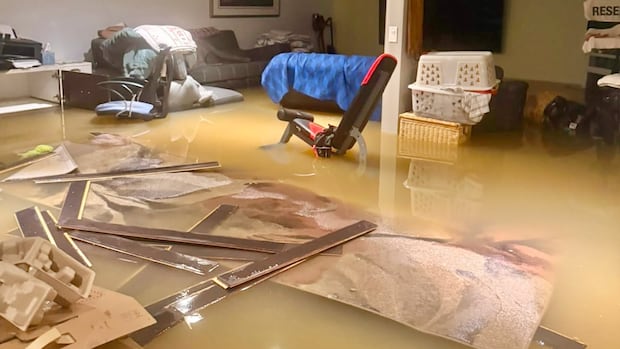
Volunteers with Team Rubicon Canada haul materials taken from the flooded basement of 93-year-old Mary Winning’s home in St. Catharines in August and toss it to the curb. She had her home flooded twice in five days. (Paul Forsyth/CBC)
Other regions in Ontario have received help through disaster recovery programs. In July this year, the province announced activation of disaster recovery aid for Ottawa, Sudbury, and six other communities affected by flooding.
The City of Burlington and Mississauga also noted late last year that residents impacted by creek floods were eligible for financial assistance.
On July 30, Ontario’s Ministry media relations team informed that they were collaborating with the city to evaluate storm-related flood damage to see if there were any areas hit hard enough by overflowing creeks or rivers where uninsured losses might qualify under DRAO guidelines.
Michael Minzak, spokesperson for Minister Flack, provided a statement when contacted by on Friday.
“The Ministry of Municipal Affairs and Housing is currently assessing the situation against DRAO eligibility requirements,” he said. “Provincial disaster assessment teams are currently evaluating conditions in Niagara based on information provided by municipalities. If further details come from municipalities additional teams will be deployed. We will continue working with impacted residents and municipal partners.”
Minzak pointed out that activating DRAO relies heavily on data supplied by municipalities; since its launch ten years ago it’s aimed at assisting people with costs not covered by private insurance.
City working closely with province
The city reported on Thursday that it has been coordinating closely with provincial officials since July’s initial flooding events-sharing information about impacts from floods while taking provincial representatives on tours through areas hit hardest by water damage.</P
The city believes having more detailed property-specific information could bolster discussions regarding potential relief funding via DRAO; especially data showing how water entered homes due specifically outside sources such as doors or windows during these incidents.
They want feedback particularly from residents whose houses experienced external water intrusion through doors or foundation openings along properties located close enough nearby floodplains or natural waterways.
“Beyond supporting discussions with the province,” Deputy Chief Administrative Officer Erin O’Hoski explained “the information collected through the flood impact form will also contribute towards future planning initiatives around preparedness strategies.”
Anyone can share their experiences regarding recent floods using phone number 905-688-5600.
Source link