



The heavy summer floods in north Niagara have significantly contributed to Canada’s total insured damage from natural disasters this season, according to new data.
The storms that hit on July 27 and 28, followed by another on Aug. 2, unleashed a month’s worth of rain in just a few hours, overwhelming the municipal sanitary sewer systems in St. Catharines, Lincoln, and parts of Niagara-on-the-Lake and Niagara Falls, resulting in thousands of homes being flooded.
Now, three months later, many residents of Niagara who faced sewage-tainted flooding are still waiting for their insurance companies to settle costly claims, as stated by St. Catharines riding MPP Jennie Stevens.
A recent survey of those affected by the flooding revealed that many victims feel overwhelmed, anxious, traumatized, helpless, and even suicidal.
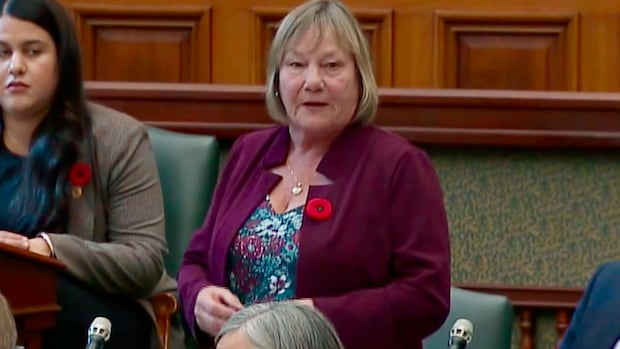
Stevens addressed the Ontario legislature this week urging the province to activate a disaster relief program for those impacted by the flooding in Niagara. However, she faced strong opposition from Municipal Affairs and Housing Minister Rob Flack who stated that these households do not qualify for assistance.
$360 million in flood damage estimated
According to Toronto’s Catastrophe Indices and Quantification Inc., the flooding in Niagara caused an estimated $360 million in damages. This is part of the overall $3.7 billion in insured losses across Canada during the summer due to severe weather events like storms across the prairies and wildfires in British Columbia, as reported by the Insurance Bureau of Canada on Oct. 22.
This marked one of the costliest summers on record regarding losses from extreme weather events.
Earlier this summer, Stevens reached out to Flack asking him to consider making residents and businesses affected by flooding eligible for aid under the Disaster Recovery Assistance for Ontarians (DRAO) program.
This program offers up to $250,000 for individuals, farmers, small businesses, and non-profit organizations for emergency costs related to repairs or replacing essential property after disasters such as floods or tornadoes.
A provincial website indicates that typically this recovery program does not cover damages caused by sewer backups unless certain low-income households may qualify. However, Stevens pointed out that an Environment and Climate Change Canada meteorologist confirmed that flash flooding resulted from the July storm.
Additionally, St. Catharines city officials stated earlier this summer that it was indeed a storm causing the flooding rather than infrastructure issues.
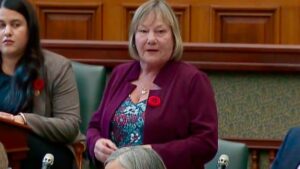
Ontario Municipal Affairs and Housing Minister Rob Flack speaks at Queen’s Park after St. Catharines riding MPP Jenny Stevens urged activation of DRAO for victims of flooding in Niagara. (Legislative Assembly of Ontario)
When responding to Stevens’ request during question period at Queen’s Park on Tuesday about activating DRAO for those affected by Niagara’s floods, Flack dismissed it saying people with flooded basements due to sewer backups need to rely on private insurance instead.
“Bottom line is DRAO was not activated because it was not overland water,” he said. “It was sewer backups.”
Stevens emphasized that it’s crucial for the province to support Ontarians during disasters.
“[But] ninety two days later still no relief” has come for north Niagara residents,” she mentioned.
She highlighted an online group called Northend Neighbours formed post-flooding which conducted a survey among nearly 450 homeowners finding over 60 percent are still stuck with their insurance claims unresolved.
“Seniors and vulnerable families are drowning under repair bills while fearing they might lose their homes,” Stevens remarked.
Stop pointing fingers; take responsibility
“Stop pointing fingers and start taking responsibility.” The residents of St. Catharines cannot afford another day of delay.” p >Daya Lye , oneoftheorganizersofthe Northend Neighboursonline survey , saidonly36.6 percentofrespondents -97percentofwhomwereflooded -havehadtheirinsurance claim fully approved. p >Ofthoseflooded ,70percentdescribedthedamageassevereorcatastrophic , shesaid. p >Thefloodinganduncertaintyoverrepairs has taken ahugepsychological tollonresidentsas shownbytheirdescriptionsoftheirfeelingsin thesurvey, says Lye, w experiencedminorfloodingbecause shehasabackflowvalveathome. p >“They said overwhelmed , frustrated , stressed, depressed , PTSD , anxious , trauma , helpless , despair ,”shesaid.”Peoplefeeldevastated. One personwrote ‘suicidal’.” p >“Thatpartwasshockingtomehowbaditwasforpeopleemotionally. Itsdefinitelyamess.” p >Lyesaid somerespondentssaidtheirinsurancecompaniesleaptintoa ctionalmostrightawaywithaninsuranceadjustercallingwithin daysoffloodingandremediationcompaniessentout almostimmediatelyafterthat. p >“There’sahugedifferencebetweenpeople’sinsurancecompanies,”shesaid. p >Theinsurancebureau saidclaimsfromnaturaldisasterscontinue torisein Canada. p >Overlastdecadeinsuredlossesfromextremeweatherin Canadahave averagedmorethan$ 3.7 billionannually upfrom$1.4 billioninthepreviousdecadeand$883millioninthedecadebeforethat itsdatashows.
Annual losses have increasedby roughly300 percent since late1990sandearly2000sevenafteraccountingforinflation, the bureau said.
The insurance bureau calledonalllevelsgoverment totake immediate stepstoreduce Canada exposuretoextremeweatherevents throughsteps suchas:
Using land use planningto restrictdevelopmentin areasathighriskoffloodsandwildfires. Providinghomeownerswithincentivestoinvestinpractical affordablemeasures storeduceextremeweatherdamage. Investingin resilient infrastructuretoprotectcommunitiesfromextremeweatherrisks suchas flooding.
Source link a>