

In light of the family doctor shortage in Ontario, the paramedic chief of Renfrew County believes he has a solution through a hybrid care model.
This model makes it easy to reach a family doctor with just one phone call and usually a wait of only a few hours.
“This is actually a new door into the health-care system that is connected to all other parts,” said Michael Nolan, who designed this innovative healthcare delivery method for eastern Ontario’s county.
The initiative is called the Renfrew County Virtual Triage Assessment Centre (VTAC). It began as a quick way for community paramedics to test some of the approximately 100,000 residents during the COVID-19 pandemic.
Now, nearly three years and 80,000 visits later, VTAC recently received $3.2 million from the Ontario government, with promises for ongoing funding in the future, according to Nolan.
VTAC operates on team-based care principles. Anyone needing medical attention can call a 1-800 number and speak with a medical receptionist trained to guide them towards the quickest available healthcare provider.
The receptionist arranges an appointment with one of many VTAC doctors working remotely throughout Ontario. Then, either a paramedic or nurse will come by their home or meet them at a nearby clinic for their physical assessment before connecting them with the virtual doctor.
Renfrew County’s chief paramedic and director of emergency services Michael Nolan hopes this approach will help gain the trust of homeless people and connect them with supports they might otherwise not access. (CBC)
Paramedics and nurses use Bluetooth-connected medical devices as eyes and ears for doctors who watch over assessments via video.
“If they come in and they’re running a [temperature], and we listen to their lungs and it’s symptomatic of possible pneumonia, we can get a requisition drawn up and circumvent going through the [emergency department] for hours and hours,” said paramedic Sean Plunkett.
The doctor can then order an X-ray or write out a prescription based on what they see.
This model allows paramedics to enable doctors to see more patients. Nolan mentioned that most patients using VTAC can meet with their family doctor on the same day. Unlike traditional walk-in clinics, health information follows patients from one doctor visit to another until they find permanent family care.
Dr. Jonathan Fitzsimon serves as medical lead for VTAC in Renfrew County. He stated there haven’t been challenges recruiting or keeping family doctors like in some other Ontario communities.
“The only reason we’ve been able to recruit a pool of doctors to do this long-term and maintain them is because it’s professionally rewarding work they enjoy,” said Fitzsimon.
“We feel we’ve been able to tap into an unused pool of talent. We’re not poaching anyone from another community.”
This group includes semi-retired doctors, those newly certified, along with family physicians who are willing to take on extra hours alongside their full-time roles.
![]() Dr. Jonathan Fitzsimon, Chief of Medicine at Arnprior Regional Health and physician lead for Virtual Triage Assessment Centre (VTAC), wants long-term improvements in primary care across Ontario. (Brian Goldman/CBC)
Dr. Jonathan Fitzsimon, Chief of Medicine at Arnprior Regional Health and physician lead for Virtual Triage Assessment Centre (VTAC), wants long-term improvements in primary care across Ontario. (Brian Goldman/CBC)
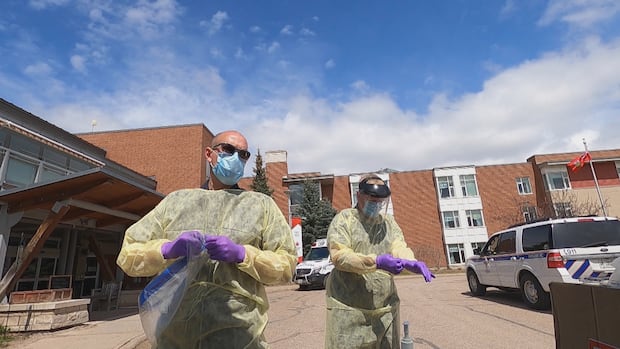
![]() Virtual triage assessment centre (VTAC) paramedics put on personal protective equipment outside before visiting seniors residences in Renfrew County during COVID-19 pandemic.(CBC)
Virtual triage assessment centre (VTAC) paramedics put on personal protective equipment outside before visiting seniors residences in Renfrew County during COVID-19 pandemic.(CBC)
Source link
This isn’t ‘the end,’ says doctor
Fitzsimon doesn’t consider VTAC as an ultimate solution for addressing family doctor shortages. “This isn’t the final sort of endpoint that we want to be at,” he explained. “This isn’t … comprehensive team-based care. But it’s a bridge to that point as a safety net.” He estimates that this program has saved around $2 million annually on healthcare costs within the county. Nolan noted these savings combined with increased provincial funding along with positive responses from locals shows that it’s effective-and it should expand into nearby towns too. Medical experts estimate over 2.2 million residents across Ontario lack access to family doctors-leading many individuals neglecting their health issues until they escalate into emergencies requiring urgent care.’ Nolan emphasized that VTAC acts as “a powerful tool” addressing this issue temporarily.’The Future Lies in Team-Based Care
Around many experts agree team-based care offers solid solutions against decreasing numbers among family physicians-a mix involving nurses physiotherapists social workers dietitians among others-to alleviate burdens placed upon individual practitioners. A survey done by Canadian Medical Association revealed most physicians support pan-Canadian licensing-the idea behind having one medical license valid anywhere throughout Canada-as beneficial towards solving persistent gaps including when professionals take vacations’ “When operating rooms run short because surgeon isn’t available anesthesiologist isn’t available those could potentially stay open because people migrate faster now ” Dr Alika Lafontaine president CMA adds No less critical Jane Philpot former federal minister regarding health presently dean faculty medicine Queen’s University Kingston Ont urges both provinces nationally contemplate external strategies tackling problems such recruitment retention – referencing UK National Health System lending itself valuable insight moving forward’ “We’re actually paying more than we need while wasting funds directed onto costly items which could’ve been prevented had earlier access occurred regarding primary treatment” Philpot asserts suggesting resolving these dilemmas may require decade-long initiatives before universal coverage achieved.’ Nolan urges focused efforts bridging immediate needs preventing worsening crisis faced within field stating'”It’s about saving lives maintaining prosperity among Ontarians offering options where previously none existed.”‘Source link