




For many years, a group of environmentally-conscious residents in Pickering has worked hard to prevent the building of a runway on 9,300 acres of federally owned land that is sensitive to environmental concerns at the eastern edge of Toronto – and they succeeded.
However, they now claim that this precious farmland is under threat from private developers since the federal government and the city of Pickering have suggested making parts of the land available for residential and commercial development to create more housing and jobs.
Farmers and environmental advocates argue that this land is too important to lose, insisting it should be permanently designated as public space. It is classified as rare Class 1 farmland and lies adjacent to Rouge National Urban Park – both areas host species at risk, diverse ecosystems, and delicate wetlands already facing climate challenges.
At a crowded open house organized by the City of Pickering on April 22, residents examined maps and displays showcasing three potential futures for the land: each option featured a combination of employment zones, a mix of housing with agriculture, and an expansion of Rouge National Urban Park.
The federal government has already dismissed any airport plans and indicated that sections with significant conservation value would be handed over to Parks Canada.
Residents fill out surveys at Pickering City Hall during a public consultation on the future of the Pickering lands. Photo by: Abdul Matin Sarfraz/Canada’s National Observer
A national consultation concluded on April 17. Transport Canada is currently reviewing feedback before deciding whether this unique piece of Class 1 farmland will become another part of Greater Toronto Area’s rapid development or be preserved as a lasting public resource for food production, nature preservation, and climate resilience.
“The Government of Canada is consulting First Nations and engaging provincial and municipal governments, local communities, and the public to gather input on possibilities for the Pickering Lands,” Flavio Nienow, a communications advisor with Transport Canada stated in an email response. A report titled “What We Heard” will be released soon; however, he noted that Ottawa will make the final decision.
In the meantime, City Hall in Pickering aims to influence that outcome.
Inside the consultation room, officials stressed their desire to protect most but not all of the land.
In each proposed option, up to 30 percent would be allocated for commercial use – which could potentially generate about 22,700 jobs – while most would remain focused on agriculture or expanding Rouge National Urban Park with minimal residential development included.
“We want to safeguard most of these lands while allowing some space for employment purposes,” said Fiaz Jadoon, director of economic development and strategic projects for Pickering.
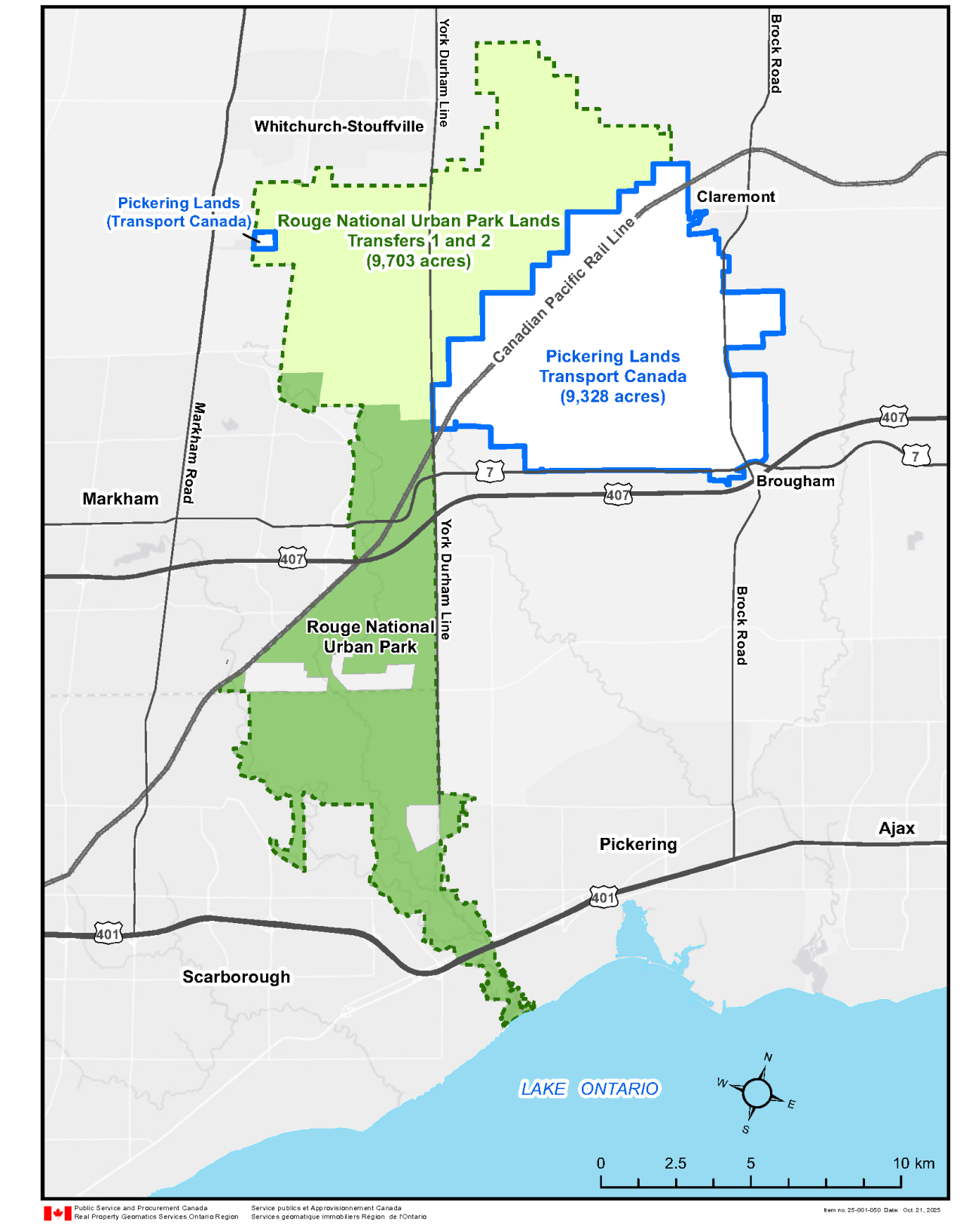
Map showing the layout for Pickering lands alongside Rouge National Urban Park indicating federally owned areas under review. Map Courtesy: Transport Canada
“Many municipalities lack either opportunity or capacity when it comes to shifting their tax base from residential properties toward non-residential ones. That’s what we’re examining – looking into opportunities that can attract jobs while generating revenue,” Jadoon shared with .
This includes various sectors such as commercial spaces, industrial sites, advanced manufacturing facilities, clean industries along with agri-food operations he added.
Mayor Kevin Ashe mentioned that after many years filled with uncertainty; The city hopes to find common ground moving forward.
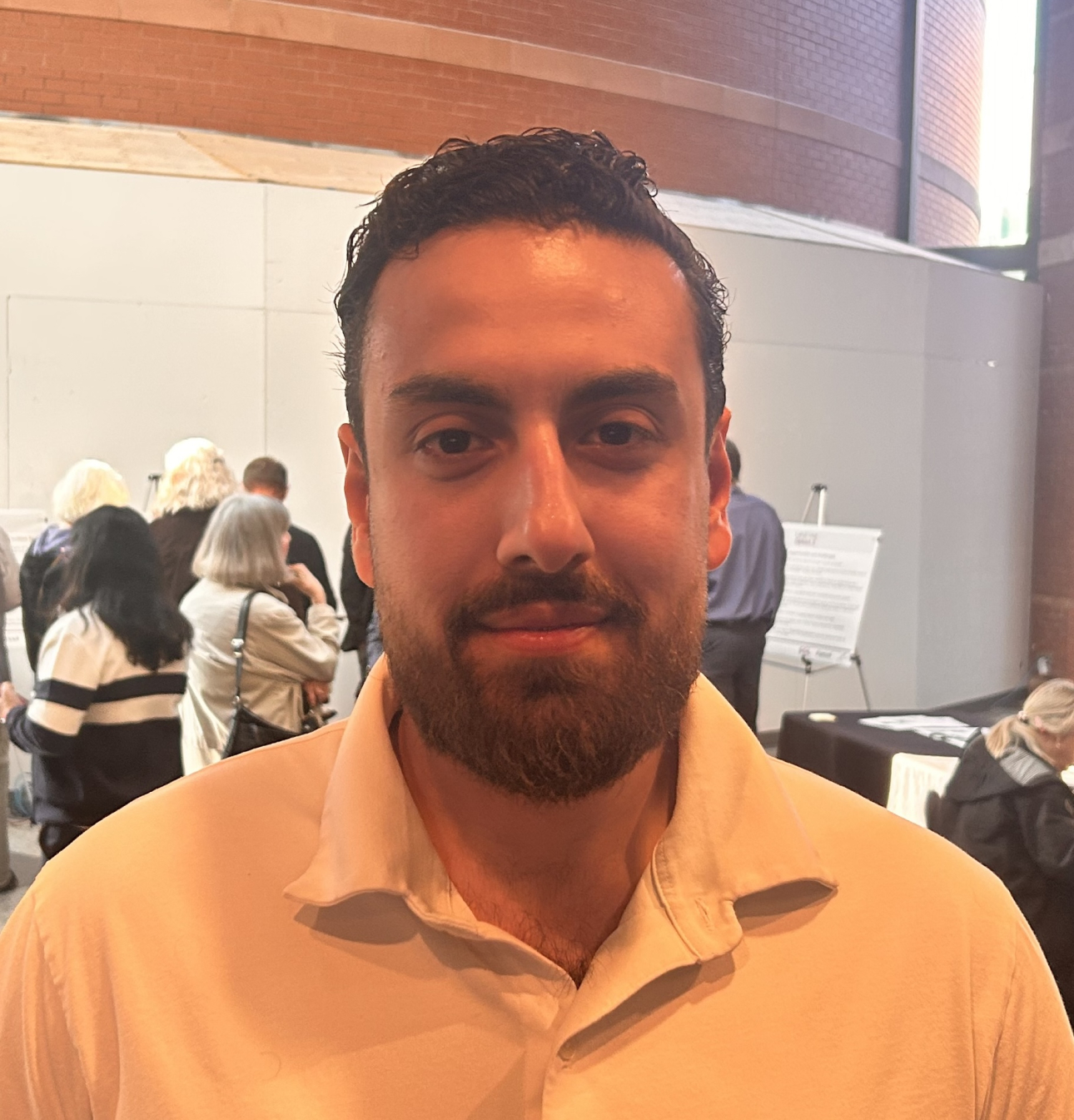
Abdullah Mir co-chairing Stop Sprawl Durham warns against developing in Pickering as it could lead costly sprawl along with lost chances for alternative growth strategies. Photo by: Abdul Matin Sarfraz / Canada’s National Observer.
“This situation presents us an opportunity not just safeguard its vast majority through agricultural designation or integrate it within Rouge National Urban Park but also create job openings which bring tax revenues,” he commented.
Ashe conveyed through how recently they’ve met housing targets but continue growing requiring additional industrial land necessary for job creation supporting overall community growth efforts stating “We’re welcoming new people into our area but we need infrastructure too – libraries; doctors’ offices; hospitals; recreational spots.” p>
Concerns Raised by Local Advocates
Local environmentalists alongside farming proponents argue there exists sufficient territory inside current urban limits capable enough accommodating both housing needs plus industry developments-thus keeping this particular plot off-limits entirely makes sense. p>
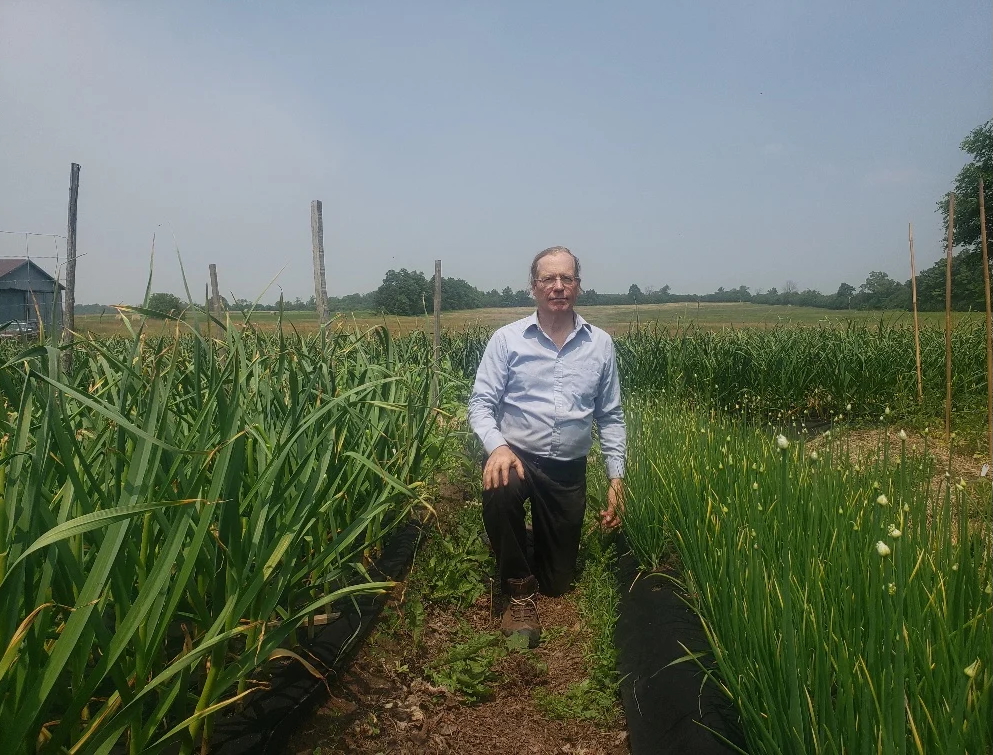
An analysis carried out back in 2018 ordered via Land Over Landings suggested far greater values if preserved solely within agricultural uses instead rather than pursuing other options-including visualizing creating regional food hubs distributing fresh produce throughout Greater Toronto Area helping stimulate job creation supporting sustainable local economies overall effort. p>Projected long-term leases alongside diversified farming initiatives estimate annual farm outputs could jump from around $3.7 million upwards beyond $25 million dollars whilst total economic activity- tourism included surpassing $221.2 million yearly overall! p>This document further accentuates essential benefits associated namely soil quality , water systems proximity towards major urban markets ; Adrian Stocking president representing National Farmers Union Ontario Local number345 stated such basics often get neglected during discussions surrounding potential changes coming forth regarding those proposals made earlier today! p>“Everything involved discussing developmental plans forgets core issues existing right now”, Stocking expressed bluntly declaring statements emphasizing importance recognizing agricultural sectors don’t merely employ workers anymore-they contribute immensely towards healthier lifestyles amongst communities! He insisted prior assumptions seeing farmland primarily valued under developmental terms remains completely false interpretation borne out ignorance alone”. p>Only about half percent classifies Canadian farmlands categorized specifically labeled class-one represents highest-quality cultivations allowing growing almost anything imaginable without hindrance whatsoever! Meanwhile province loses more than three hundred acres daily converting them onto developed lots/ properties ! p>Stocking urged sharing perspectives considering long-lasting implications attached whenever paving occurs leading irreversible losses concerning our vital food sources required ensure future generations capable sustaining themselves adequately.” p>Furthermore , others echoed similar sentiments voicing worries regarding consequences resulting from limited developments threatening established patterns over time past experiences show repetition typically costs taxpayers exorbitantly compared gains brought forth.” p>Mir claimed seizing opportunities presented here affords chance rethink approaches taken addressing region’s expansions-not solely protecting lands-but implementing alternate methods utilized effectively ensuring sustainability all around! ” p >
An Additional Option Not Considered Yet
During open house event numerous attendees felt current selections offered fell short entirely failing meet expectations set previously held beliefs thus leading Peggy Bowie suggesting alternative approach termed simply : ‘Option Four’ which consists requesting Ottawa transfer full acreage consisting nine thousand three hundred acres directly into protective boundaries defining Rouges national urban park thereby still permitting suitable farming practices recreational activities concurrently maintaining original essence intact fully without compromising aspects integral valued significantly!”Adrian Stocking President representing Farmers Union Ontario Local345 states value associated farmlands overlooked throughout ongoing proposals submitted thus far ! Photo By : Abdul Matin Sarfraz /Canada’s National Observer.
Discussions surrounding consequences arising pertains individual natural waterways highlight larger implications underpinning decisions taken place presently henceforth drawing serious considerations await ahead must face dangers including flooding events likely recur occurrences nearby experienced first-hand previously showcased history lessons learned reaffirm crucial necessity awareness ongoing trends shifts emerge affecting lives everywhere across board accordingly emphasizing urgency involved reaching mutual agreement collectively addressing criticalities encountered ground level matters thereof’ pg id > div > body> html>.