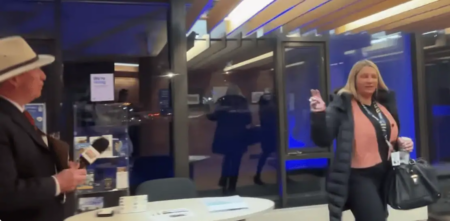



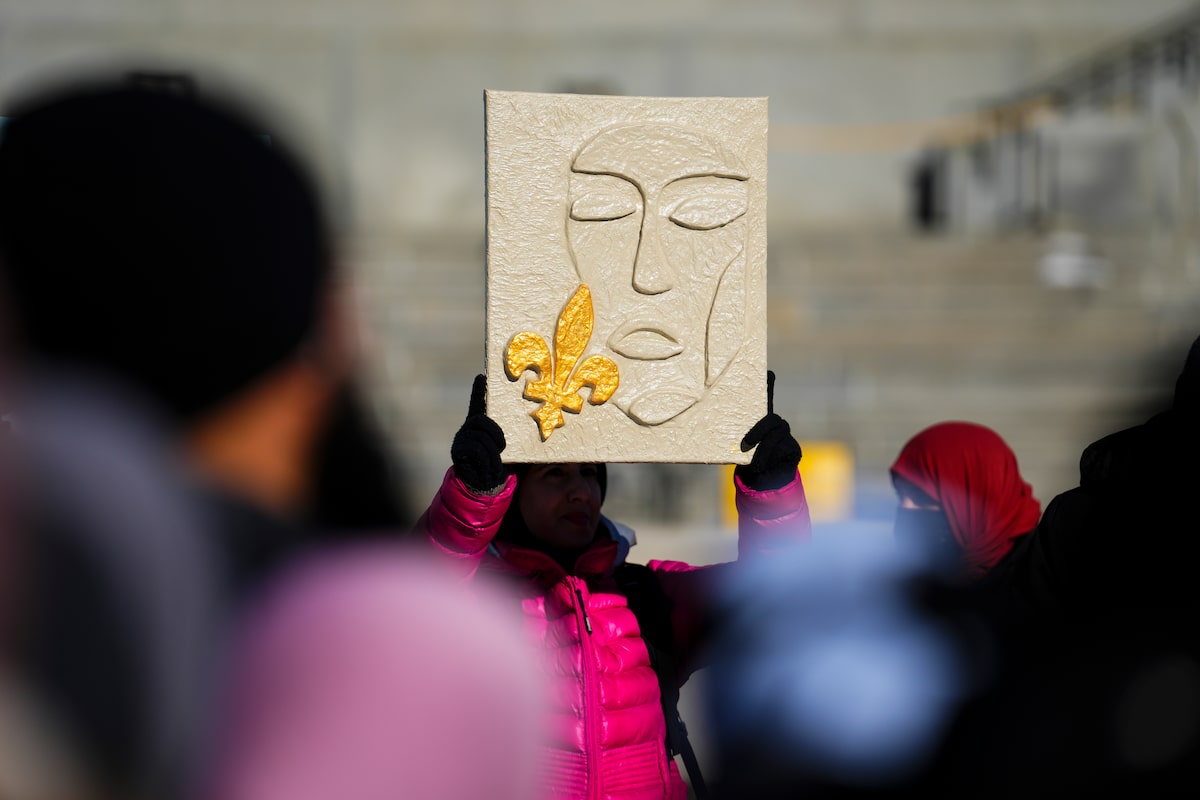
Open this photo in gallery: People congregate outside the Supreme Court as the court hears the appeal on Quebec’s secularism law on Monday. Sean Kilpatrick/ The federal government faced off against Ontario and Alberta at the Supreme Court of Canada on Wednesday as they discussed possible restrictions on the Charter’s notwithstanding clause. The federal government urged the Supreme Court to set, for the first time, boundaries on the repeated use of the notwithstanding clause. Ottawa is also requesting that courts be allowed to issue declarations stating that laws invoking this clause have infringed upon Canadians’ rights, even if those laws can’t be overturned by judges due to the clause. Ontario and Alberta strongly opposed any limitations on this clause and rejected the idea of judges examining potential rights violations – claiming that using the clause means there’s no judicial role. Lawyers for each government appeared via Zoom at Canada’s highest court in this landmark case regarding Quebec’s secularism law, known as Bill 21. Quebec shielded this law, passed in 2019, from legal challenges using the notwithstanding clause found in the Charter of Rights and Freedoms. This tool permits governments to override a range of rights including freedom of religion and equality rights. The law was upheld twice in lower courts. The final decision in the Bill 21 case is expected to have lasting effects for years ahead. It will address critical issues concerning how the Charter operates, refining the balance between government authority and Canadian rights. A Supreme constitutional clash: Canadians’ rights against government powers On Wednesday, Ottawa and provincial representatives referred back to political history from the early 1980s when the Charter became part of our Constitution. During that time, Ottawa made an important compromise with provinces by including the notwithstanding clause within it. Each side had 15 minutes to persuade judges about their perspectives. Guy Pratte, senior counsel at Borden Ladner Gervais in Ottawa, represented the federal government. He stated that while provinces have a “broad margin” for utilizing this clause without prior justification, he stressed that compromises made during those early negotiations didn’t allow governments to repeatedly use it so as to effectively eliminate Charter rights. “That would not at all be the intention of the framers,” Mr. Pratte said to judges regarding those politicians who shaped details around the Charter. Ontario Attorney-General Doug Downey argued that claims from Ottawa along with other challenges against Bill 21 amount to an attempt “to rewrite the Constitution.” Mr. Downey asserted that judicial declarations concerning rights violations should be dismissed by Supreme Court when dealing with laws invoking this clause. “Courts should not provide opinions,” stated Mr. Downey, labeling judicial declarations as an “academic exercise” potentially misleading Canadians. Opinion: Will Bill 21 complete Quebec’s unfinished revolution against Catholic culture? Alberta Deputy Minister of Justice Malcolm Lavoie maintained that this notwithstanding clause is a vital component of our Constitution allowing provinces to “chart their own course in a united Canada.” He consistently challenged any notion of judges declaring rights violations when this clause is invoked. In his closing statement he remarked such actions would “step well outside judicial role,” which would be “unprecedented and unnecessary.” On Parliament Hill Wednesday afternoon Bloc Québécois Leader Yves-François Blanchet confronted Prime Minister Mark Carney about both Bill 21 case issues and church-state separation during question period within House Commons.
“It is responsibility federal government defend [the] Charter,” Mr. Carney told House regarding his government’s arguments presented at Supreme Court.
“We will await result.”
The seven judges reviewing case were largely quiet Wednesday compared Monday Tuesday when many questions were raised. Their focus during presentation involved interactions between courts elected officials; however only Justice Malcolm Rowe posed inquiries five times related these topics. No other judge questioned various governments.
Wednesday particularly brought prominent legal political figures into courtroom.
Mr. Pratte speaking behalf Ottawa recognized leading appellate lawyer father Yves served two years late ’70s justices.
Meanwhile Mr. Downey’s unusual presence representing Ontario stemmed rarity wherein elected officials rarely argue before high court. Jack Fazzari spokesperson noted Attorney-General chose personally deliver arguments due its significant implications country-wide.
Additionally Lavoie Deputy Minister Justice Alberta who took leave from University Alberta two years ago also represented province unusual capacity contributing strategy surrounding usage notwithstanding Clause. Since last fall Alberta invoked it protect four separate laws from being legally challenged.
This marked third out four days hearings focused entirely Bill 21 one longest sessions history supreme court challenger appeared Monday defended Tuesday All arguments put forth were shared through zoom format presenting lawyers courtroom screens mounted walls throughout morning session Since year two main parties appeared person courtroom while all lawyers appellants respondents remained present week whereas outside interveners groups including additional governments relegated zoom policy implemented Chief Justice Richard Wagner Last summer both provincial federal administrations sought one-time exemption interveners zoom rule considering substantial stakes pertaining bill twenty-one however Chief Justice Wagner declined request December
Source link