





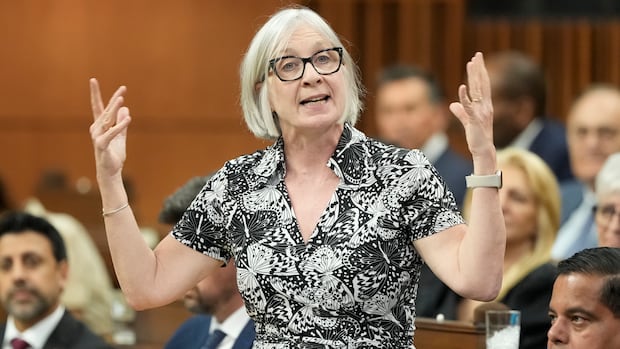
The federal government is providing provinces and territories with an extra $5.4 billion over the next two years for the national $10-a-day child-care program to help address “cost pressures,” according to Canada’s families minister.
This initiative, which began rolling out across the country in 2021, aimed high with goals for lowering fees parents pay and creating hundreds of thousands of new spaces by this year. However, many areas have yet to meet those targets.
Jobs and Families Minister Patty Hajdu told on Friday that she’s heard the provinces’ requests for more federal funding as many face challenges in reducing fees, increasing spaces, and hiring enough early childhood educators amid rising costs and demand.
“Certainly, money has been part of the challenge,” Hajdu stated ahead of a meeting with provincial and territorial ministers.
WATCH | Ontario says it needs more cash to hit program’s goals:
Still on a childcare waitlist? Ontario staffing shortages are making it worse
Ontario mentions that the long-term success of the federal daycare program is in jeopardy, leaving many families waiting for child care spots. As CBC’s Talia Ricci reports, while the province claims it’s working on staffing issues, there are concerns that things may deteriorate further before improving.
“We’ve already invested $58 billion in affordable child care across the country. This additional $5.4 billion reflects the added cost pressures provinces have indicated, and that money will be flexible so they can use it to tackle their specific challenges.”
While numerous provinces and territories have managed to lower child-care fees for parents down to about $10 a day, five have not achieved this goal. In Ontario specifically, where average fees stand at around $19 a day, officials say they would need an extra $2 billion annually to reach $10.
‘A brake on the economy’
Universal child-care advocates expressed disappointment when no new investments were announced during the government’s spring economic update, arguing that without additional funding, the program could be endangered.
“It is well established that when families can’t find affordable and reliable child care, mothers are forced out of the paid labour force or significantly reduce their work hours,” Child Care Now executive director Morna Ballantyne said in a statement at that time.
“This puts a brake on the economy and undermines income security.”
Hajdu acknowledged that affordable child care plays a vital role in driving economic growth; thus, this new funding aims to ensure that progress made so far-like reduced fees and increased access-is maintained.
“It is definitely about protecting what we’ve gained-and what we’ve gained is very significant,” she remarked. “On average, families are saving about $11,000 per year per child. That’s huge savings across Canada.”
The lowered fees have led to higher demand and longer waitlists in various regions. The initial agreements were designed to create 250,000 new spaces by March; however, as reported by the government currently only about 173,500 new spaces have been created.
A number of provinces signed five-year extensions for their child-care agreements before last year’s federal election; however some like Alberta and Ontario opted only for one-year extensions. The new funds might help strengthen these negotiations.
This funding comes with conditions regarding additional data sharing as mentioned by Hajdu-to gain insights into existing gaps within services.
“I think that data is critical in terms of understanding what those specific barriers are; what fee structures look like; what access looks like; what operational realities exist all across Canada,” she explained.
Source link