





It’s tough to dislike Canada. It’s like getting mad at a cotton ball or being upset over tapioca.
The friendliest neighbor, the country has stood by the U. S. in conflicts since World War I, bought trillions of dollars in American goods, and gifted this nation with things like ice hockey, Drake, Joni Mitchell, and Alex Trebek.
While you might question their culinary choices – poutine being an unofficial dish made of French fries, cheese curds, and hot gravy is quite peculiar – Canada is essentially a vast and beautiful land filled with very nice and extremely polite folks.
Yet for reasons only he understands, President Trump has initiated economic hostilities against our friendly northern neighbor.
After more than a year of back-and-forth tariffs, Trump recently intensified the situation by imposing a new 50% tax on various Canadian exports including cement, furniture, dairy products, and most notably, hockey sticks. This added tax will further strain inflation-burdened U. S. consumers starting mid-August.
This action seems illogical from both an economic and foreign policy perspective. One should view Trump’s trade decisions as weather patterns; his inconsistent tariffs are not born from well-thought-out strategies but rather reflect his fluctuating moods towards different world leaders.
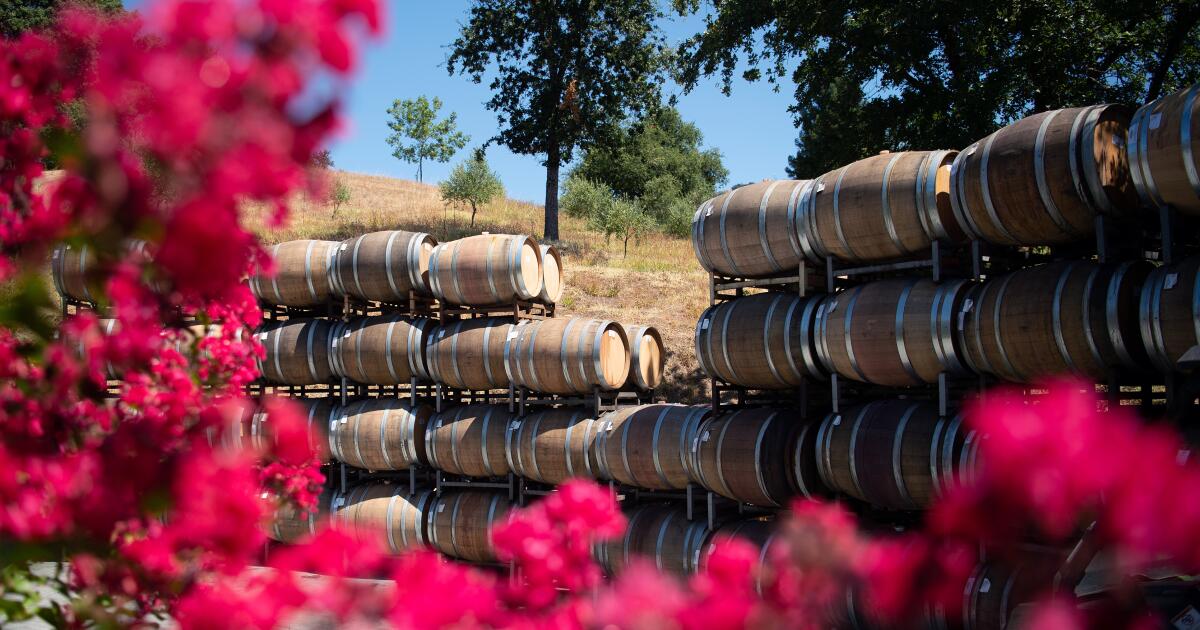
And these moves come with significant costs – just look at California’s struggling wine sector as one example.
You’re reading the L. A. Times Politics newsletter
George Skelton and other analysts provide insights into legislation, key players, and politics you need to know about every Monday and Thursday morning in your inbox.
By continuing, you agree to our Terms of Service which include arbitration and a class action waiver. You agree that we and our third-party vendors may collect and use your information through cookies, pixels, and similar technologies for purposes outlined in our Privacy Policy such as personalizing your experience and ads.
The wine industry has long been an essential part of California’s agricultural landscape. However, recent times have brought several challenges.
Costs are on the rise while sales decline as younger crowds prefer hard seltzers or canned cocktails over traditional wines. Additionally, climate change along with increasing wildfires poses risks to some of California’s top wine-growing areas.
A Canadian ban on alcohol imports
Additionally complicating matters is the trade conflict with Canada-the industry’s largest export market that used to be a major buyer of California wines. Until recently, Canada accounted for over one-third of the state’s exports.
However last year saw several provinces halting U. S. alcohol purchases in retaliation to Trump’s tariffs alongside his comedic threats-more humorous than serious-to annex Canada as the 51st state. While Saskatchewan and Alberta soon lifted their bans again after that incident, Ontario and Quebec-both populous provinces-have not followed suit.
This “geopolitical friction,” as described by University of California researchers led to nearly an 80% drop in California wine exports to Canada in 2025 compared to previous years. Unsurprisingly though homegrown Canadian wines have gained traction during this time.
You can keep that in mind next time someone talks about terroir!
<p. In response to this sharp decline in exports over a dozen Californian Congress members reached out last month urging Quebec’s premier Christine Fréchette to remove the retaliatory ban on U. S.-made wines and spirits.
“Reopening the market for American wine would bring back consumer options while signaling support for fair trade practices between Québecois consumers & American wineries unconnected with these broader disputes,” said their letter.
Sens. Adam Schiff also sent correspondence urging Fréchette towards resuming sales of both Californian wines & U. S.-made spirits.
“The restrictions placed upon American wines have had adverse impacts affecting local consumers businesses along producers who lack any control over national policies,” explained Schiff , adding “I’ve consistently opposed voted against harmful trade regulations instigated by this president particularly regarding relations involving Canada.”
Fréchette’s reply was pretty straightforward: “Non!”
“Amidst ongoing tensions tied up within these trades disputes she continues defending Quebec’s economic interests,” said spokesperson for Fréchette during interview with CBC Radio.” This measure will remain until United States lifts unjustified tariffs upon us when conditions improve we’ll reconsider”
This statement came before Trump raised stakes further raising tariffs against Canadians which likely exacerbates situation more.
Red or white?
Mike Thompson has witnessed damage done due directly towards Trump’s economic warfare firsthand representing core area surrounding Wine Country he led bipartisan effort along with Democratic Rep Jimmy Panetta from Carmel Republican Rep David Valadao Hanford reaching out premier Fréchette.“Today I spoke vintner traveling across my district they dropped $11 million annual revenue down $2 million just from loss sales due this,” said Thompson recently during drive through expansive Northern Californian region.
Thompson introduced multiple bills including one meant reimburse winemakers suffering losses connected tariffs implemented under Trump however those proposals stuck House despite receiving bipartisanship backing dryly noting “administration hasn’t warmly welcomed my efforts”.“Currently cross-border frictions persist neither side appears willing budge leaving vintners stranded midst chaos”.
So question remains Montreal Toronto what pairs best poutine? Canadian white red?.
What else you should be reading
The must-read: Trump administration targeted California plus other blue states clean energy cuts
The deep dive: Justice Kennedy reflects time deciding Constitution promise liberty equality
L. A Times Special: His nickname ‘Satan.’ Political influence immense
Until next time,
mzb
–
Was this newsletter forwarded? Sign up here receive it direct inbox.
Source link