Last year’s Looking Ahead 2025 highlighted increasing tensions between high-density development and community concerns. These tensions persist, as more development disagreements are being resolved outside of municipal control.
As Markham changes, significant redevelopment plans along Highway 7 have come to represent the city’s swift transformation while continuing to raise common questions about density, traffic issues, infrastructure capacity, and neighborhood character.
Looking back, the issue remains largely unresolved, not because of any lack of action from the municipality but because many disputes are now decided at the Ontario Land Tribunal (OLT), where provincial policy often takes precedence over local issues.
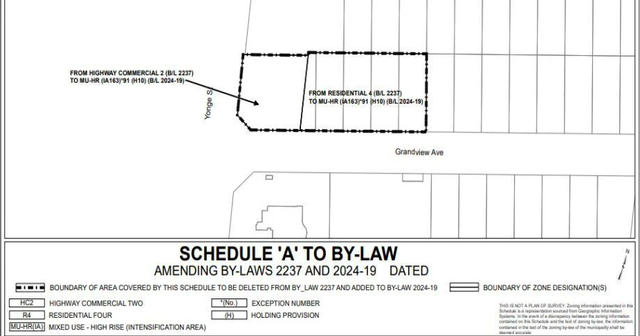
This reality was emphasized in a recent ruling regarding a prominent development proposal at the northeast corner of Yonge Street and Grandview Avenue in Thornhill.
In November 2025, the OLT issued its final decision following a settlement hearing related to appeals by Terra Bona 7115 Yonge Ltd., permitting official plan and zoning bylaw amendments to allow two mixed-use towers reaching 49 and 46 storeys atop a shared seven- to eight-storey podium. The project includes 873 residential units, all proposed as purpose-built rental housing on a 0.94-hectare site along the Yonge corridor.
In its decision, the tribunal found that the proposal aligned with the city’s long-term planning direction for the corridor shaped by policy initiatives and technical studies anticipating the Yonge North Subway extension. The tribunal also ruled that the development was consistent with provincial policy, regional and municipal official plans and principles of good land-use planning.
Ward 8 Coun. Keith Irish criticized both the scale of the revised proposal and the process leading up to its approval, noting that originally, the developer had suggested a single 13-storey tower before appealing to OLT in 2024.
After what he described as positive public engagement and political involvement, a 13-day tribunal hearing was set for July 2025. However, earlier that year, the developer significantly changed its application by increasing it to two towers of 59 and 51 storeys-a change that Irish claimed was allowed without necessitating another statutory public meeting.
The revisions resulted in an average height increase of over 50 percent and a density increase of about 130 percent, creating what he called “the highest floor space index” for any project in Thornhill.
“Public engagement is important in democracy,” he said.
Mayor Frank Scarpitti remarked that this case reflects a broader trend faced by municipalities today.
“I think we’ve lost considerable influence in some of the local planning decisions,” he said, adding residents often ask why council seems to approve projects they oppose.
“If we don’t agree to something reasonable, other actions will be taken at OLT,” Scarpitti explained. “Quite often that means more height, more density and fewer community benefits we’ve managed to negotiate locally.”
Questions have also arisen about whether Markham has enough resources to defend its planning positions at OLT. Scarpitti stated that while they’re doing what they can within their current setup-with a full team of professional planners and lawyers-and bringing in outside expertise when needed-the city’s position is strongest when staff aligns with council especially when applications are appealed after staff suggest refusal.
Difficult situations emerge when staff supports a proposal based on provincial or regional policy but council rejects it due to community concerns.
<p“ In those situations we still have very good lawyers,” Scarpitti noted. “But since staff recommended approval we then need outside planners to support council’s position.”
Even then he pointed out that provincial planning policies remain dominant forces affecting outcomes.
Source link
Source link