



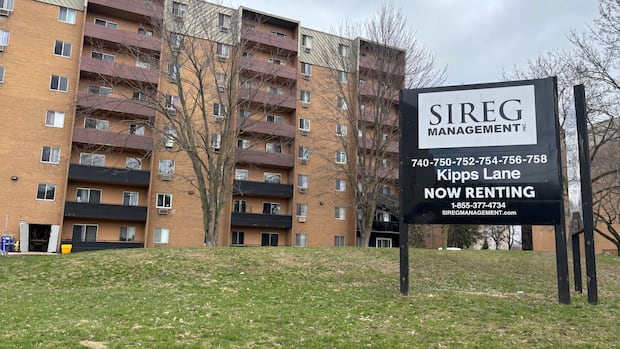
An older apartment complex in north London, where residents recently experienced four weeks without hot water, was turned into condos in 2021 and aimed at investors.
A real estate expert notes that the ownership structure can become tricky when aging apartment buildings are turned into condos, especially as maintenance and repair costs increase.
“Once they are condominiumized, after a few years the underlying problems start to rear their heads and you are faced with major repairs,” said Ron Butler, a mortgage broker who talks about the condo market on his Angry Mortgage Podcast.
Butler was making general comments regarding the conversion of older apartment buildings into condos and wasn’t referring specifically to the Kipps Lane property.
The six multi-storey buildings known as Riverfront Towers contain around 700 units. These units were sold to individual investors after the City of London approved the condo conversion in 2021. SIREG Management took over management of these buildings post-conversion.
The buildings have faced maintenance issues leading tenants to file complaints with the city over the past year.
In addition to a long delay in restoring hot water this summer, tenants at 750 Kipps Ln. expressed feeling stuck in their units while waiting for both elevators to be fixed.
Two of the six buildings managed by SIREG Management. Units in the buildings were converted to condos and sold to individual investors. (Andrew Lupton/)
These issues prompted ACORN, a tenants’ rights organization, to host a meeting for tenants in the lobby of 756 Kipps Ln. on Wednesday evening.
ACORN highlights ‘extreme neglect’
Jordan Smith from ACORN met with tenants who shared experiences he described as “extreme neglect,” including moisture issues in walls and pest infestations.
“The overall disrepair, it’s egregious,” said Smith. “The four weeks without water, that’s vital service but it’s just the tip of the iceberg. They’ve got every kind of repair needed you can imagine.”
Jordan Smith from ACORN met with tenants during a meeting on Wednesday. He noted many are frustrated by building issues but also afraid to speak up. (Isha Bhargava/CBC)
SIREG Management stated it has made numerous repairs since taking control of the Kipps Lane properties and is actively working on unresolved problems.
“We recognize that some repairs have taken longer than residents, and frankly we ourselves, would have preferred,” said their statement.
The company mentioned several factors like worker availability and parts supply affecting how quickly repairs get done.
Pursued partnership with city
SIREG also indicated it reached out to the city for a potential partnership.
“Our objective is to find practical ways to expedite necessary capital improvements, improve quality of life for existing residents and preserve housing affordability over time,” stated SIREG’s message.
The city mentioned its housing team met with SIREG regarding an application through its Dollars to Doors program but noted that “the funding request does not meet current guidelines.”
This program offers loans and financial incentives aimed at stimulating new affordable rental housing creation.
A section of SIREG’s website called Simple Investor promotes former rental units as condos available for investors looking to purchase and rent them out. The company manages rentals on behalf of owners-this model claims it can help create “generational wealth” for investors through a “hands-off approach” toward real estate investing.
The website states SIREG manages properties for more than 1,800 investors with approximately $1.3 billion in assets under management.
It also mentions hundreds of thousands of rents have been distributed without any missed payments reported.
“This shows the reliability of our model,” claims their site.
SIREG president Todd C. Slater runs a Simple Investor You Tube channel discussing real estate trends along with promoting workshops, webinars, and coaching sessions focused on real estate investment.
Mortgage broker advises caution
Butler suggested that potential investors should be cautious when thinking about purchasing units in older apartments that have been converted into condos.An image from Simple Investor’s website showcases investment opportunities involving condos converted from previous rental apartments. (Simple Investor. com)
He pointed out borrowing costs have increased recently while rents have softened too; meanwhile big-ticket repair or replacement costs like roofs or elevators can squeeze investor profits further down.
“Eventually there’s more pressure on landlords trying to raise rents,” Butler explained. “Then there is this difficulty living somewhere where elevators don’t work or leaks exist along with other issues-it becomes problematic for everyone.”
Marc Bhalla serves as vice-president at Ontario’s Condominium Authority-a group dedicated towards fostering well-managed condos via educational initiatives.
A different section from Simple Investor’s website highlights easy rental income opportunities offered through purchased converted apartments (Simple Investor. com)
Bhaala explained condo regulations require boards consult experts when estimating long-term management costs within buildings while ensuring enough fees are collected from owners forming reserve funds meant for future anticipated repairs.
The responsibility falls onto condo owners rather than renters concerning these fees; rentals set inside converted apartments still abide by Ontario’s Residential Tenancies Act limiting yearly rent hikes within older structures.
Butler added there could be significant differences between boards largely composed by owners residing within versus those filled mainly by remote investors focusing solely profit maximization instead.
“It’s just about ‘Can I make enough rent off this unit?’ They’re disconnected from actual involvement within their building.”
Source link