





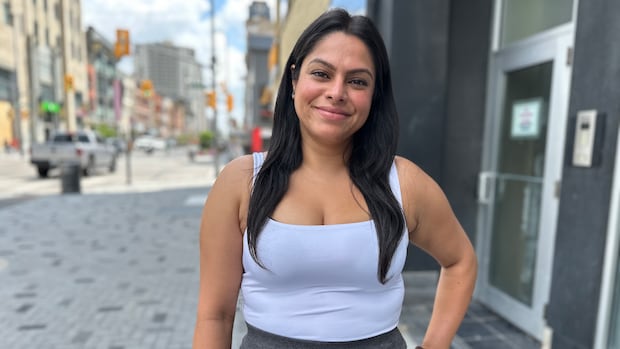
When Smriti Capoor moved to London, Ont., from Mississauga, she thought making new friends would be easy. Instead, she often ended up alone at local bars, wishing someone would come over and chat.
Capoor left the hustle of the Greater Toronto Area to start fresh. However, finding a new social circle turned out to be tougher than she anticipated.
“I would go alone, and I would just sit at the bar with a drink and I would kind of look around hoping that other people will come and sit around as well,” said Capoor. She sometimes spent hours at the bar without anyone joining her.
She also went to events she discovered on Facebook and Eventbrite. While she had fun, those events didn’t lead to the deeper friendships she desired.
“Loneliness to me feels like you’re sitting in front of a group of people, and you’re laughing and you’re talking, and from the outside, you’re having a really great time,” said Capoor.
“But there’s this pain inside that nobody can see or feel because everybody’s living on the surface level.”
Social Bloom Collective is a community for women in London who are looking for friendship and connection. It was created by 23-year-old Mila Ivanisevic after sharing her feelings of loneliness on social media. (Submitted by Mila Ivanisevic)
Eventually, Capoor connected with Mic Se Mohabbat, a social group for South Asian residents in London. But when its founder moved back to India, the gatherings ceased.
Now, Capoor wants to help bring back that group.
“I know there’s people like me out there,” she said. “I think we’re all searching for each other, but we’re just not able to fill in that gap.”
The Loneliness Issue Worldwide
This year, the World Health Organization labeled loneliness as a global public health issue affecting individuals across all age groups that can greatly impact both mental and physical health.
According to Statistics Canada data from late 2024, 13.7 percent of people in Ontario reported they felt lonely either always or often.
Debbie Laliberte Rudman is a health sciences professor at Western University who studies “third places” – informal spots outside home or work where individuals gather to form connections. (Christopher Kindratsky/Western University)
Debbie Laliberte Rudman teaches at Western University’s Faculty of Health Sciences and researches “third places” – spaces beyond home or work where people can meet up and create relationships.
She explained that third places were once casual hangouts where folks could drop by anytime-like Cheers from the sitcom. Nowadays they can include community groups, activity-based meetups or even online environments.
However, some young women in London-including Capoor-still find it challenging to discover these spaces.
Mica Callender is 27 years old; she moved here from London in England five years ago. While browsing Facebook one day, she came across several posts from others seeking friendships locally. So she decided to launch her own group called 519 Ladies Link-Up aimed at helping women connect.
The plan is to hold weekly meet-ups where participants can pick an activity together. The toughest part has been coordinating times that suit everyone-especially single mothers like herself who need babysitters.
LISTEN | What is a ‘loneliness influencer’? The Current digs into the new social media trend:
The Current18:04Why we’re watching ‘loneliness influencers’
“POV: you live alone, have no friends; this is how you spend a Friday night.” Videos like this have become popular on social media platforms. Their creators are dubbed ‘loneliness influencers’. Guest host Catherine Cullen talks with content creator Lana Isa aka @Lana Solo Life about why these videos are made along with Atlantic writer Faith Hill regarding what their rising popularity reveals about our current climate.
Mila Ivanisevic started her own initiative called Social Bloom Collective about a year ago after feeling lonely post-graduation when most of her friends relocated away from the city.
After sharing her story online-which struck a chord with many-it inspired her to form this collective offering shared activities for members interested in connecting with others. Women pay an entry fee for events organized by Social Bloom Collective ranging from cycling classes to coffee meetings or painting lessons.
“I’d say about 80 per cent of our attendees actually come alone,” said Ivanisevic.
“We have social activities designed into our events so attendees can mingle easily without awkward small talk.”
Suggestions for Finding Friends
Laliberte Rudman mentions multiple factors might hinder someone’s efforts when seeking connections such as how long they’ve lived somewhere; language barriers; or whether locations are physically accessible too.
If anyone wants to start their own social circle , Laliberte Rudman recommends allowing members input on scheduling activities. Picking hobbies you genuinely enjoy also makes meeting others more natural. p >
“If you force yourself into situations where you’re thinking , ‘I don’t want to do this but want friends ’ , it’s unlikely you’ll stick around ,”she advised. p >Sharon Flynn found companionship through joining Facebook groups tailored towards singles over time. At age sixty-two , she went through various coffee dates searching both platonic & romantic bonds before eventually finding success attending baseball viewing parties hosted locally instead. p >
“I walked right in all by myself! I thought ,’I’m grown up now & capable!’”she expressed happily , recalling how it led towards meeting Heather -now considered one best friends! p >
Flynn mentioned being shy during childhood but stated engaging strangers via compliments has helped ease conversation initiation over time. She encourages others try speaking casually within public settings since it builds confidence enabling lasting relationships down line too. p >
“It’s so simple saying something nice like,’Hi, you’ve got nice hair today’or ‘Hey, this band rocks!’ ”she suggested excitedly,”This sparks conversation-you never know what may blossom!” p >
Source link