





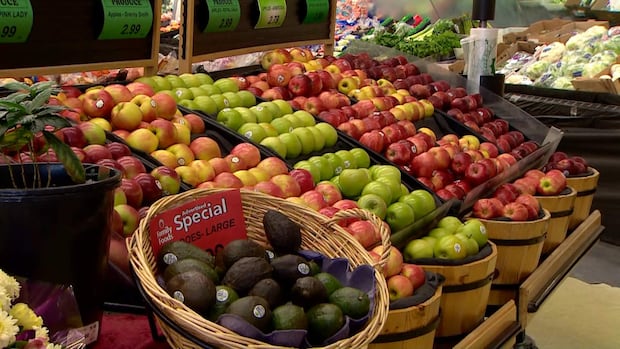
A professor from the University of Guelph is warning Canadian shoppers to expect rising food prices as the ongoing conflict in the Middle East and increasing fuel costs continue to disrupt the global supply chain.
Evan Fraser, who directs the university’s Arrell Food Institute, mentioned that this current crisis is affecting farm inputs significantly, particularly fertilizer, which he pointed out requires a lot of energy to manufacture.
“The price of fertilizer has jumped by about 50 per cent and that directly translates into higher production costs and will be handed on to consumers,” Fraser said on CBC K-W’s The Morning Edition.
LISTEN | Evan Fraser explains how war is affecting food prices:
The Morning Edition – K-W9:43The trickle down effect of war on the global food supply
Evan Fraser, professor and director of the Arrell Food Institute at the University of Guelph, explains how war and rising fuel costs are rippling through the global food supply.
He highlighted that around 20 per cent of the world’s fertilizer comes from the Persian Gulf region. However, due to the conflict, that fertilizer isn’t making it to market. He added that anything driving up energy prices also drives up fertilizer costs.
“If Canadian farmers happen to be buying fertilizer from the Middle East, they’re expensive because there’s a supply challenge,” Fraser said.
“If we’re buying fertilizer from other farmers or buying fertilizer from other parts of the world, it’s expensive because energy is expensive and it’s very energy intensive to produce fertilizer.”
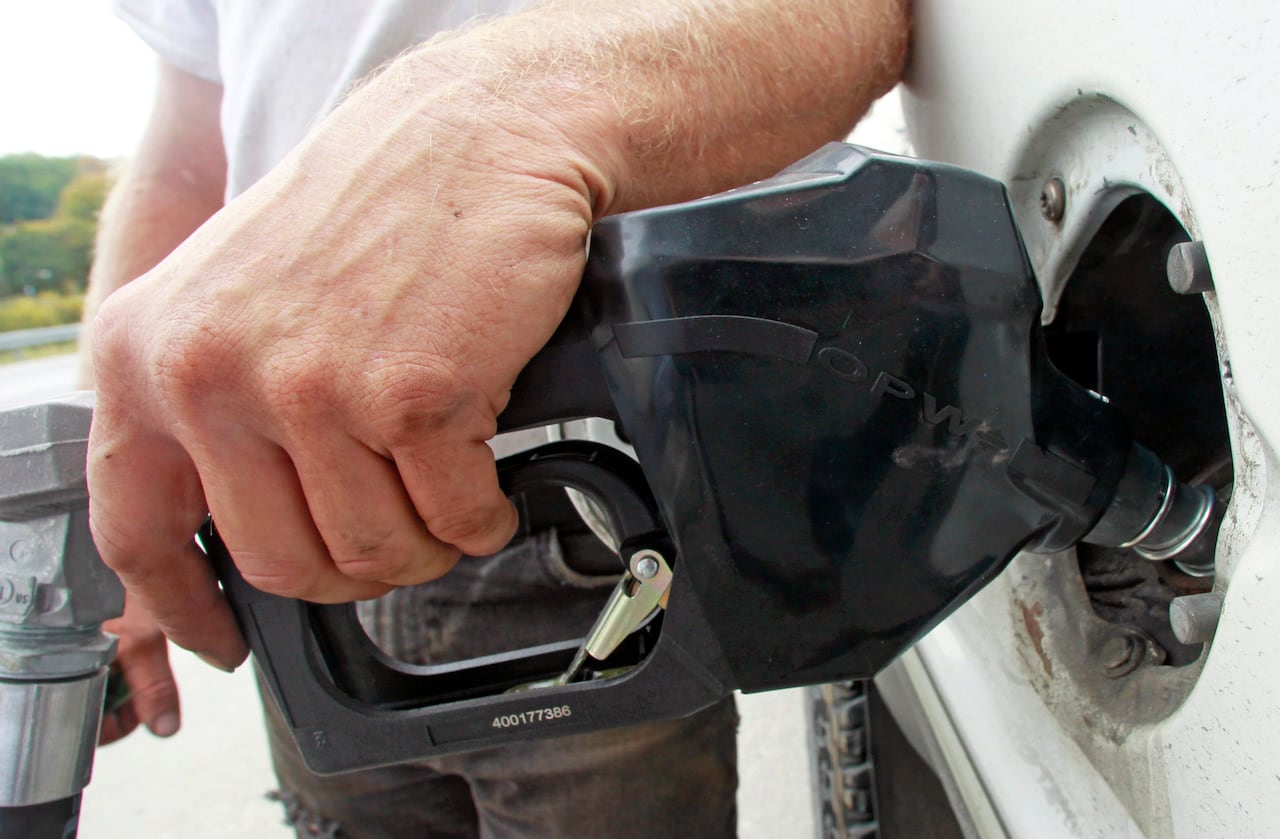 (Image courtesy: The Associated Press)
This week experts indicate gas prices should continue climbing according Patrick De Haan who heads petroleum research at Gas Buddy-a platform dedicated towards tracking fuel expenses across regions.
“Currently , price Monday here in Ontario shows an uptick by approximately 2.6 cents per litre with expectations nearing $1.65 soon , ” De Haan informed CBC K – W.
“At present averages hover around [$1.62] ; however once we do reach $1.65 there may indeed be slight rollbacks if relations improve between U. S. and Iran.”
According him recent months indicated hikes-averaging about $.38/litre compared last month representing roughly one-third increase driven mostly events occurring overseas around Middle Eastern nations affected prominently by geopolitical tensions related oil trade routes via Strait Hormuz passageway leading into wider economic ramifications felt globally.”
(Image courtesy: The Associated Press)
This week experts indicate gas prices should continue climbing according Patrick De Haan who heads petroleum research at Gas Buddy-a platform dedicated towards tracking fuel expenses across regions.
“Currently , price Monday here in Ontario shows an uptick by approximately 2.6 cents per litre with expectations nearing $1.65 soon , ” De Haan informed CBC K – W.
“At present averages hover around [$1.62] ; however once we do reach $1.65 there may indeed be slight rollbacks if relations improve between U. S. and Iran.”
According him recent months indicated hikes-averaging about $.38/litre compared last month representing roughly one-third increase driven mostly events occurring overseas around Middle Eastern nations affected prominently by geopolitical tensions related oil trade routes via Strait Hormuz passageway leading into wider economic ramifications felt globally.”
 (Image credit : The Associated Press )
In meantime driver actions could alleviate pressures somewhat according De Haan stating measures such improving driving habits yield better mileage results-approaches included lowering speed limits employing cruise control minimizing abrupt accelerations can help conserve tank space longer distances achieved overall ! ” He suggested too alongside efficient operation practices many should utilize available apps like Gas Buddy Google Maps track real-time pricing data local fuel stations thus allowing potential savings hundreds dollars annually.”
(Image credit : The Associated Press )
In meantime driver actions could alleviate pressures somewhat according De Haan stating measures such improving driving habits yield better mileage results-approaches included lowering speed limits employing cruise control minimizing abrupt accelerations can help conserve tank space longer distances achieved overall ! ” He suggested too alongside efficient operation practices many should utilize available apps like Gas Buddy Google Maps track real-time pricing data local fuel stations thus allowing potential savings hundreds dollars annually.”
Source link
Food system ‘yoked’ to energy system
Fraser explained that “our food system is yoked to the energy system” so any issues in our energy sector lead directly to higher grocery prices for consumers. “It’s a tough situation for us all to be in,” he said. As long as this conflict persists, Fraser predicts all types of food products will likely experience significant price increases first impacting fresh items. “Lettuce or tomatoes or apples or things like that, where the products are relatively perishable, they’re moving from farms to grocery stores to consumers relatively quickly, and there’s relatively little processing going on,” he said. Fraser serves as director at Arrell Food Institute at University of Guelph. He says ongoing conflicts such as those involving Israel and Iran are negatively impacting farm inputs like fertilizers due their high-energy production requirements. (Portico) “Those products, the value of say fertilizers or farm inputs is a higher percentage of what consumers are paying. So it’s those products that I think will be seeing [increases] first but then it will cascade outward to more processed items. Nothing is buffered too much from this process,” said Fraser.Province ‘working on ways to protect farmers’
An official for Ontario’s Minister of Agriculture, Food and Agri-Business Trevor Jones stated that they aim to support farmers facing challenges stemming from conflicts in the Middle East. “We are always working on ways to protect farmers from rising input costs,” Spencer Fair wrote in an email sent out by . According to Fair’s update since 2022, over $60 million has been invested by government efforts toward reducing expenses across agri-food sectors while strengthening Ontario’s food supply chains. “Through our Fertilizer Accelerating Solutions and Technology Challenge initiative we’ve invested $2 million focused on decreasing reliance upon imported fertilizers while expanding made-in-Ontario alternatives,” Fair noted. He also mentioned Ontario’s Risk Management Program (RMP) helps producers handle market risks outside their control; additionally announcing a funding increase for RMP-from $150 million annually up until 2027-to reach $250 million by then.Ontario gas prices up 31% since war began: expert
(Image courtesy: The Associated Press)
This week experts indicate gas prices should continue climbing according Patrick De Haan who heads petroleum research at Gas Buddy-a platform dedicated towards tracking fuel expenses across regions.
“Currently , price Monday here in Ontario shows an uptick by approximately 2.6 cents per litre with expectations nearing $1.65 soon , ” De Haan informed CBC K – W.
“At present averages hover around [$1.62] ; however once we do reach $1.65 there may indeed be slight rollbacks if relations improve between U. S. and Iran.”
According him recent months indicated hikes-averaging about $.38/litre compared last month representing roughly one-third increase driven mostly events occurring overseas around Middle Eastern nations affected prominently by geopolitical tensions related oil trade routes via Strait Hormuz passageway leading into wider economic ramifications felt globally.”Source link