





The Pentagon is asking Canada to lay out a specific strategy on how it plans to meet NATO’s new military spending goals before joint defence planning can resume.
The lack of a roadmap for spending 3.5 percent of Canada’s gross domestic product on the military, along with an additional 1.5 percent on defence infrastructure, seems to be the main reason behind the recent halt of the U. S.-Canada Permanent Joint Board on Defence (PJBD).
High-ranking Pentagon officials, speaking privately Thursday to mainly Canadian journalists, pointed out that the delay in deciding whether to move forward with the complete acquisition of American-made F-35 fighter jets has also become a significant concern.
This suspension of cooperation under the PJBD was made public this week through social media by Elbridge Colby, a senior policymaker at the U. S. Department of War. The announcement included vague remarks about Canada not contributing enough.
WATCH | Pentagon withdraws from Canada-U. S. defence board: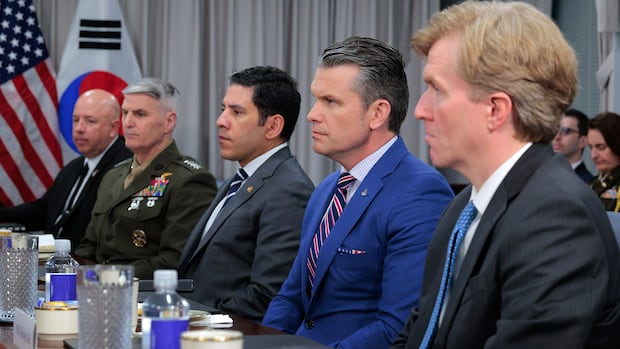
Pentagon withdraws from Canada-U. S. defence board
The Pentagon has revealed it will stop participating in a collaborative Canada-U. S. defence board that’s been active since the 1940s, citing Canada’s insufficient progress on its obligations. Meanwhile, Canada claims it’s always open for constructive discussions aimed at enhancing mutual security.
Senior U. S. defence officials provided a bit more context Thursday, stating that Prime Minister Mark Carney’s government has yet to present a plan that aligns with NATO’s updated targets set last summer during a leaders’ summit in The Hague.
“Canada has yet to articulate a path to reach NATO’s new defence spending targets,” said a senior official who requested anonymity for quoting purposes. “A plan backed by resourced investments that will put Canada on pace to spend 3.5 percent on core defence by 2035 would be a good place to start.”
$9.3B allocated to defence last year
The federal government invested $9.3 billion into the Department of National Defence (DND) last year in an effort to meet NATO’s previous benchmark of two percent of GDP. When asked by reporters how they achieved this goal, DND released somewhat unclear background information that mentioned ongoing equipment acquisitions and previously accounted-for expenses like down payments on new River-class destroyers.
Canada’s defense budget for the past fiscal year ending March 31 was projected at over $63 billion. Future projections are harder to find.
In both last November’s federal budget and this spring’s economic update, DND did not outline how defence spending will increase over the next five years-a shift from earlier practices.
On several occasions, DND has declined requests for these projections despite follow-up inquiries from various journalists.
WATCH | Canada’s met its NATO defence spending target. What’s next?: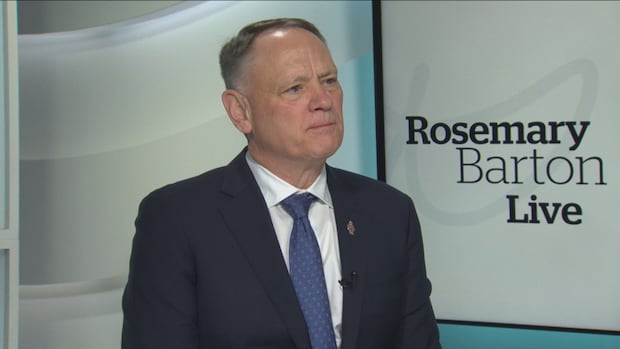
Canada’s met its NATO defence spending target. What’s next?
CBC’s Rosemary Barton talks with Minister of National Defence David Mc Guinty about Canada’s recent achievement in meeting NATO’s target of 2 percent GDP allocation for defense and what it signifies about current global security challenges and maintaining such expenditure levels.
Dawned upon during April’s spring economic update, defense analyst Dave Perry expressed his discontent regarding the lack of concrete figures available.
“The government committed quite an extra amount last fiscal year just to hit two percent but only provided very general details about where those funds were directed,” said Perry, president of the Canadian Global Affairs Institute.
“We’re now aiming towards three point five percent … but we really don’t have clear details about how we’ll transition from our current status up towards fulfilling core defense requirements or what investments Canada needs.”
U. S. wants ‘rapid conclusion’ of F-35 review
The senior U. S. official also criticized Canada Thursday for not putting forth enough resources toward rebuilding its Armed Forces since 2014-a common complaint voiced privately by other allies including the United Kingdom over many years.
When announcing their two-percent commitment last year , Carney referred to much investment as “foundational,” meant primarily for revamping facilities like bases and training grounds , aiming ultimately at expanding military size.
“The [U. S.] is monitoring Canada’s defense investment and will re-engage in this forum when it is possible to have a serious discussion about our mutual security,” stated one senior U. S. official.
U. S. representatives also expressed concerns regarding delays faced by Carney ’ s government concerning whether it will proceed fully with acquiring F -35 stealth fighters.
It’s been more than one year since an assessment was initiated , and while military evaluations were completed quickly , considerations around industrial benefits and potential alternatives such as Swedish-manufactured Gripen fighters have left decisions pending indefinitely.
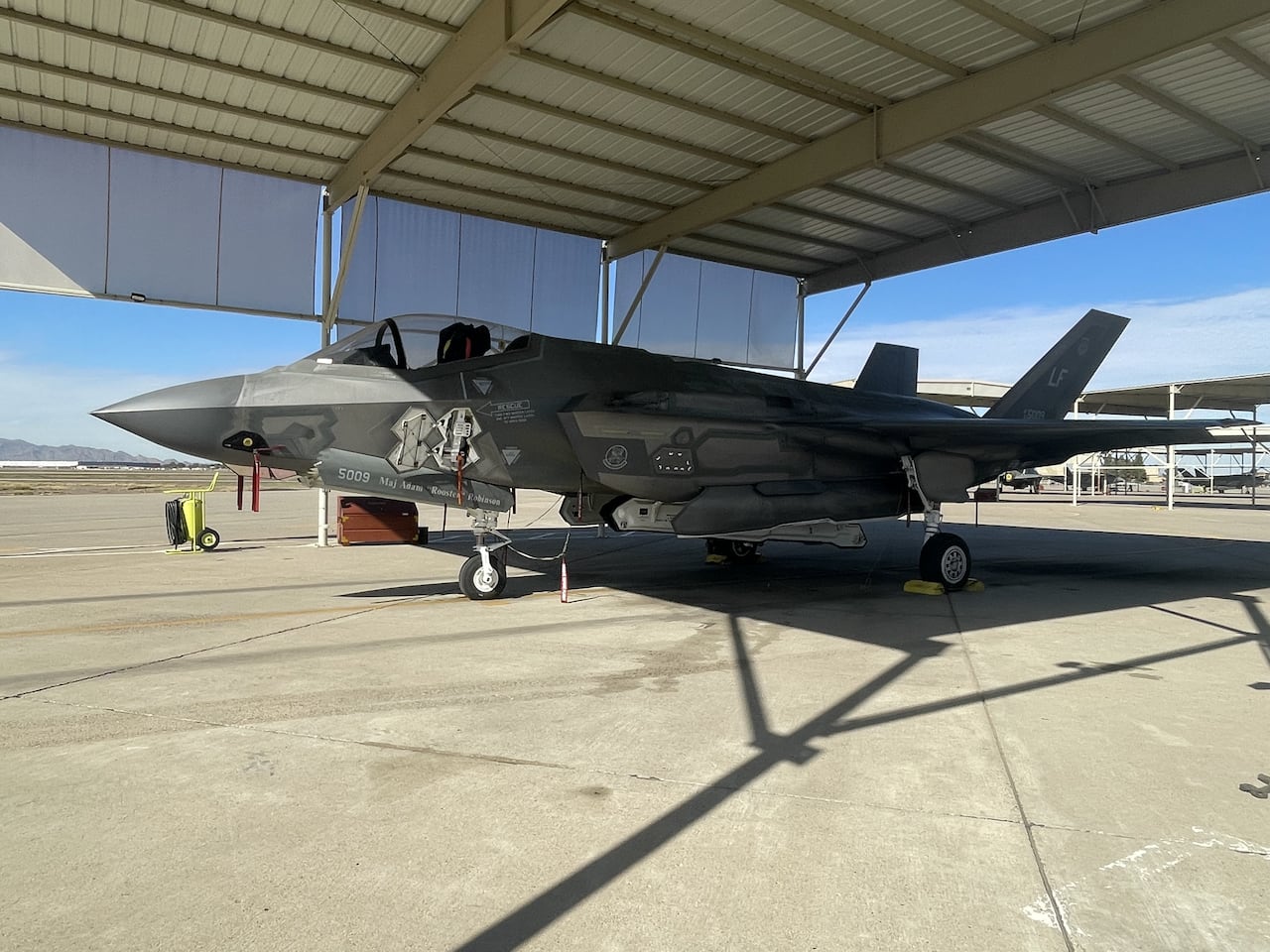
Royal Canadian Air Force pilots will arrive at Luke Air Force Base in Glendale , Ariz., later this year for training sessions involving three F -35 fighter jets , including one seen here on Thursday , Jan.22 ,2026.(Laura Clementson/CBC)
“The Canadian government’s delays and lack of transparency surrounding its ongoing F -35 review are merely examples prioritizing politics rather than fulfilling our shared responsibilities towards North America ’ s defenses,” remarked another high-ranking U. S. official.“The [U. S.] welcomes swift resolution regarding this assessment.”
This pause within PJBD “does not influence operations related within our binational North American Aerospace Defense Command (NORAD).”
What remains unaddressed however was how these pauses might impact policy coordination between nations concerning President Donald Trump ’ s “Golden Dome” anti-missile initiative known as Integrated Air And Missile Defense here in Canada.
Currently tasked managing missile-defense shields falls under jurisdiction assigned first-line guardianship via US Space Command ; operational integration alongside NORAD remains undisclosed yet certainly presents critical policy dilemmas requiring resolution efforts soon enough.
Last week saw publication issue reported through Congress Budget Office detailing extensive studies pointing out costs potentially reaching around $1 trillion long-term expenses required over twenty-year deployment cycle altogether
Canada received invitations allowing participation opportunities while Carney ’ s administration showed initial enthusiasm without providing any firm confirmation.
Source link