



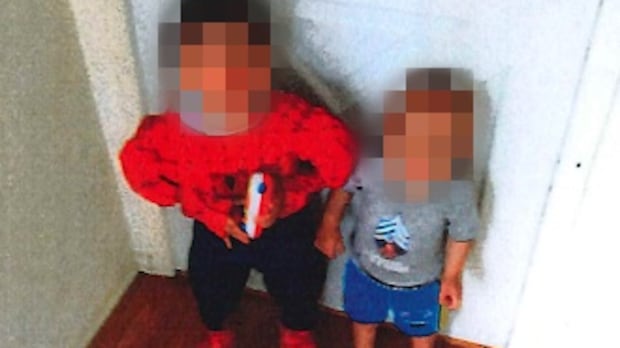
A 12-year-old boy was discovered unconscious and malnourished in a puddle before passing away in the hospital. His brothers were made to sleep in a mesh tent, zip-tied to their clothes. There are audio recordings and text messages from potential adoptive parents referring to the children as “f-kface,” “loser,” and “dumb brat.”
Disturbing information has emerged during the trial of Becky Hamber and Brandy Cooney. The couple from Burlington, Ont., faces charges for abusing two Indigenous brothers they were attempting to adopt and for murdering the older boy, known only as L. L., who died on December 21, 2022. They have pleaded not guilty to all allegations.
Closing arguments concluded on Friday in this judge-only trial that began in September. As the couple awaits their verdict, child welfare advocates say this case highlights significant flaws within Ontario’s youth protection system.
They argue it also reveals systemic failures observed throughout Canada.
“Sometimes when we see the headlines, we focus on the offenders’ behaviour as being so reprehensible,” said Cindy Blackstock, an Ottawa-based First Nations child advocate.
“But what we need to do is knit together these cases to see the patterns.”
WATCH | Questions raised about child welfare system:
Closing arguments start in case of Ontario boy allegedly killed by couple trying to adopt him
Closing arguments are currently taking place in a case involving two prospective adoptive parents charged with first-degree murder among other accusations. This situation in Milton, Ont., has prompted questions regarding why the boys remained under their care despite numerous alarming signs raised by professionals. Advocates are calling for immediate reforms within the child welfare system.
![]() Cheyanne Ratnam, who grew up within the child welfare system herself, is advocating for a national registry of children who die while involved with child welfare services. At present, provinces and territories track this data differently. Some share it publicly; others do not. (CBC)
However, there’s no official count of these incidents across Canada – each region monitors these deaths uniquely.
The contacted every province and territory asking how they track these statistics. All responding provinces confirmed they keep records – but some like Ontario, Quebec, P. E. I., and Nunavut wouldn’t disclose numbers for 2025 due to concerns over identifying individuals because of low counts of child deaths. Quebec’s coroner’s office stated it doesn’t yet have comprehensive data from last year available. Ontario did not respond regarding its decision not to release its 2025 figures.
The Northwest Territories and Yukon did not answer CBC’s inquiries by deadline.
This recent case clearly illustrates that current tracking methods aren’t sufficient enough-said Cheyanne Ratnam-who now serves as a children’s rights advocate after her experiences growing up in care.
“We need some sort of registry to show these things because numerically it provides more evidence about why transformation is necessary,” Ratnam stated.
A national registry could help identify trends behind such fatalities-she added-and determine what actions should be taken moving forward.
“One death is too many if this is supposed to be a system that ensures safety for every individual removed from their family or community.”
Cheyanne Ratnam, who grew up within the child welfare system herself, is advocating for a national registry of children who die while involved with child welfare services. At present, provinces and territories track this data differently. Some share it publicly; others do not. (CBC)
However, there’s no official count of these incidents across Canada – each region monitors these deaths uniquely.
The contacted every province and territory asking how they track these statistics. All responding provinces confirmed they keep records – but some like Ontario, Quebec, P. E. I., and Nunavut wouldn’t disclose numbers for 2025 due to concerns over identifying individuals because of low counts of child deaths. Quebec’s coroner’s office stated it doesn’t yet have comprehensive data from last year available. Ontario did not respond regarding its decision not to release its 2025 figures.
The Northwest Territories and Yukon did not answer CBC’s inquiries by deadline.
This recent case clearly illustrates that current tracking methods aren’t sufficient enough-said Cheyanne Ratnam-who now serves as a children’s rights advocate after her experiences growing up in care.
“We need some sort of registry to show these things because numerically it provides more evidence about why transformation is necessary,” Ratnam stated.
A national registry could help identify trends behind such fatalities-she added-and determine what actions should be taken moving forward.
“One death is too many if this is supposed to be a system that ensures safety for every individual removed from their family or community.”
.
 “Survivors told their truth through tears so that grandchildren wouldn’t have similar experiences.” Blockstock remarked.”
The representation rate among indigenous kids remains shockingly high across Canada’s youth protection framework accounting almost fifty-four percent residing within foster care settings despite making up only seven point seven percent overall population comprised under fourteen age bracket reported Statistics Canada’s analysis twenty twenty-four shows noticeable increase took place decade prior rising forty-seven point eight percent recorded foster homes documented throughout various regions including Alberta specifically noted highest disparities witnessed consistently across Western Provinces mentioned previously here today.”
“We see same recommendations returning again decade upon decade,” Blackstock highlighted pointing out where problems lie tends come down simply failing execute necessary changes requested time after time.”
“Government entities must act beyond mere internal reviews pushing through substantial alterations rather than cosmetic ones otherwise risk repeating history resulting even more tragedies over coming years” she warned solemnly mentioning ultimate cost paid occurs primarily innocent young lives lost far too soon robbed precious childhoods meant flourish instead.
“Survivors told their truth through tears so that grandchildren wouldn’t have similar experiences.” Blockstock remarked.”
The representation rate among indigenous kids remains shockingly high across Canada’s youth protection framework accounting almost fifty-four percent residing within foster care settings despite making up only seven point seven percent overall population comprised under fourteen age bracket reported Statistics Canada’s analysis twenty twenty-four shows noticeable increase took place decade prior rising forty-seven point eight percent recorded foster homes documented throughout various regions including Alberta specifically noted highest disparities witnessed consistently across Western Provinces mentioned previously here today.”
“We see same recommendations returning again decade upon decade,” Blackstock highlighted pointing out where problems lie tends come down simply failing execute necessary changes requested time after time.”
“Government entities must act beyond mere internal reviews pushing through substantial alterations rather than cosmetic ones otherwise risk repeating history resulting even more tragedies over coming years” she warned solemnly mentioning ultimate cost paid occurs primarily innocent young lives lost far too soon robbed precious childhoods meant flourish instead.