




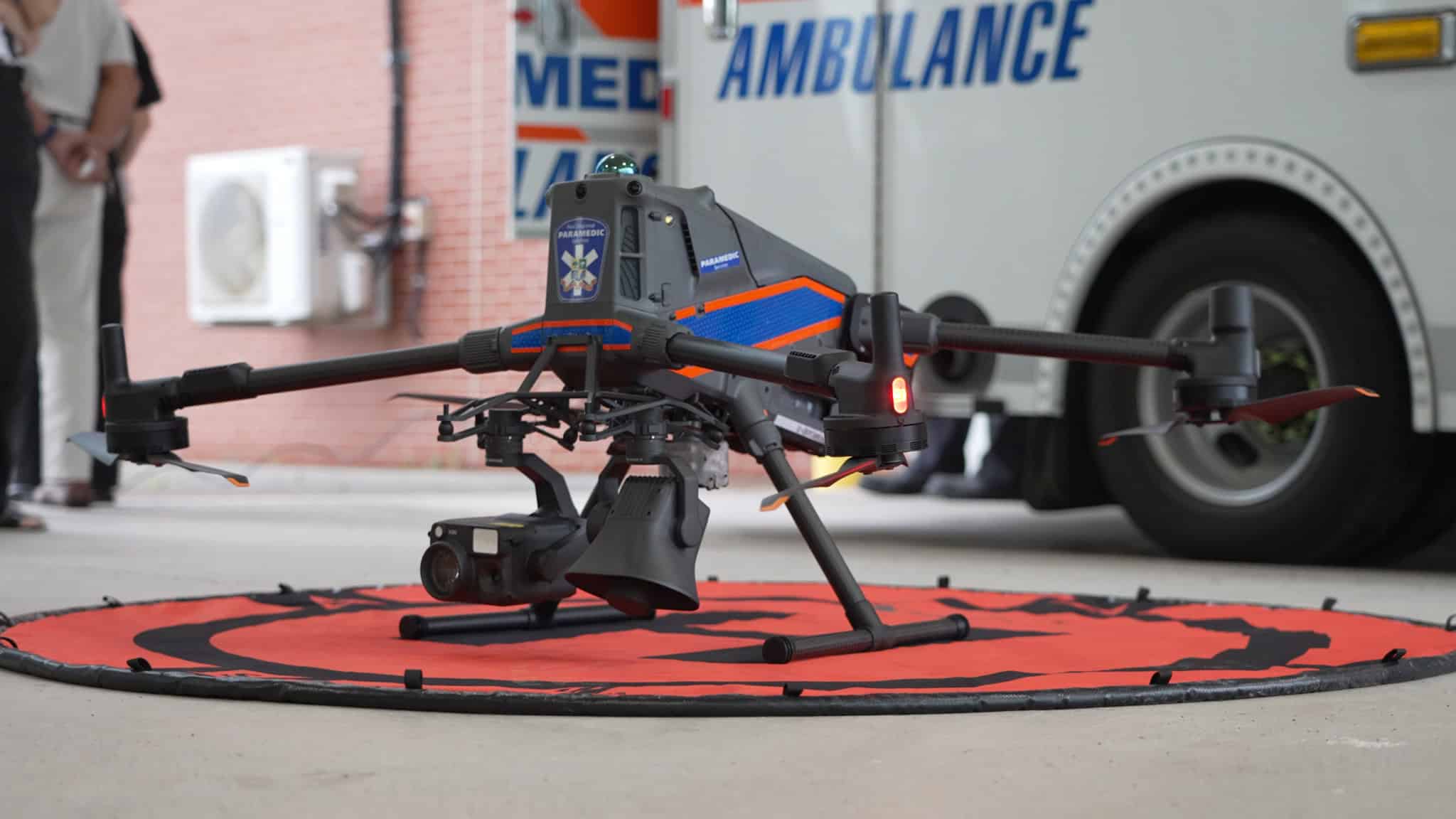
Peel Regional Paramedics kicked off the first medical drone pilot program in Ontario this week. Photo: Peel Region
Peel Regional Paramedics launched the first medical drone pilot program in Ontario this week.
The Medical Drone Pilot Program began on Tuesday, Brian Gibson, chief and director of Peel Regional Paramedic Services, told INSAUGA.
This pilot will utilize medical drones to deliver essential supplies during time-sensitive emergencies in rural areas. Items like an automated external defibrillator for cardiac arrest, naloxone for suspected opioid overdoses, or an epinephrine auto-injector for allergic reactions can be transported by the drone.
Although ambulances typically reach patients quickly, factors like traffic, distance, geography, and rural road conditions can lead to delays. During a cardiac arrest, survival rates drop by about seven to 10 percent for every minute that passes without defibrillation.
“Early defibrillation is one of the most important factors in surviving cardiac arrest,” said Dr. Sheldon Cheskes, a researcher and the medical director at Sunnybrook Centre for Prehospital Medicine. “This initiative is about getting AEDs to patients faster and strengthening the chain of survival, particularly in areas where access can be more challenging.”
When someone dials 911 and their call qualifies, a drone will be dispatched simultaneously with the ambulance. The caller will also have access to a trained paramedic via video link who will guide them through using life-saving equipment until paramedics arrive to take over.
In this new initiative, the drone will operate within a three-to-five kilometre radius from the ambulance station at the north end of Bolton, Gibson explained.
“If it’s successful in this test area, it could expand further into other parts of rural Caledon,” he added.
As of Thursday morning, no qualifying calls had come in yet; therefore, the drone hadn’t been deployed as mentioned by him.
Last 30 Days: 56,303 Votes
All Time: 1,535,478 Votes
819 VOTES
Would you support higher property taxes if the money went directly toward improving municipal services?
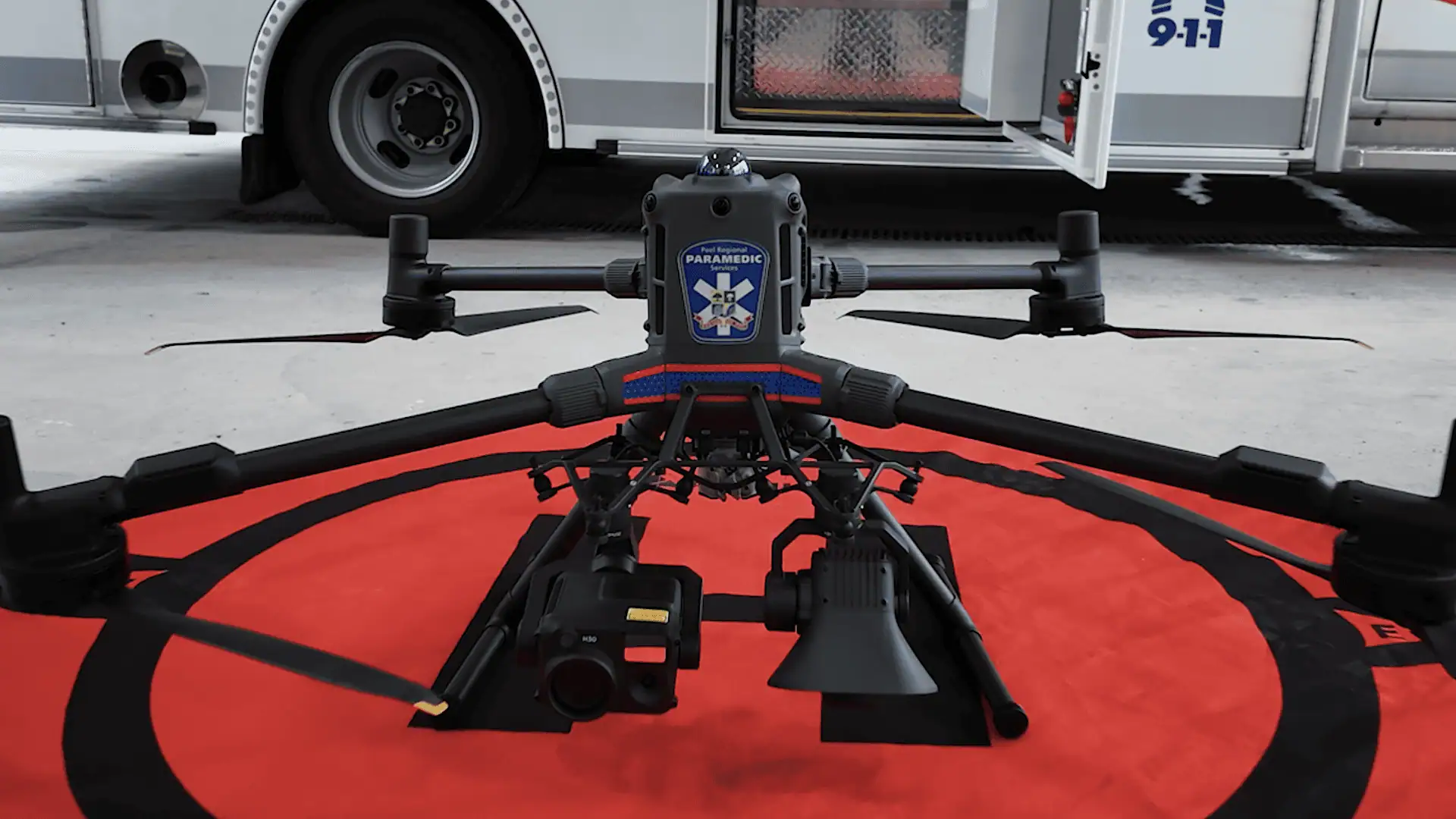
Peel Regional Paramedics launched the first medical drone pilot program in Ontario this week. Photo: Peel Region
The idea for a paramedic drone started several years ago between Peel Paramedics and Dr. Cheskes according to Gibson. Cheskes is well-regarded internationally for his work on cardiac arrest research.
“It was really born from seeing drones being used to deliver packages,” he noted. “So we thought-why not deliver a defibrillator?”
Data collected from this pilot program in Peel Region will help inform evidence-based research aimed at improving survival rates during cardiac emergencies while focusing on expanding access to life-saving defibrillation. The study will also investigate how delivering AEDs via drones can assist rural and Indigenous communities across Ontario where emergency response times tend to be longer.
Though this is Ontario’s first paramedic service drone program; similar initiatives are underway elsewhere around the globe. Australia and Sweden have initiated trials involving drones within their paramedic services. In July, Sweden reported success when a patient experiencing cardiac arrest received timely assistance through a drone carrying an automated external defibrillator which ultimately led to resuscitation according to Gibson.
“The drone was sent out along with paramedics and all essential elements came together leading to saving that patient’s life,” he shared.
Cloer by home here too; police departments are utilizing drones as well. Durham Regional Police introduced a “drone first responder” pilot project back in February while Peel Regional Police plans on launching one by 2025.
The community safety team from Peel’s paramedics is heading up this initiative with members qualified as licensed drone pilots stated Gibson further adding that when calls come through; they’ll establish flight plans tracked via Nav Canada systems accordingly.
The funds required for implementing this pilot scheme were sourced through grants alongside private donations revealed Gibson explaining that currently there are no taxpayer dollars involved financing it at present moment either way however!
Gibson expressed enthusiasm regarding these advancements saying “In Peel we’re consistently exploring innovative ways making care delivery quicker accessible our residents.” He continued “Sometimes challenges arise due mainly road networks weather traffic congestion but our hardworking dedicated medics navigate effectively yielding high-quality clinical service! It’s simply about embracing fresh perspectives whilst innovating solutions!”
You can find more information about this program here.
INsauga’s Editorial Standards and Policies
Stay informed!
Subscribe now so you don’t miss today’s top stories from your city!
Source link