





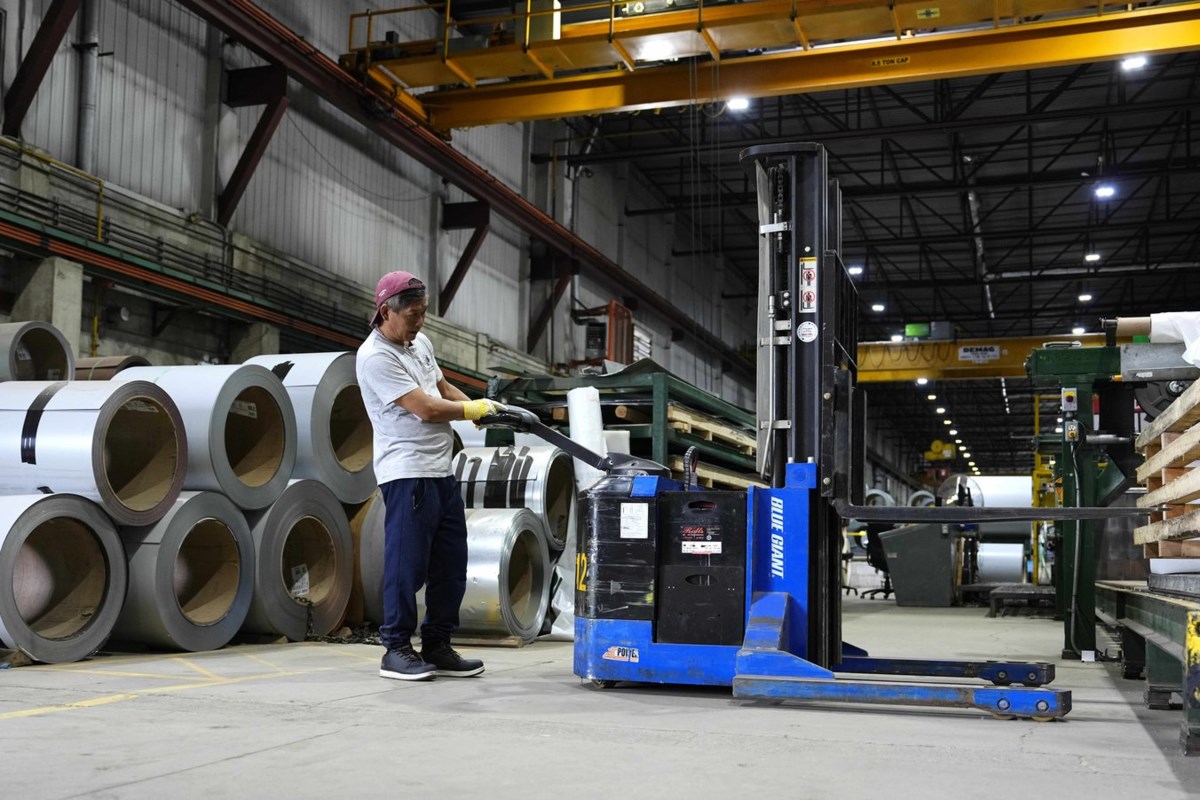
‘It’s everything from welders to mechatronics to electrical technicians. It’s right across the board,’ says official with Canadian Manufacturers and Exporters
A recent report from the industry association that represents Canadian manufacturers indicates that workforce issues continue in Ontario, even though job vacancies are decreasing.
The findings released by Canadian Manufacturers and Exporters reveal that manufacturers in Ontario are experiencing shortages in essential skilled trades because apprenticeship programs aren’t keeping up with the demands of modern manufacturing.
The report, which reflects discussions the association had with manufacturers and educators throughout the province, highlighted a “weak alignment” between education systems and industry requirements. It mentioned that small and medium-sized manufacturers struggle to handle these challenges.
“Manufacturers are still struggling to find people that they need with the kind of skills they need,” said the group’s president and CEO Dennis Darby.
“This really means that we’ve got to do better to match the demand with how we train and educate and prioritize skilled trades.”
Darby noted that this gap exists across various skilled trades.
“It’s everything from welders to mechatronics to electrical technicians. It’s right across the board,” he said in an interview.
“One of the things we’re trying to help evolve is trying to get better linkages between educational institutions and manufacturers and.. doing more to really make that connection earlier.”
The report stated stakeholders widely expressed that while labor market conditions may be changing, manufacturers still face structural workforce challenges. This is despite a significant decrease in the province’s manufacturing job vacancy rate, which fell from 4.7 percent in 2022 to 1.7 percent at the end of last year – marking its lowest rate in over ten years.
Darby attributed this downward trend partly to the trade war between Canada and the United States, as temporary layoffs among manufacturing workers have reduced the job gap for now. He mentioned around 50,000 jobs – mainly linked to steel, aluminum, automotive, and fabrication – have been affected by tariffs.
“But long term, we’re convinced and our members and companies are convinced, we have to fill that pipeline,” he said, adding about 20,000 workers in Ontario’s manufacturing sector retire each year.
This situation comes as the sector faces additional pressures due to Canada’s declining immigration rates.
“Canada has relied historically on skilled immigrants coming here; with those reductions, temporarily that’s caused a real perturbation,” said Darby.
“We’ve heard that from colleges too; suddenly there aren’t as many people available, and pathways to citizenship aren’t as clear.”
The association emphasized a need for more responsive immigration processes that align with employer needs along with targeted government initiatives aimed at helping smaller manufacturers plan for succession.
This report by The Canadian Press was first Sept. 23, 2026.
Sammy Hudes, The Canadian Press
Source link