





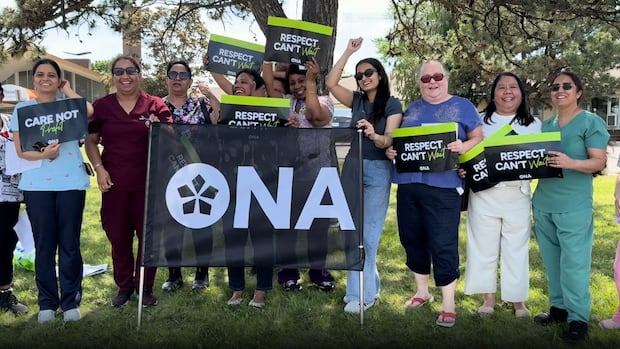
Union representatives for around 4,400 long-term care nurses in Ontario will start arbitration on Monday following a breakdown in negotiations earlier this spring and growing frustration over the situation.
During arbitration, a neutral third party reviews submissions and evidence from both the union and employers before making a final, binding collective agreement.
“We’re hopeful, but the system, the arbitration system … is broken, it’s archaic, it’s oppressive,” said Ontario Nurses’ Association (ONA) president Erin Ariss.
Ariss mentioned to that her members are frustrated due to provincial laws that prevent nurses from striking. She describes these conditions as leading to unfair bargaining outcomes where arbitrators end up “imposing a decision” on nurses.
The ongoing negotiations are focused solely on nurses employed in private, for-profit long-term care facilities.
Nurses at municipal long-term care homes were part of last year’s bargaining for hospital staff, which also concluded with arbitration.
This led to an agreement that Ariss labeled as a “new low in the history of bargaining” since it didn’t address the minimum staffing levels requested by nurses throughout discussions.
“This [arbitration] system relies on patterns and compares nurses … to other occupations that aren’t saving lives every day,” Ariss told CBC last week. She pointed out that during previous arbitration in 2025, nurses were unfairly compared with retail clerks and office workers.
Focus on wage equality between public and private sector nurses
The ONA’s primary goal in this week’s talks is achieving wage equality between for-profit and public-sector long-term care nurses.
“It is exactly the same work, but for wages [for private-sector nurses] that are inferior, in some cases, by $10 to $15 per hour,” she stated.
There are two groups of long-term care home nurses in Ontario: Those employed by municipal care homes and those working in the public sector. This week’s arbitration applies only to the second group. (John Panella/Shutterstock)
The Ontario Long-term Care Association (OLTCA) represents about 70 percent of Ontario’s nursing home sector. A collection of for-profit operators, some being association members, will be present at the negotiation table during arbitration.
The OLTCA declined CBC’s request for an interview but expressed through a statement that it hopes for constructive progress during arbitration.
Legal challenge initiated
For Ariss, witnessing two consecutive breakdowns in bargaining between her union and employers indicates that legal changes may be necessary.
Nurses currently can’t engage in any job action whatsoever under the Hospital Labour Disputes Arbitration Act including strikes.
Last month, ONA announced plans for a constitutional challenge against that law.
“Every worker should have the right to strike or withdraw their labour in this country. That’s what makes us a free country,” Ariss told .
This move faced criticism from the Ontario Hospital Association when news broke about it last month. The OHA described it as a “reckless challenge to legislation that protects patients from unnecessary risk.”
However, Ariss argues real risks arise when nurses can’t take job actions needed to ensure proper staffing levels and working conditions.
She confirmed that they have filed their application for challenge , and ONA’s legal team will provide evidence supporting it over summer.
Source link