





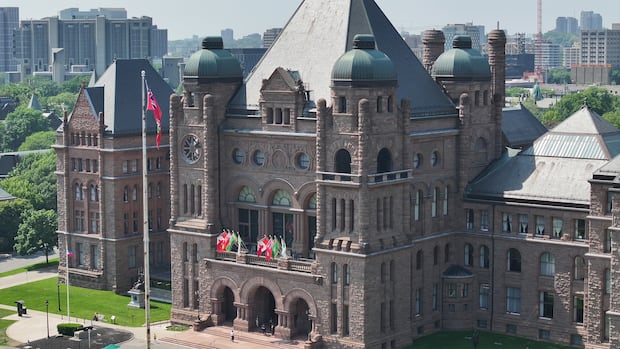
Ontario’s Bill 9, aimed at addressing the misconduct of municipal politicians, successfully passed its third reading at Queen’s Park on Tuesday and is set to become law.
The Municipal Accountability Act was approved overwhelmingly with a vote of 110 to one. It now awaits royal assent from the lieutenant governor before taking effect.
Introduced by Municipal Affairs Minister Rob Flack, Bill 9 establishes uniform codes of conduct for municipalities throughout Ontario and empowers them to remove or disqualify members found guilty of serious violations.
This legislation mandates that a local integrity commissioner investigates allegations of misconduct. If they determine that a breach of the code warrants removal, the case will be referred to Ontario’s integrity commissioner for further evaluation.
If that independent overseer also suggests removal, it will then go back to the local council for a decision within 30 days. A councillor can only be removed if all remaining council members who are not involved in the complaint unanimously agree.
The only dissenting vote came from Independent MPP Bobbi Ann Brady, representing Haldimand-Norfolk in southwestern Ontario.
She expressed her belief to that elected officials shouldn’t have the power to dismiss their peers; instead, she thinks voters should decide. She also raised significant concerns about how the integrity commissioner process works, even filing a motion earlier this month advocating for their elimination.
This marks another effort to introduce legislation targeting severe misconduct among municipal councillors, building on previous attempts by both the Liberals and NDP.
For years now, municipal politicians and staff have been requesting legal tools to handle claims regarding sexual harassment, discrimination, and ethical breaches.
The province took this bill on tour last summer for public feedback and promised to implement the new law ahead of upcoming municipal elections scheduled for October 26.
Source link
Concerns Over Unanimous Vote Requirement
A relevant case illustrating where this law could have been useful involves former Ottawa city councillor Rick Chiarelli. has reported extensively on allegations concerning harassment directed at women employed in Chiarelli’s office. Despite several reports from integrity commissioners outlining issues, Ottawa city council lacked any authority to remove him. Ottawa city councillor Rick Chiarelli in November 2019. He did not run for re-election in 2022. (Giacomo Panico/CBC) The requirement for a unanimous vote prior to removing a councillor has faced some criticism. “Two integrity commissioners can have found serious harm, harm of a sexual nature, harm to real people, and if a single councilor votes no, the person walks away without so much as a formal sanction,” said Ottawa Centre NDP MPP Catherine Mc Kenney, who served on city council with Chiarelli and generally supports the bill. “This is not a high enough bar; this is more of a wall that does not prioritize accountability.” Liberal MPP Stephen Blais from Orléans echoed similar sentiments; he’s also a former Ottawa city councillor whose own private member’s bills didn’t make it this far. In his statement about the new law being an improvement but needing more strength and timeliness he said:“I continue to believe accountability decisions should be more independent and less political; I believe the government waited far too long to act.”Source link