




DEVELOPMENT PLANNING
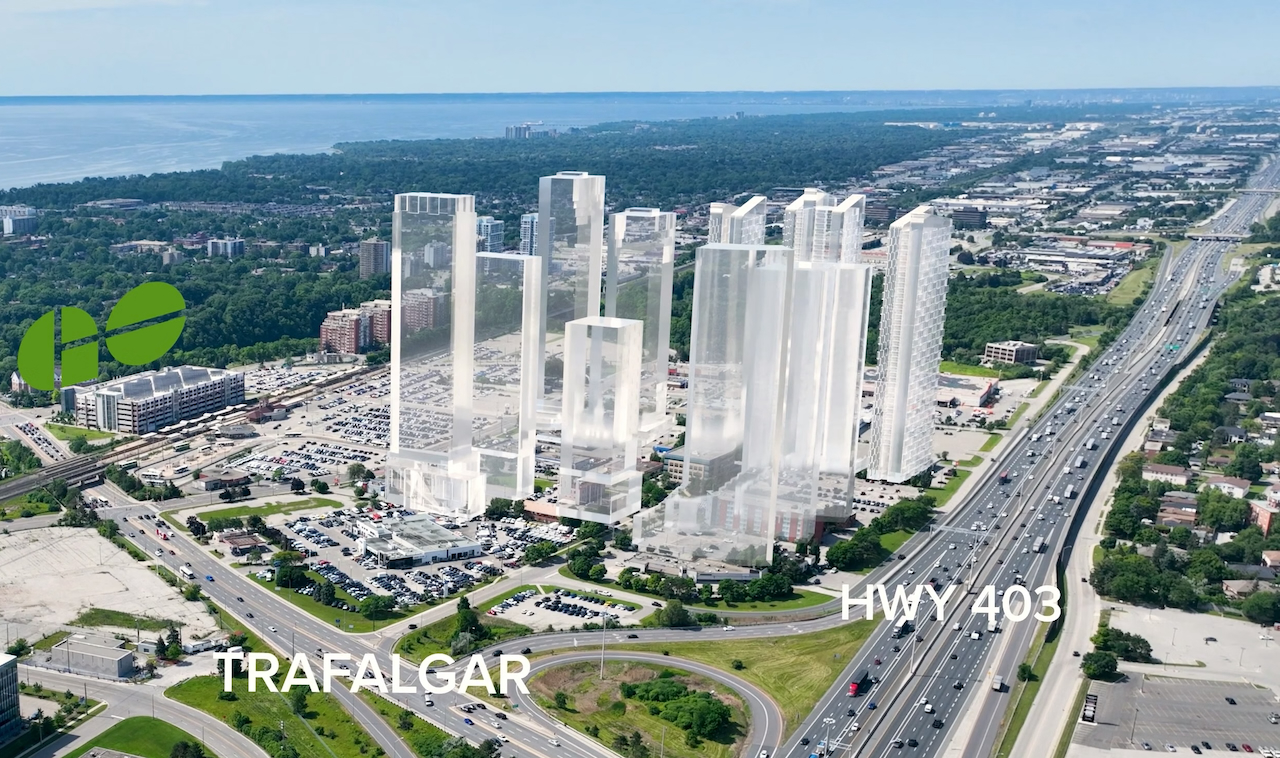
May 04, 2026 by Anthony Teles 113 Province Issues MZOs for 11-Tower Oakville GO Transit Oriented Community A provincially backed plan consolidates four previously separate proposals into a unified redevelopment area between Oakville GO station and the QEW. Now branded as the Oakville Transit Oriented Community (TOC), the project brings together sites along Cross Avenue, Argus Road, and South Service Road East within Midtown Oakville, an area long identified for intensification between the town’s traditional Downtown and Uptown districts. The proposal is led by a partnership of Distrikt Group, The Remington Group, and Windsor Private Capital. Looking southwest to the Oakville TOC, image from submission to Town of Oakville The combined proposals outlined 11 towers across four development blocks, with heights ranging up to 61 storeys, though the Province is restricting the maximum to 38 storeys while redistributing overall density through four Minister’s Zoning Orders (MZOs) issued in April. MZOs are a provincial planning tool that allows the Province to directly set zoning permissions for specific lands, overriding local municipal zoning controls to fast-track development. The lands span four development parcels northwest of the GO station, generally centred on the intersections of Cross Avenue and Argus Road, and extending toward South Service Road East. The sites include 157 Cross Avenue, 590 Argus Road, 166 South Service Road East, and 217 Cross Avenue at the northeast corner with Argus Road, together forming a roughly 4.9ha assembly within Midtown Oakville. Individually, the parcels range from approximately 8,950m² to over 15,300m² in size, and are currently occupied by a mix of low-rise commercial plazas, office uses, and a hotel, alongside expansive surface parking lots and service-oriented buildings. An aerial view of the sites and surrounding area, image retrieved from Google Maps Distrikt Group initially advanced separate rezoning applications across the area beginning in the early 2020s. Early proposals included the three-tower scheme at 590 Argus Road and the 45- and 61-storey development at 157 Cross Avenue. By 2024, these individual applications were brought into a broader provincial TOC framework, with the Province partnering with Distrikt to coordinate the sites under a single master plan, leading to a formal resubmission in November, 2025. The process culminated on April 9, 2026, when the Province issued four MZOs covering the full TOC lands. The TOC would introduce an 11-tower community organized across four blocks, delivering approximately 6,881 residential units. The plan incorporates roughly 15,000m² of non-residential space, including office and street-oriented retail, while allocating about 7,888m² to POPS (Privately-Owned Publicly-accessible Spaces). A network of new and realigned streets, including adjustments to Cross Avenue and Argus Road, would divide the lands into smaller urban blocks. Additional community infrastructure is planned to include a daycare, library, and multi-purpose community space, with the project envisioned to proceed in phases over a multi-decade timeline beginning with the Cross Avenue lands. Ground floor retail, image from submission to Town of Oakville At 157 Cross Avenue, the proposal called for a two-tower mixed-use development rising 45 and 61 storeys, reaching heights of 155.5m and 203.5m. Designed by Teeple Architects, the project would deliver 1,198 condominium units within a total Gross Floor Area (GFA) of approximately 97,858m². The podium would support a mix of uses, including about 2,739m² of retail space and 1,126m² of office space, while framing a POPS at grade. Below grade, seven levels of parking are proposed, accommodating 819 vehicles, alongside 1,204 bicycle parking spots. A redesign would be needed to accommodate height restrictions. Looking west to 157 Cross Avenue, designed by Teeple Architects for Distrikt Group To the south, 590 Argus Road was planned as a three-tower development rising 44, 50, and 58 storeys, reaching a maximum height of 196.5m. Also designed by Teeple Architects, the project would deliver approximately 1,750 rental units within a total GFA of about 135,792m². The podium would connect the towers and incorporate roughly 1,744m² of retail space, while organizing a series of POPS fronting Argus Road. Below grade, six levels of parking are proposed, providing 1,255 spaces, complemented by 1,750 bicycle parking spots. A redesign would also be needed here to accommodate height restrictions. Looking northwest to 590 Argus Road, designed by Teeple Architects for Distrikt Group At 166 South Service Road East, a three-tower development designed by Sweeny & Co Architects would have rised 44, 50, and 58 storeys, up to 194m. The proposal would deliver 1,606 residential units within approximately 106,443m² of GFA, with a mix of unit types weighted toward one-bedroom layouts. Supporting uses would include about 3,873m² of office space and 2,014m² of retail space in the podium. The development would be served by 1,191 vehicular parking spaces, all allocated to residents. A redesign would be needed to accommodate height restrictions. Looking southeast to 166 South Service Road East, designed by Sweeny &Co Architects Inc for Distrikt Group At the northeast corner of Cross Avenue and Argus Road, the Distrikt Station block iswasenvisioned as a three-tower mixed-use development rising 44, 49, and 58 storeys, reaching 184.8m. Designed by BDP Quadrangle, the project would accommodate 1,748 residential units within approximately 120,803m² of GFA. The plan incorporates a mix of supporting uses, including about 2,269m² of office space and 2,816m² of retail space at grade and within the podium. With 1,286 residential parking spaces proposed, the block is positioned to anchor the northern portion of the development. A redesign would be needed to accommodate height restrictions. Looking northwest to Distrikt Station, designed by BDP Quadrangle for Distrikt Group Across the four blocks, the plan would introduce a new street network that would realign Cross Avenue and Argus Road while adding new connections to break up the existing superblocks. This layout is intended to frame the POPS, collectively accounting for roughly 7,888m² of open space. Sustainability measures include geothermal and wastewater heat recovery systems. The site is situated within a short 3- to 6-minute walk from the Oakville station on the Lakeshore West GO line. Looking ahead, the proposed Trafalgar Road Bus Rapid Transit corridor would further strengthen north-south transit connections from Midtown across the highway to the northern half of Oakville. At the local level, the plan would introduce bike lanes along Cross Avenue and Argus Road, supported by approximately 6,954 bicycle parking spaces across the development. A growing cluster of other high-rise proposals would also reshape more of Midtown Oakville. To the west, applications at 599 Lyons Lane and 627 Lyons Lane would introduce towers of 26 and 28 storeys, while to the southeast, 485 Trafalgar Road is planned with towers rising 14 and 19 storeys. To the east of Trafalgar Road, 349 Davis Road is looking for 58 storeys. UrbanToronto will continue to follow progress on these developments, but in the meantime, you can learn more about them from our Database files, linked below. If you’d like, you can join in on the conversations in the associated Project Forum threads or leave a comment in the space provided on this page. * * * UrbanToronto’s research and data service, UTPro, provides comprehensive data on construction projects in the Greater Golden Horseshoe—from proposal through to completion. Other services include Instant Reports, downloadable snapshots based on location, and a daily subscription newsletter, New Development Insider, that tracks projects from initial application. fbq(‘track’, “PageView”);
Source link
May 04, 2026 by Anthony Teles 113 Province Issues MZOs for 11-Tower Oakville GO Transit Oriented Community A provincially backed plan consolidates four previously separate proposals into a unified redevelopment area between Oakville GO station and the QEW. Now branded as the Oakville Transit Oriented Community (TOC), the project brings together sites along Cross Avenue, Argus Road, and South Service Road East within Midtown Oakville, an area long identified for intensification between the town’s traditional Downtown and Uptown districts. The proposal is led by a partnership of Distrikt Group, The Remington Group, and Windsor Private Capital. Looking southwest to the Oakville TOC, image from submission to Town of Oakville The combined proposals outlined 11 towers across four development blocks, with heights ranging up to 61 storeys, though the Province is restricting the maximum to 38 storeys while redistributing overall density through four Minister’s Zoning Orders (MZOs) issued in April. MZOs are a provincial planning tool that allows the Province to directly set zoning permissions for specific lands, overriding local municipal zoning controls to fast-track development. The lands span four development parcels northwest of the GO station, generally centred on the intersections of Cross Avenue and Argus Road, and extending toward South Service Road East. The sites include 157 Cross Avenue, 590 Argus Road, 166 South Service Road East, and 217 Cross Avenue at the northeast corner with Argus Road, together forming a roughly 4.9ha assembly within Midtown Oakville. Individually, the parcels range from approximately 8,950m² to over 15,300m² in size, and are currently occupied by a mix of low-rise commercial plazas, office uses, and a hotel, alongside expansive surface parking lots and service-oriented buildings. An aerial view of the sites and surrounding area, image retrieved from Google Maps Distrikt Group initially advanced separate rezoning applications across the area beginning in the early 2020s. Early proposals included the three-tower scheme at 590 Argus Road and the 45- and 61-storey development at 157 Cross Avenue. By 2024, these individual applications were brought into a broader provincial TOC framework, with the Province partnering with Distrikt to coordinate the sites under a single master plan, leading to a formal resubmission in November, 2025. The process culminated on April 9, 2026, when the Province issued four MZOs covering the full TOC lands. The TOC would introduce an 11-tower community organized across four blocks, delivering approximately 6,881 residential units. The plan incorporates roughly 15,000m² of non-residential space, including office and street-oriented retail, while allocating about 7,888m² to POPS (Privately-Owned Publicly-accessible Spaces). A network of new and realigned streets, including adjustments to Cross Avenue and Argus Road, would divide the lands into smaller urban blocks. Additional community infrastructure is planned to include a daycare, library, and multi-purpose community space, with the project envisioned to proceed in phases over a multi-decade timeline beginning with the Cross Avenue lands. Ground floor retail, image from submission to Town of Oakville At 157 Cross Avenue, the proposal called for a two-tower mixed-use development rising 45 and 61 storeys, reaching heights of 155.5m and 203.5m. Designed by Teeple Architects, the project would deliver 1,198 condominium units within a total Gross Floor Area (GFA) of approximately 97,858m². The podium would support a mix of uses, including about 2,739m² of retail space and 1,126m² of office space, while framing a POPS at grade. Below grade, seven levels of parking are proposed, accommodating 819 vehicles, alongside 1,204 bicycle parking spots. A redesign would be needed to accommodate height restrictions. Looking west to 157 Cross Avenue, designed by Teeple Architects for Distrikt Group To the south, 590 Argus Road was planned as a three-tower development rising 44, 50, and 58 storeys, reaching a maximum height of 196.5m. Also designed by Teeple Architects, the project would deliver approximately 1,750 rental units within a total GFA of about 135,792m². The podium would connect the towers and incorporate roughly 1,744m² of retail space, while organizing a series of POPS fronting Argus Road. Below grade, six levels of parking are proposed, providing 1,255 spaces, complemented by 1,750 bicycle parking spots. A redesign would also be needed here to accommodate height restrictions. Looking northwest to 590 Argus Road, designed by Teeple Architects for Distrikt Group At 166 South Service Road East, a three-tower development designed by Sweeny & Co Architects would have rised 44, 50, and 58 storeys, up to 194m. The proposal would deliver 1,606 residential units within approximately 106,443m² of GFA, with a mix of unit types weighted toward one-bedroom layouts. Supporting uses would include about 3,873m² of office space and 2,014m² of retail space in the podium. The development would be served by 1,191 vehicular parking spaces, all allocated to residents. A redesign would be needed to accommodate height restrictions. Looking southeast to 166 South Service Road East, designed by Sweeny &Co Architects Inc for Distrikt Group At the northeast corner of Cross Avenue and Argus Road, the Distrikt Station block iswasenvisioned as a three-tower mixed-use development rising 44, 49, and 58 storeys, reaching 184.8m. Designed by BDP Quadrangle, the project would accommodate 1,748 residential units within approximately 120,803m² of GFA. The plan incorporates a mix of supporting uses, including about 2,269m² of office space and 2,816m² of retail space at grade and within the podium. With 1,286 residential parking spaces proposed, the block is positioned to anchor the northern portion of the development. A redesign would be needed to accommodate height restrictions. Looking northwest to Distrikt Station, designed by BDP Quadrangle for Distrikt Group Across the four blocks, the plan would introduce a new street network that would realign Cross Avenue and Argus Road while adding new connections to break up the existing superblocks. This layout is intended to frame the POPS, collectively accounting for roughly 7,888m² of open space. Sustainability measures include geothermal and wastewater heat recovery systems. The site is situated within a short 3- to 6-minute walk from the Oakville station on the Lakeshore West GO line. Looking ahead, the proposed Trafalgar Road Bus Rapid Transit corridor would further strengthen north-south transit connections from Midtown across the highway to the northern half of Oakville. At the local level, the plan would introduce bike lanes along Cross Avenue and Argus Road, supported by approximately 6,954 bicycle parking spaces across the development. A growing cluster of other high-rise proposals would also reshape more of Midtown Oakville. To the west, applications at 599 Lyons Lane and 627 Lyons Lane would introduce towers of 26 and 28 storeys, while to the southeast, 485 Trafalgar Road is planned with towers rising 14 and 19 storeys. To the east of Trafalgar Road, 349 Davis Road is looking for 58 storeys. UrbanToronto will continue to follow progress on these developments, but in the meantime, you can learn more about them from our Database files, linked below. If you’d like, you can join in on the conversations in the associated Project Forum threads or leave a comment in the space provided on this page. * * * UrbanToronto’s research and data service, UTPro, provides comprehensive data on construction projects in the Greater Golden Horseshoe—from proposal through to completion. Other services include Instant Reports, downloadable snapshots based on location, and a daily subscription newsletter, New Development Insider, that tracks projects from initial application. fbq(‘track’, “PageView”);
 fbq(‘track’, “PageView”);
Source link