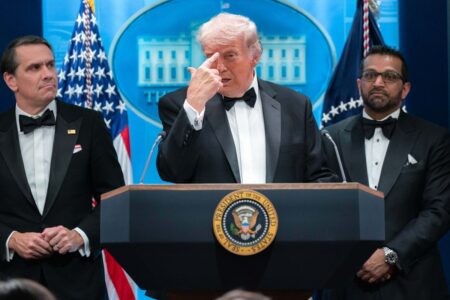




On Saturday, a man armed with a gun rushed through security at the annual White House Correspondents’ Dinner in Washington, D. C. This event was attended by US President Donald Trump and various high-ranking officials alongside some of the nation’s leading political journalists. The shooter injured a Secret Service agent before being caught by law enforcement – fortunately, the agent was protected by a bulletproof vest.
Before this event, the 31-year-old suspect from Torrance, California, reportedly sent messages to family members portraying himself as a “friendly federal assassin” and voicing frustration with Trump administration policies. This raised suspicions that his actions were politically motivated. He is set to appear in court for the first time today.
“I can’t imagine that there’s any profession that is more dangerous,” Trump remarked on Saturday evening. The attack occurred at the same venue where an assassination attempt against then-President Ronald Reagan took place in 1981.
This incident follows a troubling rise in attempts to harm politicians across the United States, reaching unprecedented levels not seen since the 1960s. Over the past two years, Trump has encountered three assassination attempts himself. Moreover, legislators from both parties have been impacted by this wave of violence. Investigations into threats against members of Congress and their families have increased for three consecutive years according to US Capitol Police data, showing a 58% rise in 2025 alone. Supreme Court justices are also facing threats of assassination.
The issue isn’t limited to national politics; local officials are also under threat. In June, Minnesota’s top Democratic representative Melissa Hortman and her spouse were killed in their home by an assailant who had also targeted Minnesota State Senator John Hoffman and his wife that same day while carrying what appeared to be a hit list featuring over 45 state and federal officials from Minnesota.
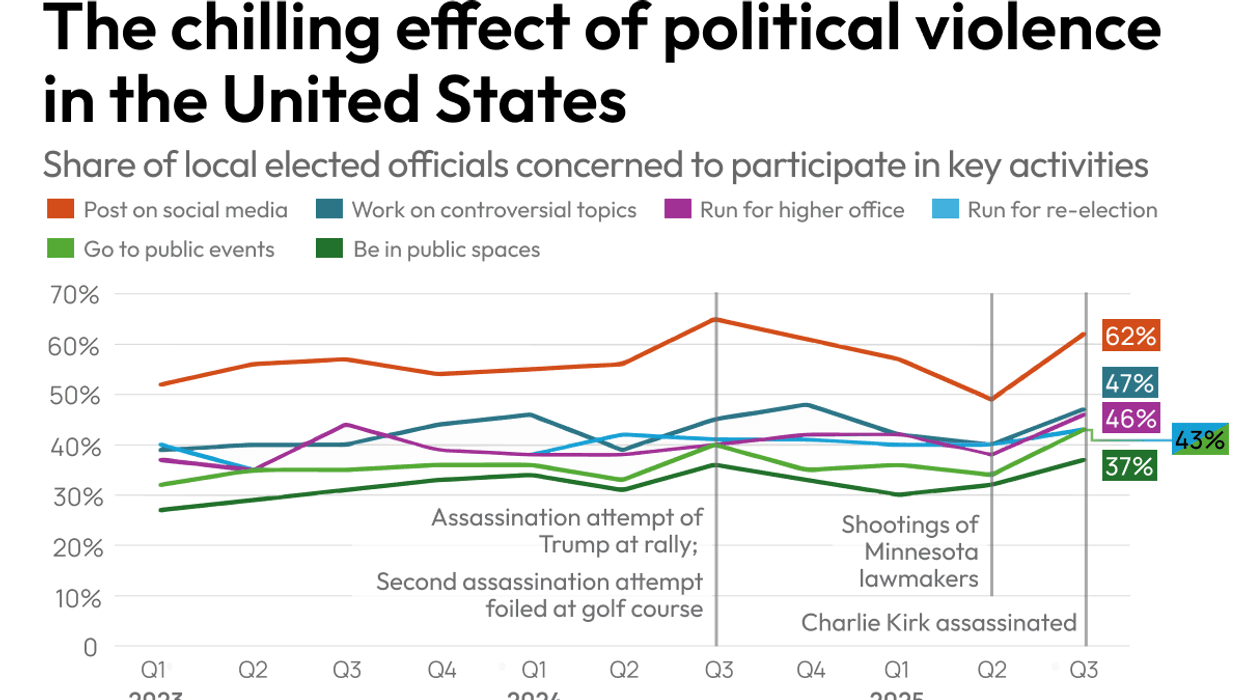
Research from Princeton University has indicated spikes in threats and harassment directed at local officials throughout 2025, notably after conservative activist Charlie Kirk was killed in September – Kirk’s widow Erika was present at the WHCD on Saturday. More than half of local officials such as mayors and city council members reported experiencing insults; approximately one-third faced harassment; and about 17% reported receiving direct threats.
As shown above in the Graphic Truth, this trend is chilling local politicians’ willingness to stay involved in public service since they typically have fewer security resources compared to their national counterparts. In last year’s third quarter alone, nearly 75% expressed being less willing to engage in political activities – including tackling controversial issues or posting on social media – due to fears of backlash; this figure rose from 66% previously.
While targeted political violence remains relatively low compared to global standards within the United States, these increasing incidents make extraordinary events like what transpired at the WHCD feel alarmingly routine, raising concerns for all levels of government across America.