



As water levels on Moose River continue to rise, the MNR expects ice breakup will happen next week; some evacuees arrived in Barrie on Monday.
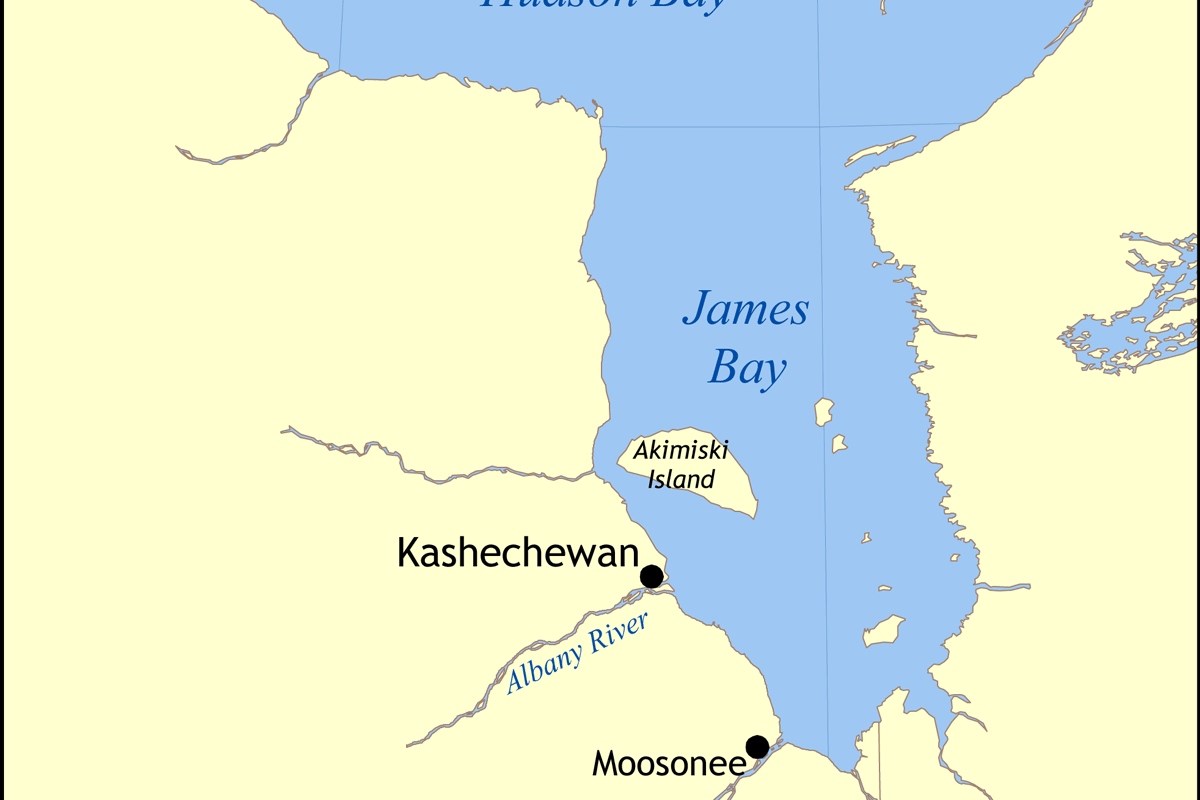
KASHECHEWAN – Over 100 at-risk residents were moved from Kashechewan First Nation on Monday as leaders brace for a potentially hazardous spring thaw after a notably snowy winter.
Executive director Tyson Wesley mentioned that evacuees from the community located on the James Bay coast are currently being housed in Timmins, Kapuskasing, Cochrane, and Niagara Falls.
“They have to leave the community because of our assessment of how much snow fell in the region,” Wesley said. “The thickness of the ice is a little thicker than in previous years, so we’re trying not to take any chances.”
The community is home to around 2,200 people, but only about 300 remained when the evacuation began. The rest have not returned after being displaced by a water and sewage crisis earlier this year.
Kashechewan and Fort Albany are both affected by the Albany River.
The Ministry of Natural Resources (MNR) issued a flood outlook statement for this river on April 20. It urges residents in both communities to monitor river conditions closely. The MNR predicts ice will break up during the last week of April, with a high flood risk projected for both areas.
Fort Albany First Nation has also begun evacuating vulnerable individuals from their community.
The threat of flooding is impacting other nearby communities along the James Bay coastline as well.
A flood watch was announced for the Moose River today.
Residents in Moosonee and Moose Factory should keep an eye on river conditions closely.
Water levels on Moose River are rising steadily, and MNR forecasts that ice breakup will occur next week. Moose Cree First Nation started evacuating vulnerable members to Barrie on Monday.
On Attawapiskat River, a flood outlook was released on April 17, with MNR estimating a moderate-high flooding risk for Attawapiskat.
Wesley noted that this winter’s heavy snowfall has heightened concerns about potential flooding among residents.
“It’s almost double the amount that we saw last year,” he said.
“We’re seeing many people struggling to reach their camps due to difficult travel conditions with snowmobiles. So there are plenty of signs indicating that there’s significantly more snow this year.”
No additional evacuation flights are scheduled at this time, but officials are gathering names just in case another flight becomes necessary.
Wesley stated that while evacuations from other coastal communities haven’t yet created transportation shortages, things could change rapidly if river conditions worsen.
“Moose Cree is a big concern this year, and they hardly ever evacuate,” he said. “So if there’s an ice breakup in Moose Factory, we might see fewer flights available for us, which could lead to problems if all our communities declare states of emergency simultaneously.”
Kashechewan is still working through recovery efforts following a January emergency that forced over 2,000 residents to leave due to failures in water and sewage systems resulting in cryptosporidium spread. Many individuals remain sheltered within host communities across northern Ontario and beyond.
The repairs to the community’s water system were originally expected to wrap up by June; however, Wesley indicated that it now looks like completion may be pushed back until July or August. This means many residents might have to stay away from home longer than anticipated.
“July is kind of a target point, but all of this can kind of change if we have to fly out everybody out of the community for their safety,” he said.
This extended timeline has been challenging for residents who’ve already spent months away from their homes.
“If July is when we go home, that’s going to be seven months,” Wesley said. “It has been frustrating for community members to be in this situation.”
Source link
Source link