





Cutting down a business’s carbon footprint can be quite a challenge. For the Electrical Safety Authority in Ontario, which operates across the province and travels eight to nine million kilometers each year, this task is even more complicated. To address this issue, they sought help from innovative climate solution thinkers at the University of Waterloo.
As part of an industry partnership for Waterloo’s Environment and Business Capstone Project, Eric Kingston (BES ’97), Vice-President Operations, presented their electrification challenge to students. He encouraged them to think about operational needs and obstacles related to various jobs, locations, and costs.
“We cover such a vast geography,” he explains. “Having one solution isn’t feasible. What we need from a vehicle for Downtown Toronto might be very different than a mining site.”
With a clear understanding of the problem’s scope, the students worked on their own to create solutions while meeting with Kingston regularly to fine-tune their proposals.
“That back and forth, that iterative piece is where the value was for both them and for me. They got a better appreciation of the complexities of the business, and we were able to step back and reflect a little more on what we were doing and why. It was fresh eyes to an old problem, and it was also dedicated eyes to a problem.”
The final proposal featured an emissions tracking system designed to establish baseline emissions for the first time so that measurable goals could be set going forward. This also included suggestions for adjusting the mix of vehicles used in operations.
“We started right away,” says Kingston. “We put the tracking in place, and then we started transitioning some of our vehicles to smaller, more fuel-efficient models and incorporating electrification into our fleet.”
Since implementing the capstone project recommendations, nearly one-third of the Electrical Safety Authority’s fleet has been updated. Over the past year, 31 vehicles have transitioned to either plug-in hybrid electric models or fully electric ones; around 100 vehicles have shifted to mid-sized trucks that are more efficient with fuel.
As they continue revamping their fleet, the Electrical Safety Authority has entered another phase based on student proposals. They’re currently conducting cost analyses for each vehicle to balance business needs with affordability and environmental impact-a balance they’ve learned together is not just possible but achievable.
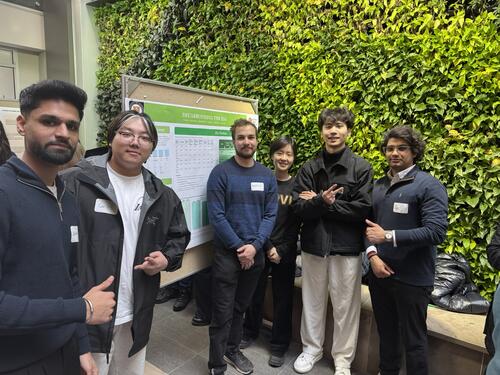
By merging technical know-how with environmental insights from business perspectives, Waterloo students are assisting industry leaders like Kingston in paving a path toward a more resilient future. This proves that today’s generation isn’t just prepared for climate challenges; they’re already working towards solutions. In fact, this initiative is among many innovative ideas coming out of capstone courses at Waterloo-some highlighted during this past March’s inaugural Environment Capstone Symposium.
As Waterloo continues connecting academia with real-world applications, we welcome collaboration opportunities. Whether you face an industry challenge as an industry client or engage with interns or co-op students-let’s tackle our biggest challenges together.
Source link