





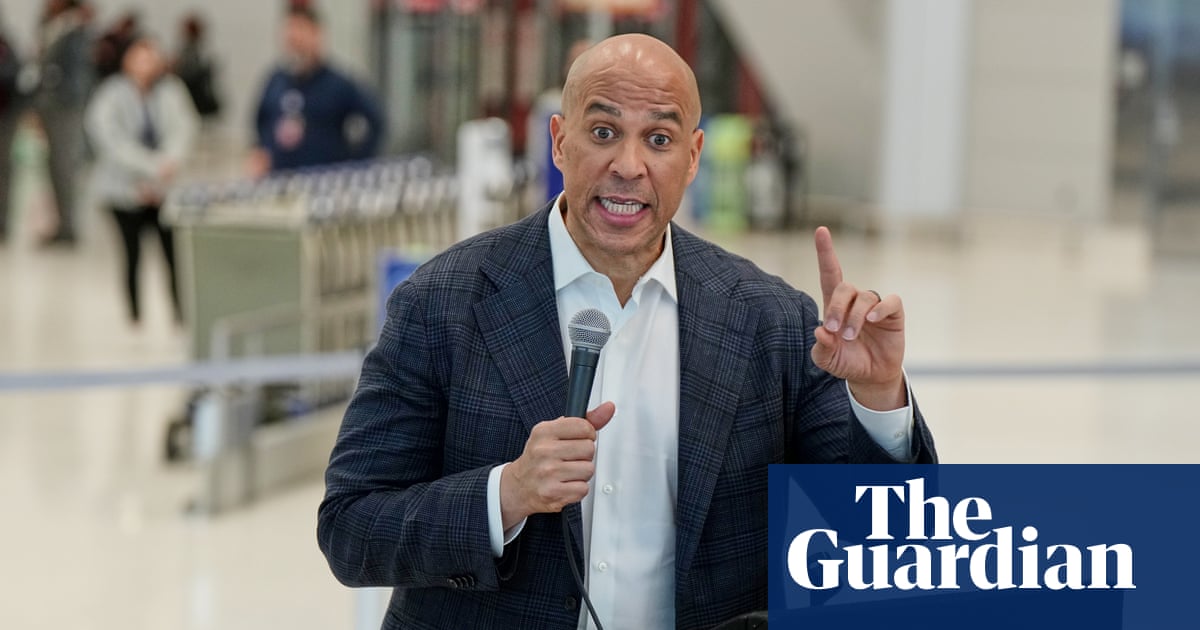
Cory Booker, the Democratic senator from New Jersey, has reiterated his call for a shift in leadership within the Democratic party, stating that the party has “failed this moment”.
“As a whole, our party has failed this moment,” Booker said on Sunday. “I’ve called for a generational renewal, because this left-right divide is killing our country and our adversaries know it.” He also mentioned that “purity tests” within the party have caused more division across the US.
During an interview on NBC’s Meet the Press, Booker pointed out that the Democratic party has “too small of a coalition”, particularly as it faces “new challenges”, including policies from the Trump administration and advancements in artificial intelligence and technology.
Booker’s remarks come amid rising tensions within the party, especially as dissatisfaction with Democratic senator Chuck Schumer grows. Some Democrats, particularly those on the more progressive side of things, have talked about replacing Schumer as midterm elections draw near. Progressive senators reportedly view Schumer as a barrier to change for the party due to his centrist views and as someone who hinders efforts against Donald Trump.
The Wall Street Journal reported last week that some senators, including Chris Murphy from Connecticut, Elizabeth Warren of Massachusetts, and Tina Smith of Minnesota have been having discussions with their colleagues about their frustrations with Schumer and strategies to remove him from his leadership role.
The Journal noted that some lawmakers had begun informal counts to assess whether there might be enough votes to oust Schumer. Concerns regarding Schumer are reportedly widespread among party members, with many speculating on ways to encourage him to step down. Some Senate Democrats have urged Schumer to commit to retiring in 2028.
Last fall, the New York Times revealed that a group of progressive senators-including Smith, Murphy, Warren-and others were using a Signal chat called “Fight Club” aimed at opposing centrist candidates backed by Schumer ahead of this year’s midterm elections.
However, during Sunday’s State of the Union show on CNN, Senator Andy Kim pushed back against claims that there’s division within the Democratic party. He stated “this is the most united I’ve ever seen the Senate Democrats,” adding that he currently supports Schumer and Democratic leadership.
In Sunday’s interview, Booker also touched upon a possible presidential bid. When asked directly about it, he said he is “definitely not ruling out” another run for president.
His ongoing book tour has sparked speculation about his interest in running again. The title of his latest book, Stand, refers to his record-setting filibuster last year in which he spoke against Trump administration policies for 25 hours straight.
During his Meet the Press appearance, Booker addressed US involvement in Israel’s conflict with Iran by questioning how well the Trump administration plans to proceed with it. While he didn’t outright dismiss US intervention in Iran affairs; he criticized how it’s being managed. He also spoke about issues related to partial government shutdowns and ongoing negotiations in Congress while stating he won’t support any additional funding for Immigration and Customs Enforcement (ICE), which handles anti-immigrant operations under Trump.
“Americans want a new generation of leaders that show that they can lift the whole country up,” Booker added. “It is time for a new vision of our country that is far more uniting than deepening divides.”
Source link
Source link