


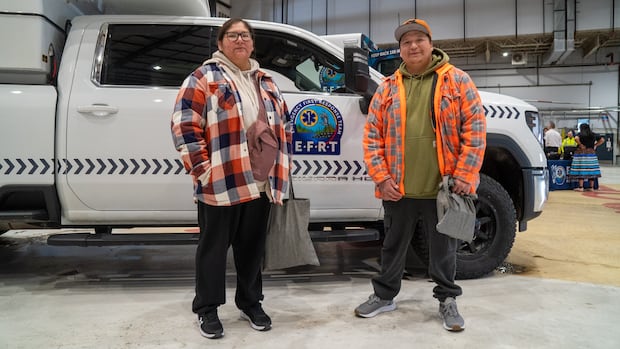
Transporting individuals for urgent medical care remains a significant issue in fly-in First Nations located in northwestern Ontario.
This means these communities depend on Ornge’s air ambulance service to reach the nearest hospitals in Kenora, Sioux Lookout, Winnipeg, or Thunder Bay – often hundreds of kilometres away from their homes.
For example, in Keewaywin First Nation, residents facing a medical emergency struggle to find a vehicle, much less one stocked with health-care supplies, to travel to the nursing station.
“Sometimes that thing [vehicle] falls apart, the one that we use, and sometimes it doesn’t wanna start,” said Eddie Meekis, a band councillor for the Oji-Cree First Nation. “Sometimes, we can’t fit anybody in our own [personal vehicles].”
Even moving people within communities in northwestern Ontario can be challenging – whether it’s getting them to the nursing station for immediate help or to the airport for further medical travel.
![]() Eddie Meekis, a band councillor in Wapekeka First Nation, says the vehicle the community currently uses for medical transportation frequently breaks down, so he’s excited about the new heavy-duty truck being delivered as part of the emergency first response team (EFRT) program. (Sarah Law/CBC)
“We’ve heard of patients being transferred in the back of pickup trucks in adverse weather conditions, something that you don’t think exists in Ontario or Canada,” said Jeffrey Gunner, a member of Moose Cree First Nation and director of the new emergency first response team (EFRT) program at Ornge.
“Something that I think most Ontarians probably take for granted every day is when you call for help, somebody’s gonna come. But for many of those communities, that’s not reality.”
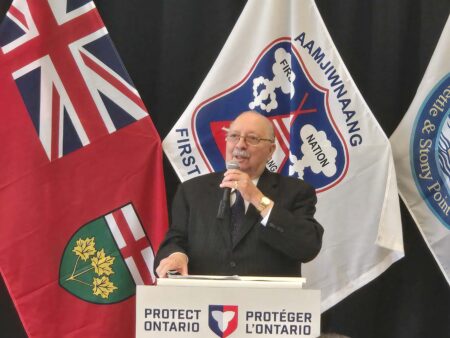
The EFRT – supported by Ornge and operated by First Nations – has been active in several communities recently but was officially launched during an event Tuesday at the Ornge hangar in Thunder Bay.
PHOTOS | Ornge celebrates launch of new emergency first response team (EFRT) program:
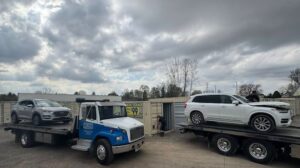
The program essentially trains community coordinators and their teams as emergency responders who can care for patients on site and safely transport them using new heavy-duty trucks equipped with medical supply pods.
All equipment is provided by Ornge which also assists with record-keeping and data management.
Representatives from three out of eight participating communities – Keewaywin, Wapekeka, and Deer Lake First Nations – saw the trucks up close for the first time on Tuesday.
The pods contain medical supplies like oxygen and have enough space to securely hold a stretcher inside as noted by Wade Durham, Ornge’s chief operating officer.
The vehicles are being brought over via seasonal ice road which means there’s urgency to deliver them before spring arrives.
“I’m very proud of getting this because it’s something that we need,” said Meekis.
Eddie Meekis, a band councillor in Wapekeka First Nation, says the vehicle the community currently uses for medical transportation frequently breaks down, so he’s excited about the new heavy-duty truck being delivered as part of the emergency first response team (EFRT) program. (Sarah Law/CBC)
“We’ve heard of patients being transferred in the back of pickup trucks in adverse weather conditions, something that you don’t think exists in Ontario or Canada,” said Jeffrey Gunner, a member of Moose Cree First Nation and director of the new emergency first response team (EFRT) program at Ornge.
“Something that I think most Ontarians probably take for granted every day is when you call for help, somebody’s gonna come. But for many of those communities, that’s not reality.”
The EFRT – supported by Ornge and operated by First Nations – has been active in several communities recently but was officially launched during an event Tuesday at the Ornge hangar in Thunder Bay.
PHOTOS | Ornge celebrates launch of new emergency first response team (EFRT) program:
The program essentially trains community coordinators and their teams as emergency responders who can care for patients on site and safely transport them using new heavy-duty trucks equipped with medical supply pods.
All equipment is provided by Ornge which also assists with record-keeping and data management.
Representatives from three out of eight participating communities – Keewaywin, Wapekeka, and Deer Lake First Nations – saw the trucks up close for the first time on Tuesday.
The pods contain medical supplies like oxygen and have enough space to securely hold a stretcher inside as noted by Wade Durham, Ornge’s chief operating officer.
The vehicles are being brought over via seasonal ice road which means there’s urgency to deliver them before spring arrives.
“I’m very proud of getting this because it’s something that we need,” said Meekis.
![]() Alisha Makila, a paramedic based in Deer Lake First Nation in northwestern Ontario says many people living there don’t have quick access to medical assistance. (Sarah Law/CBC)
An advanced emergency first response lead at Deer Lake named Alisha Makila works under Keewaytinook Okimakanak (KO) tribal council’s health department;
Mikala mentioned they’ve been testing out an initial vehicle “to work out all kinks” within EFRT’s program adding “it’s made such an impact.”
“Even during critical times transporting individuals from nursing stations directly onto airports without waiting on Ornge saves lots time,” she pointed out.<P In Wapekeka First Nation Zaccheriah Brown & Robyn Anderson manage their own emergency response team together-Brown serves as community coordinator while Anderson acts as responder.
Alisha Makila, a paramedic based in Deer Lake First Nation in northwestern Ontario says many people living there don’t have quick access to medical assistance. (Sarah Law/CBC)
An advanced emergency first response lead at Deer Lake named Alisha Makila works under Keewaytinook Okimakanak (KO) tribal council’s health department;
Mikala mentioned they’ve been testing out an initial vehicle “to work out all kinks” within EFRT’s program adding “it’s made such an impact.”
“Even during critical times transporting individuals from nursing stations directly onto airports without waiting on Ornge saves lots time,” she pointed out.<P In Wapekeka First Nation Zaccheriah Brown & Robyn Anderson manage their own emergency response team together-Brown serves as community coordinator while Anderson acts as responder.
</In "I used do duty as med driver few years back went alone got called-I could only do so much," recalled Brown.P The couple expressed excitement bringing their new vehicle back home enhancing support offered within community members! “It’s just awesome,” Brown added!
Source link
Saving time ‘in those very critical moments’
Until now many First Nations around here have struggled with limited resources when supporting patients. Lacking proper supplies or training can lead to more serious health issues according to Gunner. “I would hear stories about a Ski-Doo accident; a medical van driver pulls up – they throw someone with a broken leg into the back of a van – no attendant,” he shared. “Hopefully we get away from that and start having proper first response teams.”</In "I used do duty as med driver few years back went alone got called-I could only do so much," recalled Brown.P The couple expressed excitement bringing their new vehicle back home enhancing support offered within community members! “It’s just awesome,” Brown added!
Source link