




The states of emergency that were declared in St. Catharines and Lincoln in the Niagara Region due to recent flooding have now ended, but both mayors emphasize that residents are still facing challenges like insurance claims, cleanup efforts, and significant damage.
Both municipalities are asking the province for assistance with recovery efforts, which include repairing thousands of homes affected by sewage-tainted water.
St. Catharines Mayor Mat Siscoe announced on Thursday that the state of emergency declared on August 3rd-just after two storms dropped over a month’s worth of rain-has concluded. These storms followed another heavy downpour on July 21st that left the ground unable to absorb any additional moisture.
On Friday, Lincoln also lifted its state of emergency declared on August 3rd.
However, officials from both municipalities indicated that the crisis is far from over.
‘A Significant Step Forward’
“Our recovery is not over,” said Siscoe. “Many residents are still dealing with significant damage to their homes and the difficult work that comes with recovering from a flood.”
He added: “Ending the state of emergency is an important milestone, but we will continue to support our community, work with our partners, and advocate for the resources St. Catharines needs to recover and become more resilient.”
Last month, Siscoe called for a long-term action plan aimed at protecting his city from future heavy rainfall events. He urged staff to consult experts in developing an action plan along with a funding strategy while expanding the city’s homeowner flood protection program.
Since the storms occurred, there have been over 3,500 applications submitted for the city’s flood alleviation program-a program that previously served about 30 applicants each year with an annual budget of $150,000.
In late August, city politicians allocated $20 million from reserve accounts and budgets into a new Emergency Flood Alleviation Program designed to reimburse eligible homeowners for 90 percent of their costs (up to $5,000) related to qualifying flood protection devices.
The city has also reached out for provincial and federal assistance regarding flood relief as well as long-term stormwater management and sewer infrastructure improvements.
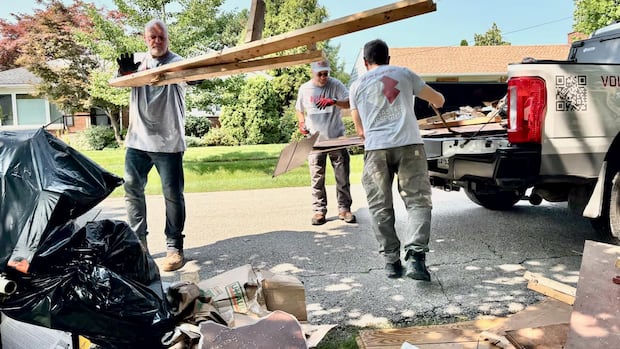
Volunteers with Team Rubicon Canada remove contaminated materials from a basement in St. Catharines as part of their flood response efforts in both cities. Both municipalities have ended their states of emergency declarations. (Team Rubicon Canada)
On August 27th, Lincoln formally asked the province to consider activating its Disaster Recovery Assistance for Ontarians (DRAO) program.
This program offers up to $250,000 for individuals, farmers, small businesses, and non-profit agencies covering emergency expenses or repairs needed after natural disasters.
At the end of August, Ontario’s municipal affairs and housing ministry informed that they were “working with the City of St. Catharines to assess storm-related flood damage” in order to see if areas impacted by overflowing creeks or lakes might qualify for DRAO assistance where uninsured damages occurred..
[insert organization]CLICK HERE FOR MORE DETAILS ON THIS STORY

.
Some Title Here!
The content goes here..,
{media}|{media-title}.