



Ontario Construction News staff writer
A judge from the Ontario Superior Court of Justice has directed general contractor Atkins Réalis to hand over $703,000 in statutory holdback funds to Ottawa’s subcontractor Bradley-Kelly Construction Ltd. This ruling provides vital clarity on how the province’s Construction Act interprets an “improvement” within complex transit infrastructure projects.
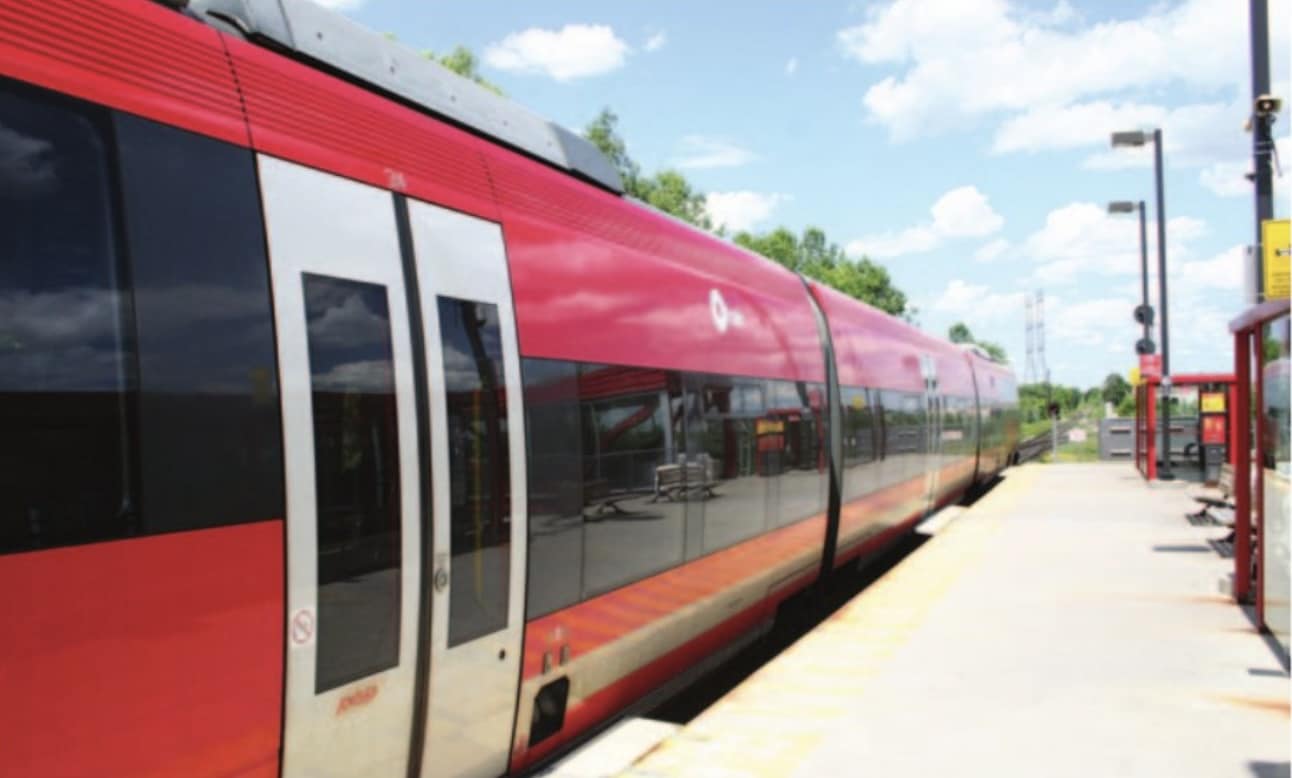
The summary judgment endorsement by Associate Judge Karen Perron addresses a significant point in the ongoing lien disputes related to Ottawa’s $1.6-billion Stage 2 Trillium Line light rail extension.
The conflict began between Bradley-Kelly, sub-general contractor GIP Construction Ontario East Ltd. (previously Aecon Construction Ontario East Limited), and Atkins Réalis Construction (Pacific) Inc. (formerly SNC-Lavalin), which is the main construction partner working through Transit Next General Partnership.
In March 2019, the City of Ottawa awarded Transit Next a contract for design, build, finance, and maintenance tasks aimed at expanding the north-south diesel commuter rail line. As part of this project involving civil and electrical works, GIP hired Nepean-based Bradley-Kelly for constructing roadway lighting, duct banks, and utility infrastructure. The subcontracts included two main work areas: realignment efforts at Earl Armstrong and Bowesville roads as well as the New Walkley Yard rail maintenance facility.
Tensions escalated between Atkins Réalis and GIP towards the end of 2023 due to unpaid invoices and delays in the project timeline, leading GIP to halt its work while Atkins Réalis decided to terminate its contract. Caught in a tough spot in the supply chain, Bradley-Kelly filed two separate construction liens in February 2024 to safeguard unpaid balances and statutory holdbacks.
Atkins Réalis managed to settle one lien related to New Walkley Yard by paying $615,000 in holdback funds; however, it refused to release another $703,000 holdback concerning the Earl Armstrong Road project. In response, Atkins Réalis filed a cross-motion claiming that the Earl Armstrong lien was invalid.
The general contractor argued that both Earl Armstrong and Walkley Yard projects represented distinct “improvements” under Ontario’s Construction Act. Since Bradley-Kelly wrapped up its fieldwork at Earl Armstrong on December 27, 2023, Atkins Réalis claimed that the statutory 45-day window for preserving that lien had lapsed by February 13, 2024-making Bradley-Kelly’s February filing late. In contrast, Bradley-Kelly completed its work at Walkley facility only on January 25, 2024.
With representation from construction law attorneys Daniel Leduc and Chelsea Packman, Bradley-Kelly contended that both locations’ work was interconnected as part of one comprehensive improvement for public transit expansion. GIP had Jay Nathwani representing them while Nathan Lean from Gowling WLG stood for Atkins Réalis.
Justice Perron ruled fully in favor of Bradley-Kelly.
“Somewhat surprisingly … there are no factual issues in dispute on this motion except for the underlying determination on whether Bradley-Kelly did work on a single improvement or multiple improvements,” Perron remarked in her endorsement.
Dismissing Atkins Réalis’ argument that geographical separation created different legal improvements, the court determined that these infrastructure components couldn’t be separated from their collective function within public transit.
The ruling stated that both subcontracts shared a common operational goal since opening up light rail expansion depended on completing both adjustments at Earl Armstrong road along with operations at Walkley maintenance facility. Perron expressed she found it easy to conclude that subcontracted tasks were aligned with a unified project objective thus meeting legal criteria for a single improvement-confirming that Bradley-Kelly preserved its lien within appropriate timelines.
The court mandated Atkins Réalis release the entire $703,000 holdback amount owed to subcontractor Bradley-Kelly.
This ruling comes while Atkins Réalis faces over $100 million worth of claims made by various Trillium Line subcontractors-including OWS and Pomerleau-regarding inflation adjustments along with design changes and contract management issues. In legal documents submitted before court proceedings commenced,Atkins Réalis maintained that contracts linked with these projects were fixed-price deals not open to cost increases.
Source link