




Three significant education unions are planning strike votes for November as negotiations with the province remain in deadlock over bargaining rules.
Editor’s note: This article originally appeared on The Trillium, a Village Media website devoted exclusively to covering provincial politics at Queen’s Park.
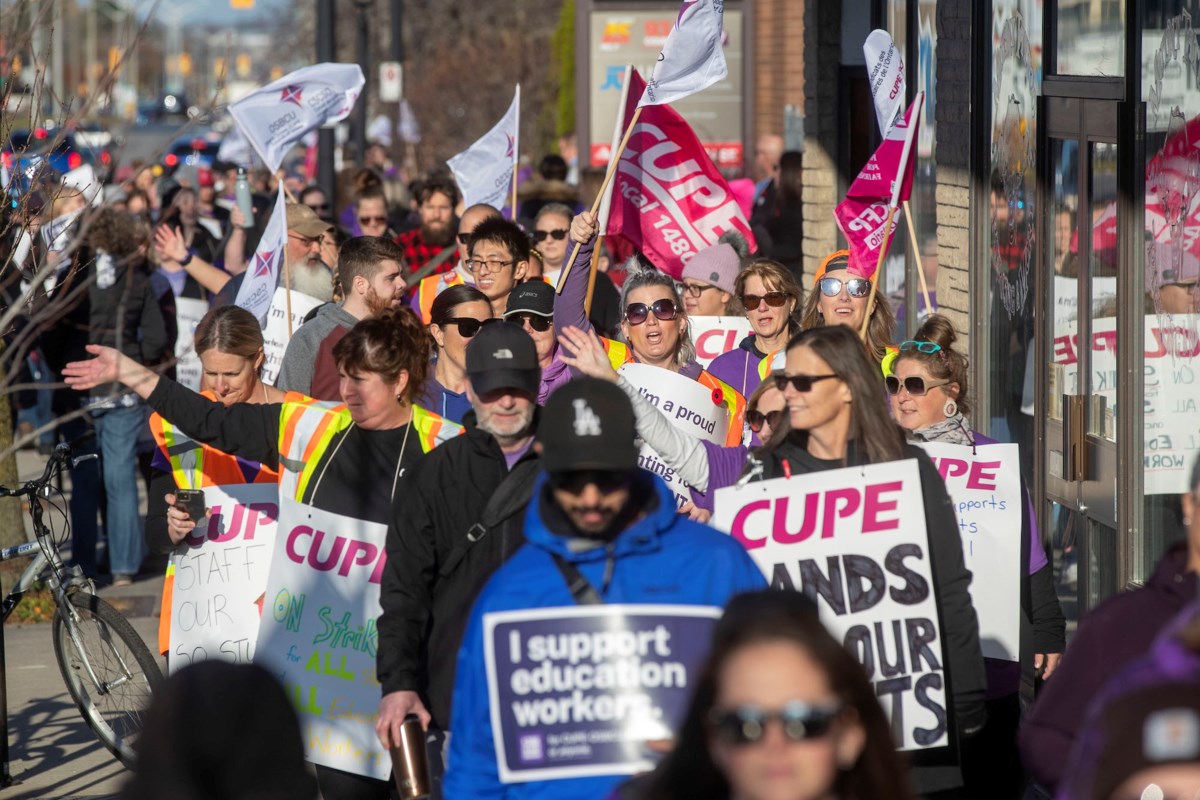
Three of Ontario’s major education unions have scheduled dates for strike votes because contract discussions with the province are stalled due to disagreements about the bargaining rules.
The latest announcement comes from the Canadian Union of Public Employees’ Ontario School Board Council of Unions (CUPE-OSBCU), representing around 57,000 education workers throughout the province.
CUPE-OSBCU members will participate in an electronic vote from Nov. 4 to 18 to decide whether to give their union a strike mandate, as stated by the union.
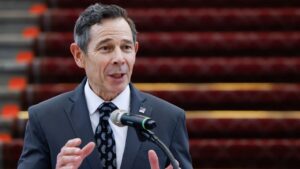
“There was 99 per cent, all in favour, to bring it to the membership,” Mitch Gagnon, the OSBCU’s Francophone VP, said during a press conference at Queen’s Park on Monday.
This follows similar announcements from both the Ontario English Catholic Teachers’ Association (OECTA) and the Elementary Teachers’ Federation of Ontario (ETFO).
OECTA, which represents about 45,000 teachers, has set its strike vote for Nov. 12 and 13. Meanwhile, ETFO – representing approximately 84,000 teachers and education workers – will conduct its online vote between Nov. 9 and 18.
The Ontario Secondary School Teachers’ Federation (OSSTF) and the Association des enseignantes et des enseignants franco-ontariens (AEFO) have yet to announce any dates for their strike votes.
Contracts expired at the end of August; however, discussions have been stalled while both unions and the government await a ruling from the Ontario Labour Relations Board (OLRB) regarding which issues should be negotiated centrally versus locally.
The unions contend that the government is attempting to centralize control over matters traditionally handled by individual school boards, such as surplus/redundancy policies related to employee reassignment or layoffs.
The OLRB process may take weeks or even months. The unions accuse Ford’s government of not engaging on agreed-upon issues like wages or class sizes while they wait for this ruling.
A spokesperson for Education Minister Paul Calandra stated that it is actually the unions who have delayed proceedings by escalating this procedural issue to OLRB.
“We respect their right to do so, but this process has delayed the start of bargaining,” Emma Testani said. “Once the OLRB process has concluded, we will be ready and willing to negotiate whenever the unions are ready to begin.”
“Premature strike threats do not serve the interests of students and do nothing but create unnecessary panic for parents. Our focus is where it should be – getting to the table and reaching a deal that keeps students in the classroom,” she added.
NDP Leader Marit Stiles remarked that “the people who should be held responsible for any feelings of insecurity that parents and families have is the minister of education and the premier.”
“All of the unions were asking to have early bargaining; he said ‘no,’” she noted.
While unions can proceed with strike votes during this waiting period, no actual job action can happen until after a decision from OLRB is made confirmed by union leaders on Monday.
Court dates regarding all educational worker unions will occur on October 6, 21, 27, and 28 according to CUPE-OSBCU’s information; hearings are expected to conclude by October 30 for all parties involved.
ETFO president David Mastin indicated that parents can “expect a proportional response to these challenging times.”
“We will only take action that’s necessary in order to encourage this government off its current path. Since 2018 it’s been about dismantling what’s good about public education,” he explained further.
OECTA president René Jansen in de Wal expressed frustration saying teachers are “at a point where they’re like ‘what are we waiting for?’ It’s quite clear where this government’s going.”
He accused officials of steering towards a “failed American-style approach instead of asking: what do kids need in order to succeed?”
Their concerns go beyond salaries into staffing levels, class sizes , student support services , and working conditions overall.
” We want compensation aligned with inflation. That’ll definitely come up during our talks. But money isn’t our main issue , ” he stressed.
” The real hurdle here : teachers come into this profession out love , but many quit out burnout due lack support. We’re facing an exodus – people leaving or being fired left & right. It’s crucial we address those elements first before anything else matters.”
Both sides have been using advertising campaigns aimed at influencing public opinion.
Mastin claimed ETFO is spending “a lot less than what government’s putting into ads these days ” adding they work under limited funds yet prioritize ensuring awareness among community members about educators ‘ perspectives because it’s vital.
” This government has certainly invested heavily into promoting themselves using taxpayer dollars.. we can’t match their financial might – still making sure educators ’ voices counteract theirs remains essential ,” he continued mentioning previous disclosures regarding leaked Ministry scripts shared recently outlining strategies criticizing union stances surrounding sick days etc.
Calandra defended those s pointing out how long unyielding campaigns waged against them came prior claiming he’d never back down when communicating directly concerning child-related issues faced daily either way.
Editor’s Note: This story has been updated with OLRB hearing dates.
Source link
Source link