






Ontario’s chief justices are alerting residents involved in the court system that their personal data might have been compromised due to a cyber breach.
A public notice regarding the incident was shared online on Sept. 2, by Ontario Chief Justice Michael H. Tulloch, along with Patrick J. Boucher, chief justice of the Ontario Superior Court, and Sharon M. Nicklas, chief justice of the Ontario Court of Justice.
The statement explains that the breach took place through an online case-management platform called C-Track, which is operated by Thomson Reuters Canada Limited.
The Court of Appeal for Ontario, the Ontario Superior Court of Justice, and the Ontario Court of Justice all utilize C-Track for storing and managing court documents and records, as stated in the notice.
The company discovered “unauthorized activity” within one of its cloud environments on June 30. They informed law enforcement and initiated their own investigation, which revealed that the breach had begun months prior, in March, resulting in court records from the Court of Appeal for Ontario, the Ontario Superior Court of Justice and the Ontario Court of Justice being accessed by “an unauthorized party.”
The company clarified that while data from these courts was affected, it was not due to issues with court networks or their data security.
WATCH | AI could become a major cybercrime tool in 2026, helping scammers hone attacks: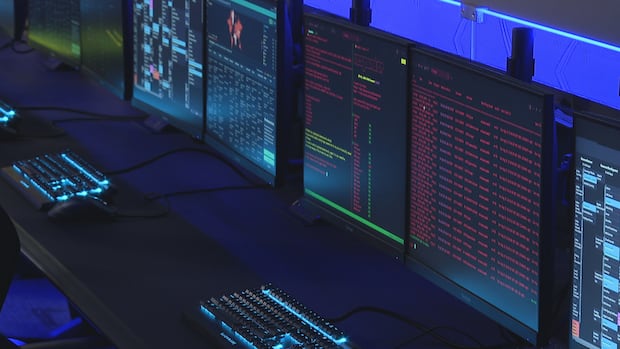 AI can make cyberattacks faster and smarter
A new EY report suggests AI will become a major force behind cybercrime in 2026 as programs help attackers hone their scamming skills.
AI can make cyberattacks faster and smarter
A new EY report suggests AI will become a major force behind cybercrime in 2026 as programs help attackers hone their scamming skills.

Source link
AI can make cyberattacks faster and smarter
A new EY report suggests AI will become a major force behind cybercrime in 2026 as programs help attackers hone their scamming skills.
Sensitive information might have been exposed
“Certain confidential, redacted or sealed information may have been impacted for certain affected courts,” the company states on a website dedicated to this incident. It mentions that names and other personal details may have been accessed but does not specify what kind of personal information or how many records were involved. It also doesn’t clarify how far back these records go. New cybersecurity measures are now implemented to enhance protection for C-Track systems and data, according to the company. “Our products and services remain fully operational and are safe to continue to use,” they stated in a message provided to . A representative from the company wasn’t available for an interview. Alongside launching a website about this issue, they have set up a call center for inquiries and are offering credit monitoring services for those affected. The company has not provided an estimate on how many Ontarians might be at risk because of this cyber attack. The statement from the chief justices indicates there’s still uncertainty surrounding what specific files may have been accessed. “However, if individuals have been involved in court proceedings or may have been mentioned in court documents, it is possible that some personal information relating to them could have been involved in the incident,” said their statement.WATCH | Canada’s cyber agency blocks hundreds of threats each year as risks grow:Hundreds of ransomware attacks stopped each year says Canada’s cybersecurity chief
The Canadian Centre for Cyber Security intercepts hundreds of potential cyberattacks each year. The centre’s head Rajiv Gupta spoke to The National’s Ian Hanomansing about how urgent some threats are and how changes in U. S. administration could impact intelligence-sharing.Court systems in U. S. also affected
The three courts in Ontario weren’t alone; several other court systems using C-Track across Alabama, Pennsylvania, Kentucky, Montana, Nevada, North Dakota South Carolina Tennessee Ohio New Hampshire Wyoming were also impacted by this cybersecurity event. The U. S. Virgin Islands faced similar issues too. A site created in the U. S. for those affected outlines that some types of personal information potentially accessed include driver’s license numbers social security numbers as well as medical details. A statement released by New Hampshire’s Judicial Branch notes that records impacted cover periods between 2002 and 2015 within its system due to this breach. The declaration from Ontario’s chief justices aims at reassuring everyone about privacy concerns being taken seriously by courts here. “We remain committed to transparency,” it reads. “Throughout this process our priority is ensuring support for potentially affected individuals safeguarding information entrusted into our care while collaborating with government officials towards stronger security measures preventing similar incidents going forward.”Source link