



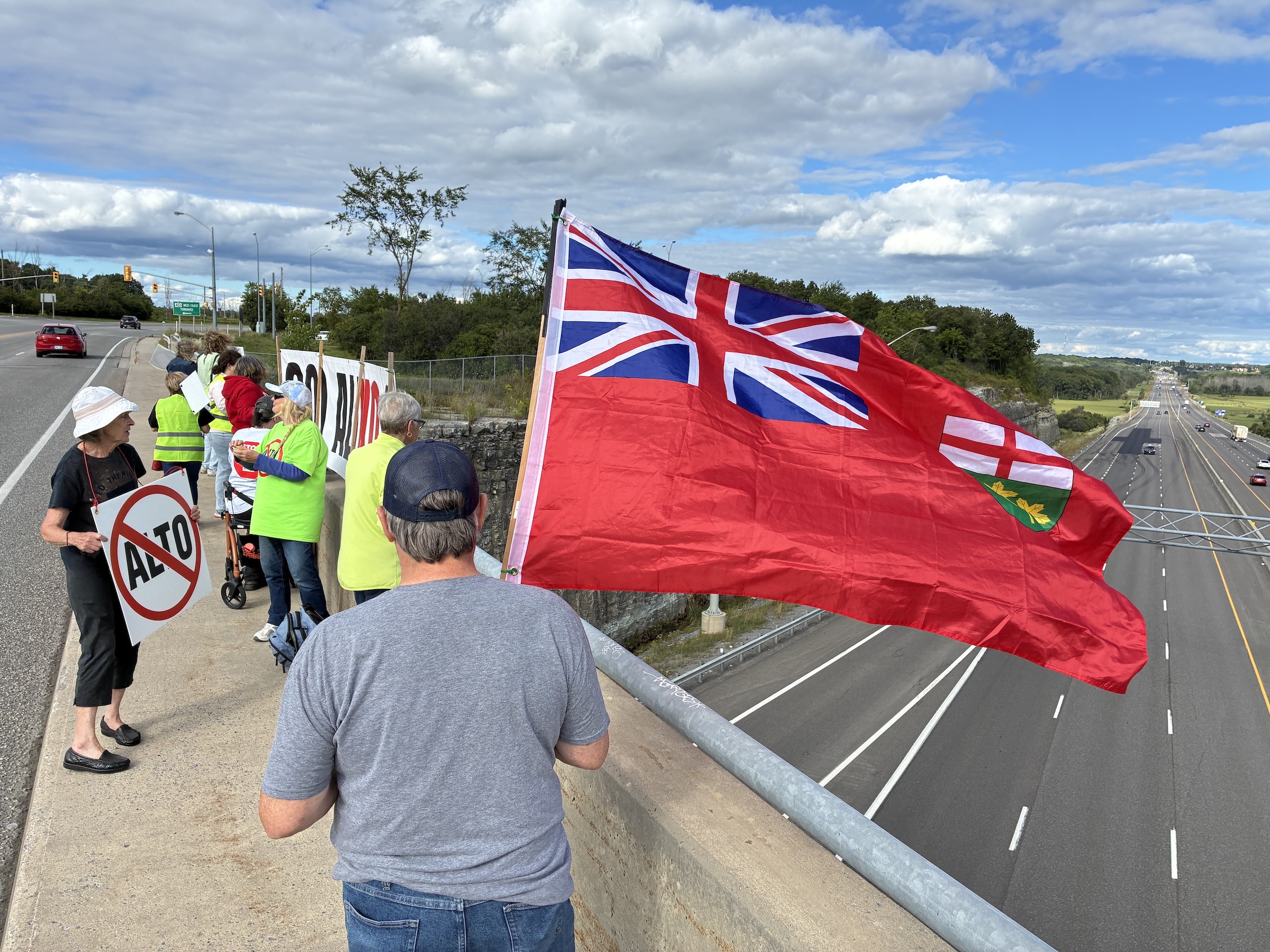
After months of discussion in the community, the proposed high-speed rail project connecting Toronto and Quebec City is heavily influencing the municipal election campaign in rural areas around Kingston.
The Rideau Lakes Township council voted Tuesday night not to sign a non-disclosure agreement with the Crown corporation responsible for developing a high-speed rail line through eastern Ontario.
By rejecting the NDA to keep conversations between the township and the Crown corporation transparent, Rideau Lakes joined other rural councils in opposing the project.
This opposition has become even more prominent as candidates prepare for next month’s municipal elections.
A candidate survey from Stone Mills, South Frontenac, and Rideau Lakes townships revealed that Alto is one of the main concerns for voters.
“Many people in Rideau Lakes are worried about Alto and feel we might have little power to stop it,” said Paula Banks, a councillor in Rideau Lakes who is running for mayor and has been vocal against the high-speed rail initiative.
“Constituents are discussing this topic and are strongly opposed,” added Kimberly Brown, another candidate running for mayor in Rideau Lakes Township.
They oppose it due to concerns about generational farmland, cottages, and issues related to infrastructure and emergency services if Alto comes through their area,” Brown explained.
“Residents don’t want our mayor and chief administrative officer pressured into signing NDAs just to be part of these talks. Whoever gets elected will need to keep fighting for transparency.”
My constituents are disgusted by Alto, and frankly, so am I
Andrew Garrett Stone Mills Township election candidate
“Alto is definitely one of the biggest issues across eastern Ontario, especially in rural areas,” said incumbent Stone Mills candidate Krysta-Lee Woodcock. “While affordability is a major concern for many, Alto isn’t separate from that. It raises questions about our investment choices and who actually benefits from those investments.”
Woodcock noted her community lacks public transit service and won’t gain anything from its construction.
“My constituents are disgusted by Alto, and frankly, so am I,” stated Stone Mills candidate Andrew Garrett. “I haven’t met anyone who supports this project. Not one person. I see no reason why we should endure the disruptions it would cause our community.”
“Stone Mills residents understandably oppose Alto,” mentioned Stone Mills candidate Lisa Ross-Black. If this goes ahead, life in our beautiful area will change drastically. Important farmland will be hard to reach. Emergency services and school buses will operate far less efficiently. The natural environment will be permanently affected. And that’s just scratching the surface.”
Recently formed citizen groups against the high-speed rail project have urged municipal election candidates to commit publicly against it.
In South Frontenac, where local resistance started early on against the high-speed rail plan, six out of eight council positions have been acclaimed; however, candidates competing for contested seats reported that Alto remains a top issue among voters.
“Alto is central to this campaign – most citizens do not support it,” claimed candidate Gord Boulton, one of Save South Frontenac’s co-founders earlier this year. “It won’t just harm our fragile environment; it’ll also displace residents during its lifetime along with years of construction disruption.”
“People feel very strongly about this issue,” remarked mayoral hopeful Alan Revill; he noted that around 90 percent of people he speaks with mention their concerns regarding the high-speed rail project. “Those living near potential corridor routes worry about losing their properties or facing expropriation.”
South Frontenac Township has already opposed plans for constructing a section of high-speed rail within its southern borders but incumbent mayoral candidate Ron Vandewal acknowledged limited control over such projects.
“Folks in southern and central parts of our township are quite concerned about Alto too but know there isn’t much we can do at a township level to prevent it from happening. Protests are ongoing while petitions continue circulating,” Vandewal explained.
Elliot Ferguson’s journalism career began decades ago delivering his hometown newspaper. A graduate of Carleton University journalism and Loyalist College’s photojournalism programs, Ferguson’s work has been recognized with provincial and national awards. Ferguson’s is currently The Whig’s municipal affairs reporter but his true passion is photojournalism and visual storytelling.
elferguson
Source link
Editor’s Picks
Source link