




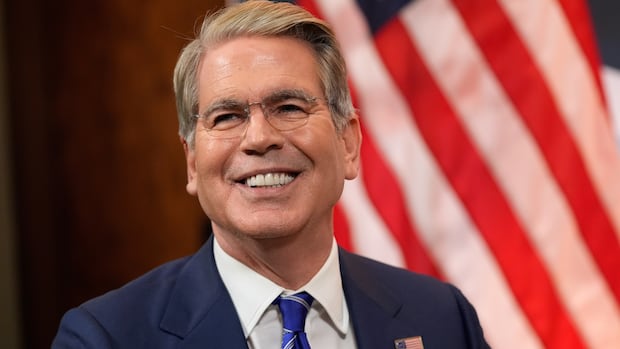
United States Treasury Secretary Scott Bessent made it clear that his country is “not at war” with Canada, then went on to joke about the potential threat Canada might pose with “submarines from the Edmonton mall.”
The secretary also pointed fingers at Prime Minister Mark Carney for fueling the current “political shouting match” between the two nations, suggesting that keeping tensions high helps his approval ratings.
Bessent shared these thoughts during an interview on Monday with CNBC when asked if there was a trade war happening between the U. S. and Canada.
“Well, I don’t think you can be in a tit for tat with someone that’s 13 times larger than you are,” he stated.
“I mean we’re not at war with Canada. How are we going to be at war with Canada? What, are they going to take their two submarines from the Edmonton mall and sick them on us?”
Directing submarines from Edmonton toward the U. S. would be quite complicated today.
Although West Edmonton Mall did have four recreational submarines for tourists to ride through an indoor lake, that attraction closed in 2005 and those subs were dismantled in 2012.
Regardless of these facts, the ongoing exchange of words between the Trump administration and Canada has intensified this week after a trade agreement fell apart just before it was finalized.
WATCH | Canada consistently raised auto industry in U. S. trade negotiations, Charette says: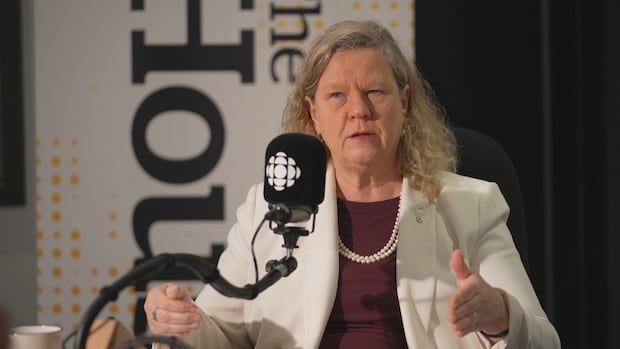 Charette says Canada consistently raised auto industry in U. S. trade negotiations
In a conversation with CBC’s Catherine Cullen on Friday, Canada’s chief trade negotiator Janice Charette responded to claims from U. S. Commerce Secretary Howard Lutnick that concerns about medium- and heavy-duty trucks were only raised by Canada at the last moment. She clarified that while those topics were mentioned on Friday during final discussions, they were also brought up earlier in the week-on Monday, Tuesday, Wednesday, and Thursday.
Carney mentioned that he pulled Canada’s negotiating team back home late on Friday, Aug. 21 because of “last-minute changes” introduced by the U. S., which were seen as “unfair” and “uneconomic.”
The demands presented by Carney indicated would restrict Canada’s ability to form trade agreements with other nations and undermine subsidies for French-language media along with bilingual product labeling requirements.
The prime minister expressed concern that any auto deal desired by the U. S. would ultimately harm Canada’s industry over time-something he couldn’t agree to.
The day following their withdrawal from negotiations, the U. S imposed tariffs of 50 percent on around $28 billion worth of Canadian exports coming into America. In response, Carney announced that Canada would retaliate dollar-for-dollar starting Sept. 8.
Charette says Canada consistently raised auto industry in U. S. trade negotiations
In a conversation with CBC’s Catherine Cullen on Friday, Canada’s chief trade negotiator Janice Charette responded to claims from U. S. Commerce Secretary Howard Lutnick that concerns about medium- and heavy-duty trucks were only raised by Canada at the last moment. She clarified that while those topics were mentioned on Friday during final discussions, they were also brought up earlier in the week-on Monday, Tuesday, Wednesday, and Thursday.
Carney mentioned that he pulled Canada’s negotiating team back home late on Friday, Aug. 21 because of “last-minute changes” introduced by the U. S., which were seen as “unfair” and “uneconomic.”
The demands presented by Carney indicated would restrict Canada’s ability to form trade agreements with other nations and undermine subsidies for French-language media along with bilingual product labeling requirements.
The prime minister expressed concern that any auto deal desired by the U. S. would ultimately harm Canada’s industry over time-something he couldn’t agree to.
The day following their withdrawal from negotiations, the U. S imposed tariffs of 50 percent on around $28 billion worth of Canadian exports coming into America. In response, Carney announced that Canada would retaliate dollar-for-dollar starting Sept. 8.
“You’re at war when you get attacked. We got attacked,” Carney said last week. Bessent noted that discussions had been going smoothly prior to Canada’s decision to walk away from what he termed “the best trade deal of any country on Earth” right before it was finalized. “I think it’s very unfortunate that Prime Minister Carney has turned this into a political shouting match,” Bessent remarked Monday on CNBC. “He came into power pushing an anti-American agenda; he was trailing by 20 points in polls until he started this.” “It’s unfortunate he’s not doing what’s best for Canadian citizens but rather focusing on what’s beneficial for himself and his Liberal party-and eventually Canadians will see through all of it.” Meanwhile Alberta Premier Danielle Smith appeared on American television Monday arguing how detrimental both countries will be affected due to ongoing disputes since “no one wins a tariff war.” Retaliatory tariffs will hurt Alberta: Premier Smith
Alberta Premier Danielle Smith informed reporters Wednesday regarding her belief Canadians need renewed efforts towards convincing American lawmakers about how damaging escalating tariff conflicts could become for both sides.
Smith explained why she thinks retaliatory tariffs impact small businesses heavily more so than large corporations across borders leading them toward layoffs amid rising costs tied directly related causing fallout stemming ever since initiation surrounding these new policies impacting trading relations overall affecting local economies alike.
This year marks yet another opportunity where both parties should prioritize returning table discussions; even though issues remain tense presently.
“Canadians feel confused; perhaps even disappointed,” she stated further elaborating.”We have strong alliances established previously regarding defense measures integrated economic ties present too! So many don’t understand why Americans desire weakening relationships held here specifically.”
Retaliatory tariffs will hurt Alberta: Premier Smith
Alberta Premier Danielle Smith informed reporters Wednesday regarding her belief Canadians need renewed efforts towards convincing American lawmakers about how damaging escalating tariff conflicts could become for both sides.
Smith explained why she thinks retaliatory tariffs impact small businesses heavily more so than large corporations across borders leading them toward layoffs amid rising costs tied directly related causing fallout stemming ever since initiation surrounding these new policies impacting trading relations overall affecting local economies alike.
This year marks yet another opportunity where both parties should prioritize returning table discussions; even though issues remain tense presently.
“Canadians feel confused; perhaps even disappointed,” she stated further elaborating.”We have strong alliances established previously regarding defense measures integrated economic ties present too! So many don’t understand why Americans desire weakening relationships held here specifically.”
Source link
Charette says Canada consistently raised auto industry in U. S. trade negotiations
In a conversation with CBC’s Catherine Cullen on Friday, Canada’s chief trade negotiator Janice Charette responded to claims from U. S. Commerce Secretary Howard Lutnick that concerns about medium- and heavy-duty trucks were only raised by Canada at the last moment. She clarified that while those topics were mentioned on Friday during final discussions, they were also brought up earlier in the week-on Monday, Tuesday, Wednesday, and Thursday.
Carney mentioned that he pulled Canada’s negotiating team back home late on Friday, Aug. 21 because of “last-minute changes” introduced by the U. S., which were seen as “unfair” and “uneconomic.”
The demands presented by Carney indicated would restrict Canada’s ability to form trade agreements with other nations and undermine subsidies for French-language media along with bilingual product labeling requirements.
The prime minister expressed concern that any auto deal desired by the U. S. would ultimately harm Canada’s industry over time-something he couldn’t agree to.
The day following their withdrawal from negotiations, the U. S imposed tariffs of 50 percent on around $28 billion worth of Canadian exports coming into America. In response, Carney announced that Canada would retaliate dollar-for-dollar starting Sept. 8.
Bessent Criticizes Carney’s Approach
After those trade talks collapsed, President Donald Trump took to social media to insult Canada further while teasing Canadians by renaming Lake Ontario as Lake America. Ontario Premier Doug Ford and Manitoba Premier Wab Kinew have both responded sharply against Trump; Ford told him to “kiss my ass,” while Kinew compared Trump’s behavior to an “over-the-hill” band trying to prolong their fading days at a casino. So far Carney has refrained from joining in such insults but confirmed that Canada is indeed facing a trade war against its southern neighbor now.“You’re at war when you get attacked. We got attacked,” Carney said last week. Bessent noted that discussions had been going smoothly prior to Canada’s decision to walk away from what he termed “the best trade deal of any country on Earth” right before it was finalized. “I think it’s very unfortunate that Prime Minister Carney has turned this into a political shouting match,” Bessent remarked Monday on CNBC. “He came into power pushing an anti-American agenda; he was trailing by 20 points in polls until he started this.” “It’s unfortunate he’s not doing what’s best for Canadian citizens but rather focusing on what’s beneficial for himself and his Liberal party-and eventually Canadians will see through all of it.” Meanwhile Alberta Premier Danielle Smith appeared on American television Monday arguing how detrimental both countries will be affected due to ongoing disputes since “no one wins a tariff war.”
Source link