





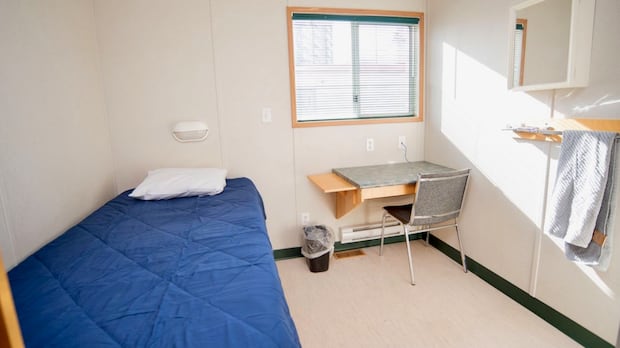
With some councillors and residents expressing worries about the potential location of a new emergency shelter in St. Catharines, regional officials are highlighting how important these facilities are for helping people without homes find safe and stable housing.
“We’re always going to need shelters,” Cathy Cousins, director of homelessness services for the Region, told on July 24. “[But] we want that shelter time to be rare, brief and non-re-occurring. Those are the three goals of the shelter system.”
Niagara Region works with local agencies to manage nine shelters that can accommodate around 300 individuals. A new shelter in St. Catharines must be opened by the end of this year because the lease for a temporary shelter on Riordon Street is set to expire.
This month, some city politicians mentioned feeling caught off guard when a short Facebook post in late June revealed plans for a new shelter on Bunting Road near Dunkirk Road.
Nearby residents voiced concerns that their community might face issues like discarded needles, vandalism, and litter.
 A study conducted through Mental Health Commission Canada revealed every $10 allocated toward supportive housings yields savings totaling roughly $21 amounting collectively related sectors (healthcare/social services/legal systems) encompassed ultimately influencing overall quality lives lived positively!
Koning mentioned how they’ve shifted away seasonal models forcing vulnerable populations disperse daily cycle instead creating round-the-clock open shelters enabling better cooperation agencies assist tenants overcoming barriers hindering access transition paths towards stable environments specifically designed cater unique needs faced today..” said koning reflecting priorities focus remains centered assisting individuals attain permanency achieving successful integrations within society once again rather than remaining stuck limited options previously presented.”
A study conducted through Mental Health Commission Canada revealed every $10 allocated toward supportive housings yields savings totaling roughly $21 amounting collectively related sectors (healthcare/social services/legal systems) encompassed ultimately influencing overall quality lives lived positively!
Koning mentioned how they’ve shifted away seasonal models forcing vulnerable populations disperse daily cycle instead creating round-the-clock open shelters enabling better cooperation agencies assist tenants overcoming barriers hindering access transition paths towards stable environments specifically designed cater unique needs faced today..” said koning reflecting priorities focus remains centered assisting individuals attain permanency achieving successful integrations within society once again rather than remaining stuck limited options previously presented.”
Source link
The location of the new shelter is not yet confirmed
However, regional politicians also stated they are unaware of where the new shelter will be situated. Henri Koning, commissioner of community services for the Region, informed on Friday that she anticipates a recommendation regarding the shelter’s location will reach regional council this fall. Once the site is finalized, she said local residents will have an opportunity to attend a public information session and can even join a liaison committee or tour the facility. A phone number for neighbours to call 24/7 will also be provided, she added. “The team is really committed to working together with the neighbourhood to ensure that the potential impact is mitigated,” she said. The upcoming shelter will feature modular design with mobile home-type units along with a common area. Koning and Cousins stressed how vital shelters are in addressing homelessness. Regional statistics indicate that last year saw 1,200 people experiencing homelessness find housing again; however, data shows that overall numbers of unhoused individuals in Niagara have remained almost unchanged from two years prior. Even though total homeless numbers stayed stable, chronic homelessness has risen significantly and now makes up 57 percent of cases according to regional data. The Niagara Region’s shelter system operates at nearly full capacity due to many unhoused individuals facing complex challenges like addiction and mental health issues which complicate their ability to secure or maintain stable housing as noted by officials. A person lays on blankets on a concrete boulevard on Queenston Street in St. Catharines on July 16. Niagara’s shelter system is running at nearly 100 percent capacity, according to the regional government. (Paul Forsyth/CBC) This situation isn’t exclusive to Niagara. The Association of Municipalities of Ontario reported almost 85,000 Ontarians experienced homelessness in 2025-an increase close to eight percent compared to last year. Known cases have jumped by 49 percent since 2021 according to this association’s findings. Tackling homelessness remains difficult in Niagara due largely to housing prices being out of reach for many alongside lingering pandemic effects contributing further complications. Cousins highlighted families and seniors as two rapidly growing groups within those experiencing homelessness; much of this trend stems from high housing costs in Niagara. The rise in senior unhoused individuals may also relate back to pandemic fears preventing them from seeing doctors leading their health conditions worsening until they can no longer stay at home safely she explained.Supportive housing is essential
Cousins and Koning pointed out that supportive housing plays an essential role in providing stability for people seeking homes. This could include basic assistance like home visits or life-skills training for those who need less complex support systems...... For those requiring more intensive help it may involve facilities staffed around-the-clock offering various supports such as food aid plus health services including mental health counseling alongside assistance securing social benefits or identification documents.. . . . . . .If you require any further information please do not hesitate contact us via email at info@example. com
Yet there’s currently a persistent shortage regarding this kind housing option: A consultant report indicated last year pointed towards needing about 1,372 supportive housing units by 2035 while presently just around 427 exist available across regions involved here throughout our province respectively.. It’s estimated building all necessary units would cost approximately $253 million while operational expenses could reach about $276 million over ten years’ span-funding primarily relying upon federal/provincial governments according region authorities themselves..
A study conducted through Mental Health Commission Canada revealed every $10 allocated toward supportive housings yields savings totaling roughly $21 amounting collectively related sectors (healthcare/social services/legal systems) encompassed ultimately influencing overall quality lives lived positively!
Koning mentioned how they’ve shifted away seasonal models forcing vulnerable populations disperse daily cycle instead creating round-the-clock open shelters enabling better cooperation agencies assist tenants overcoming barriers hindering access transition paths towards stable environments specifically designed cater unique needs faced today..” said koning reflecting priorities focus remains centered assisting individuals attain permanency achieving successful integrations within society once again rather than remaining stuck limited options previously presented.”Source link